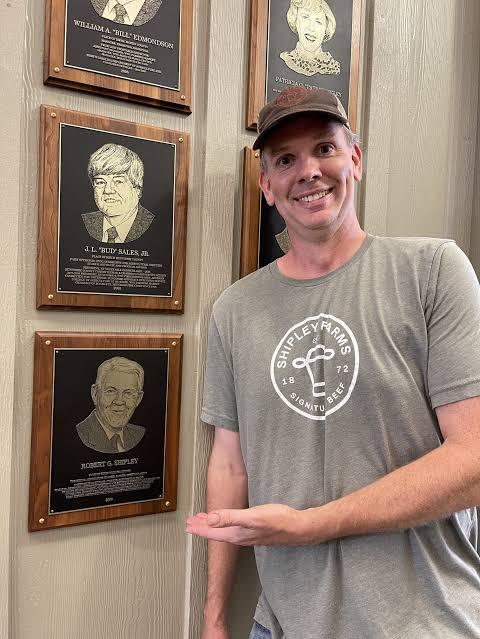
The Shipley family has been farming this Appalachian valley for over 150 years. This is our story: the land, the legacy, and the promise we keep.
Watch Our Story
Get to Know Shipley Farms
Prefer watching to reading? This short film tells the story of the valley, the family, and the beef, in just a few minutes.
Or scroll down to read the full story below.
Our Promise: To provide beef that taste better and is healthier for you because of where it comes from and how it is cared for.
R.G. Shipley Sr. (1912-2015)
Where the Ridges Hold What Words Cannot
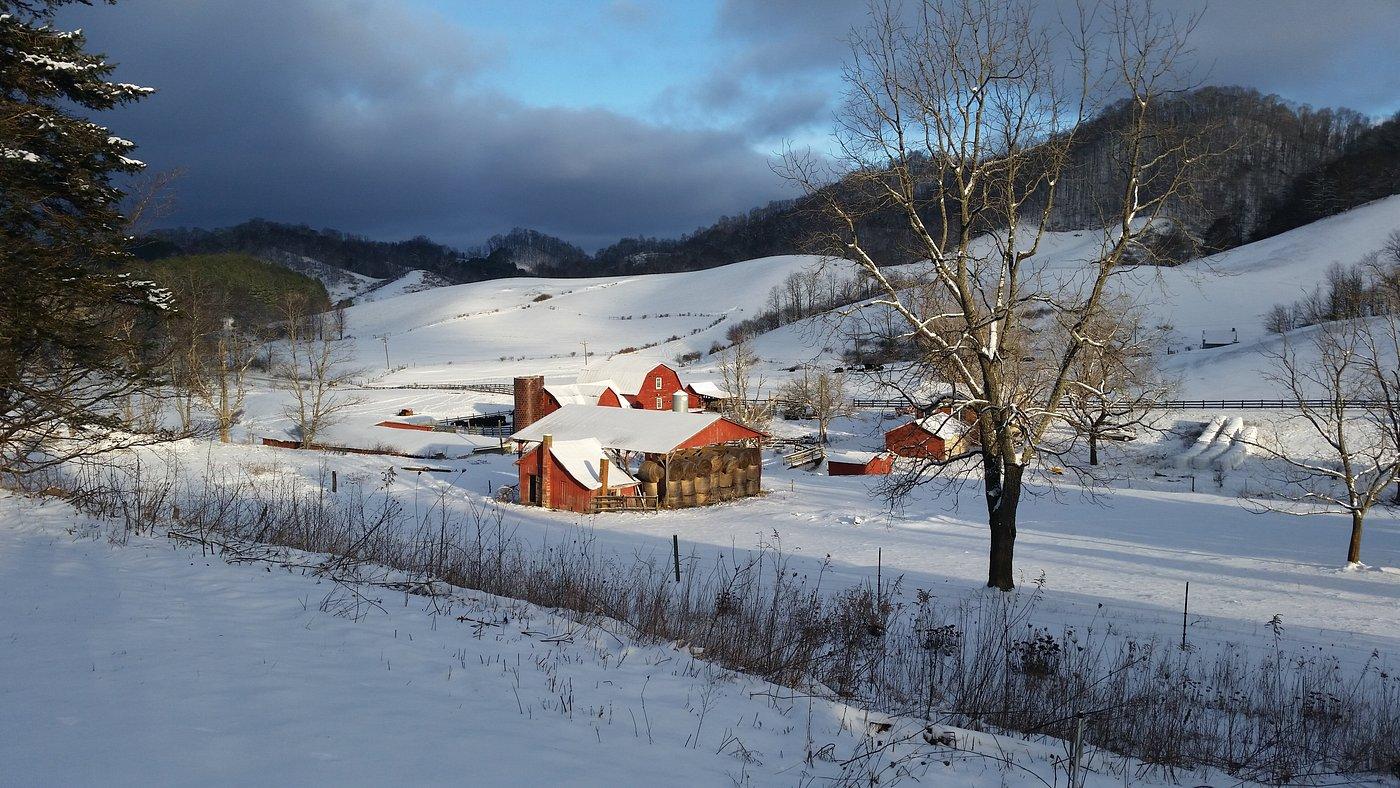
Shipley Farms sits in the tiny unincorporated community of Vilas, six miles west of Boone, in the heart of the Southern Appalachian Mountains. Former North Carolina Poet Laureate Joseph Bathanti described it as “its sane, unspeakably beautiful valley.” From the ridgelines above, the farm appears almost like a child’s toy set, a classic red barn and silo, red outbuildings, and a brick farmhouse nestled in green pastures.
The farm rests at 1699 Linville Creek Road, named for the trout stream that courses through the valley. Linville Creek is part of the larger Linville River watershed. Rich Mountain looms over the valley to the north. Three large illuminated Coffindaffer crosses sit on the mountainside opposite the farm, switched on each evening and visible from the valley below.
“Its sane, unspeakably beautiful valley.”
Shipley Farms in winter, Vilas, North Carolina.
The Appalachians: Where Cattle Walked to Market
The Southern Appalachians were settled after 1730 by Scotch-Irish Presbyterians and Palatinate Germans. For 150 years, livestock raising was the principal commercial activity. Cattle and hogs roamed freely on high mountain balds, grassy meadows above the tree line. Twice a year, drovers walked herds to markets in Virginia, Baltimore, and Philadelphia. Before the chestnut blight, Appalachian hogs were fattened on chestnuts, acorns, and walnuts. The blight destroyed both the timber industry and a critical food source.
The Civil War devastated Appalachian agriculture. The farm was established in 1872, during Reconstruction, a new beginning. Post-WWII, Appalachian farm numbers plunged from 354,748 in 1969 to 230,050 in 1997. Our farm survived when tens of thousands did not. Its continuity is exceptional, not typical.
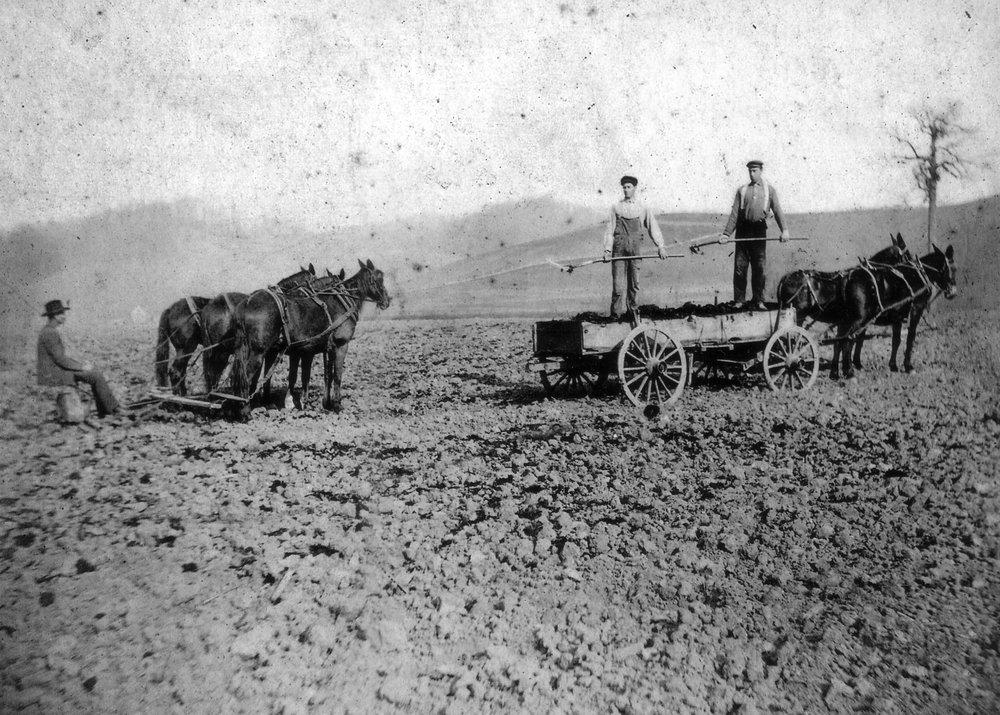
Farm work on the Shipley land, early 1900s.
1872
The BeginningNathan & Sarah Bradley Shipley
Our story begins in 1872, when Nathan and Sarah Shipley purchased 115 acres of farmland beside Sarah’s family’s farmhouse in Vilas, NC. Since then, the Shipley family has been breeding and raising premium quality beef on the family farm in the heart of the Southern Appalachian Mountains.
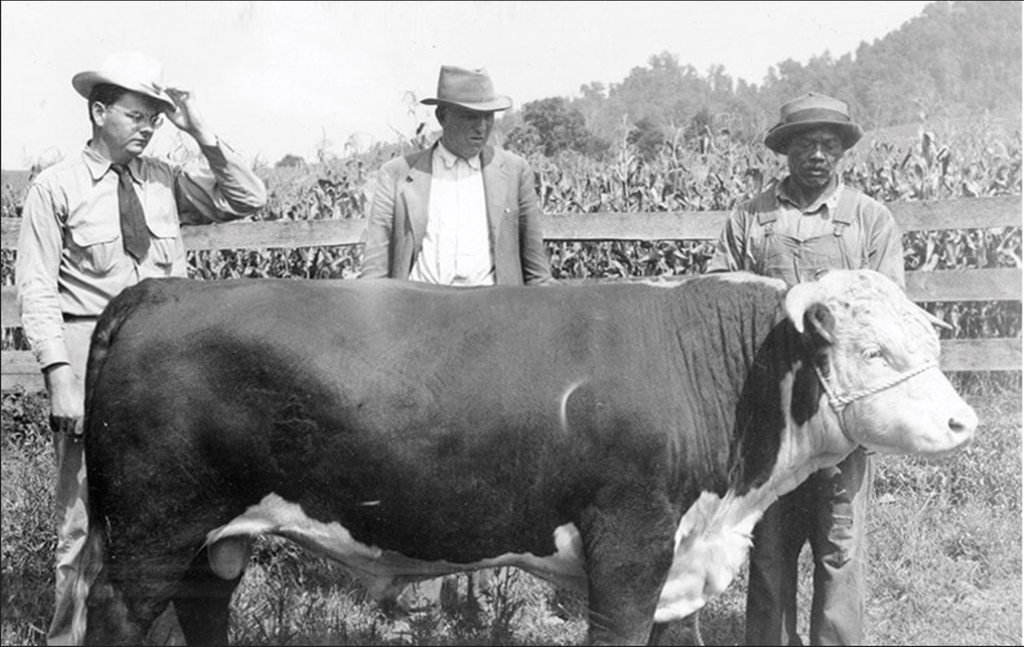
W.E. Shipley, Nathan’s son and R.G.’s father, brought the first registered Hereford bull into NC from Virginia in 1897, walking the bull behind a horse-drawn wagon. W.E. Shipley, “Mr. Ed” as he was known to many, and his brother Huston had a well-deserved reputation for their farming and livestock expertise. They were both well respected for their knowledge of cattle, and their operations were often featured in the local paper, the Watauga Democrat.
At one time they both owned multiple farms in the area, but the old Shipley Farm in Vilas was always a focal point of cattle trading in the agricultural community. The farm featured one of the more modern facilities in the region, including the first cattle scales in or around Watauga County, which any farmers in the area were invited to use.
1897
The TrekWalking a Bull Through the Mountains
W.E. Shipley, Nathan’s son, became a cattle pioneer. In 1897, he traveled to Virginia and purchased a registered Hereford bull, the first of its kind in North Carolina. He walked the bull back behind a horse-drawn wagon through the rough mountain terrain to the farm near Boone. This was not a simple livestock purchase. It was a multi-day mountain trek that demonstrated both determination and the logistical challenges of High Country farming.
W.E. established the family’s reputation as cattle breeders and set the genetic foundation for the Shipley herd. The Hereford line he introduced would remain on the farm for over a century. Herefords were prized for their temperament and hardiness in mountain conditions , qualities that still matter today.
“He walked the bull back behind a horse-drawn wagon through the rough mountain terrain.”
The Tobacco Era: What the Mountains Grew Before Beef
For decades, tobacco was the mountain farmer’s lifeline. For more than 70 years, burley tobacco was the dominant cash crop in Western North Carolina. The mountainous terrain made tobacco a natural fit: labor-intensive, high-value per acre, grown on small plots. By the 1920s, farmers across Watauga County had adopted burley.
Why This Matters
0
Tobacco farms in Watauga County (1997)
-97%
Decline over 15 years
0
NC farms lost in 40 years
The 1933 Agricultural Adjustment Act created a federal quota system that protected tobacco growers. Each farmer was granted a quota, a legal right to produce a specific amount. But the 2004 Fair and Equitable Tobacco Reform Act ended all federal supports. Within three years, the burley belt lost 91% of its tobacco farms. By 2014, the year we relaunched the beef operation, the region’s agricultural economy was still reeling.
When that era ended, we returned to what W.E. Shipley started in 1897.
1929
The InheritanceA 17-Year-Old and an Impossible Debt
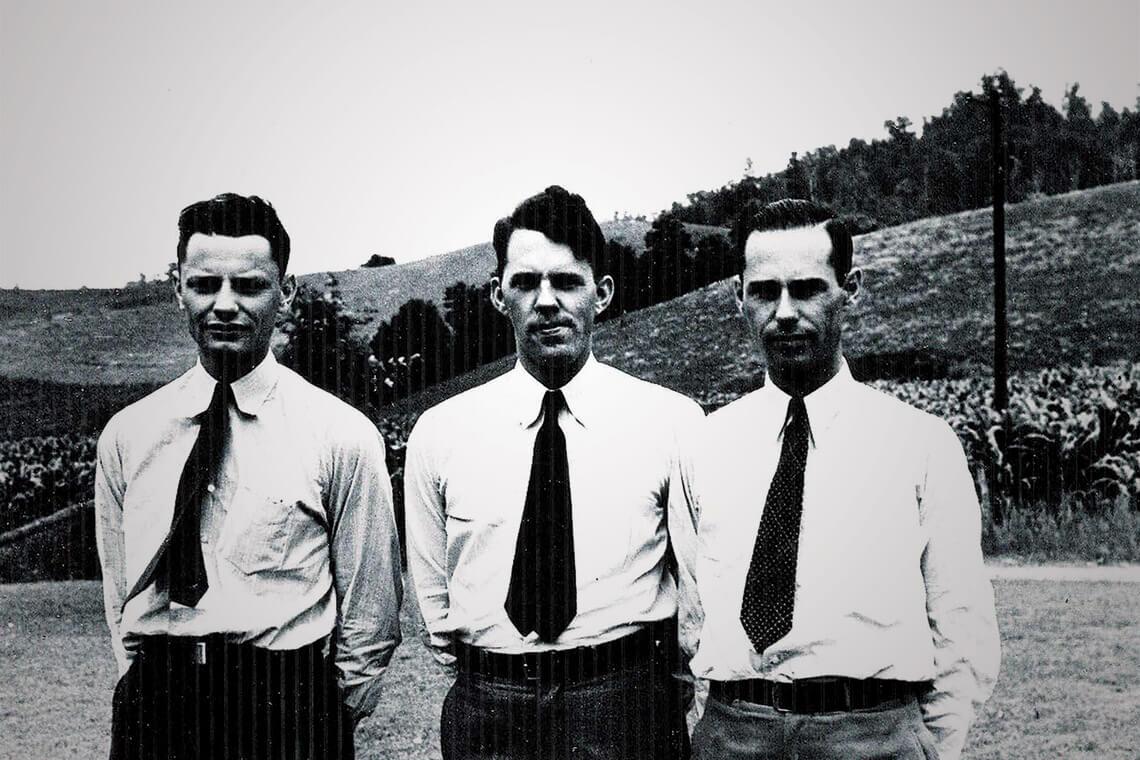
R.G. Shipley is the pivotal figure in the farm’s modern history. Born in 1912, he inherited the farm in 1929 at age 17 from his uncle Huston, W.E. Shipley’s brother. But there was a condition: Huston stipulated that R.G. must pay his six brothers and sisters for their shares. R.G. was paying his way through Virginia Polytechnic Institute, now Virginia Tech, by milking cows. He finished school trekking back and forth from Blacksburg to the farm he would own for the next 86 years.
“Uncle Hus made a decision that enables us to do this today. Being able to keep something together isn’t easy.”
Huston’s decision to leave the farm to one heir rather than dividing it was critical. This prevented the fragmentation that destroyed so many Appalachian family farms.
The First Couple of Agriculture in the High Country
R.G. became an agriculture teacher at Cove Creek High School, now Watauga High School, where he taught future generations of farmers until he was 70. This dual role, practitioner and educator , cemented his status as a regional agricultural leader. His wife Agnes, also a teacher, gave lessons on canning and baking, preserving traditional Appalachian domestic arts. The couple lived on the farm for more than 70 years. Joseph Bathanti called them “the first couple of agriculture in the High Country.”
“They recall forensically, chapter and verse, every whit of history that has passed in this valley.”
Agnes’s famous yellow irises grew by the hundreds along the roadbed of Linville Creek. The brick farmhouse, the springhouse, the hen house, and all the red outbuildings held the accumulated artifacts of 150 years of continuous living. The farm was not merely a business. It was a living archive.
2014
The RelaunchA 150-Year-Old Startup
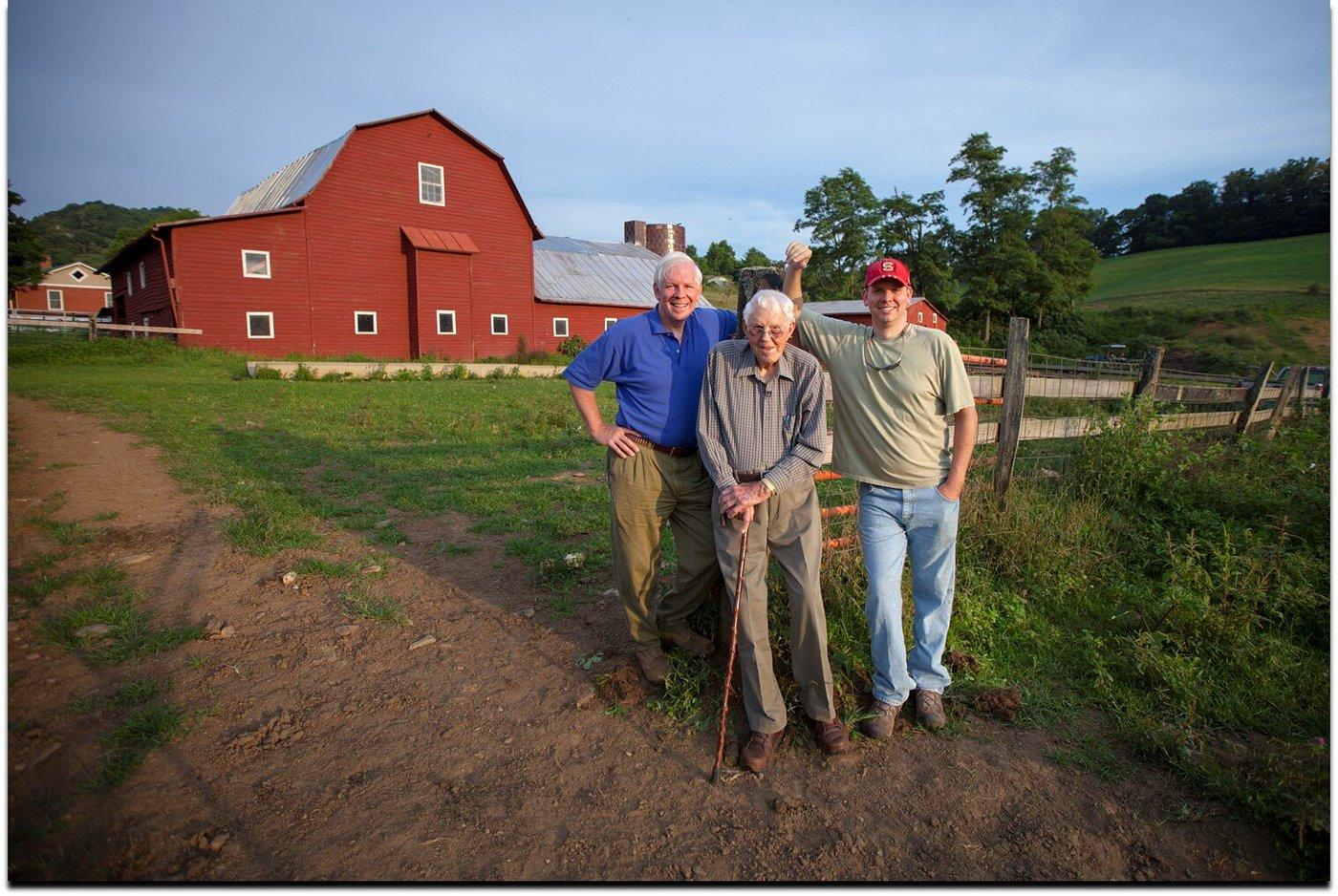
In October 2013, Agnes died at 96. R.G., then 101, agreed to leave the farm, sell the cattle, and move to Raleigh with his son Bob. But in the car ride from the farm, he told his grandson Gray: “I’ve been thinking about getting back in the cattle business.”
In 2013, inspired by R.G.’s desire for a new adventure at 101 years old, we ventured out from raising livestock and began producing finished beef, making available to our friends and neighbors the same farm-raised meat we’ve fed our family for years.
In summer 2014, Bob took his 101-year-old father to North Wilkesboro to buy their first Hereford/Angus calves. R.G. was photographed eating the first steak they produced. He was present for the first two years of the relaunched operation. He died on August 14, 2015, at age 103, having lived long enough to taste the future he restarted.
“Granddad didn’t leave us with a business. He left us a heritage. We’ve started a 150-year-old business.”
No Shortcuts Since 1872
The practices we use today were refined across five generations of mountain farming.
Pasture Raised
Our cattle graze on lush, clover-rich mountain pastures in the Southern Appalachians. Supplemented with a balanced, vegetable-based feed and aged for optimal flavor, tenderness, and marbling.
No Added Hormones
Our beef is free of any added hormones or steroids. Never treated with antibiotics except when medically necessary to treat a temporary illness, just as you would for your own family.
Dry Aged for Flavor
We dry-age our beef to develop deep, complex flavor and exceptional tenderness. A time-honored technique allowing natural enzymes to create the rich taste only patient craftsmanship can deliver.
Good Fields & the Future of Farm Country
North Carolina has lost 40,000 farms in the past 40 years. Watauga County is projected as the #39 county in the United States for farmland lost to development by 2040. When tobacco died, farms had to become polycultures again or perish.
The Good Fields Appalachian Food & Farms Festival was founded in 2022 around the farm’s 150th anniversary. A dozen chefs create dishes honoring the region’s culinary heritage. All proceeds support agricultural nonprofits focused on farmland preservation, including ASAP. As Gray puts it: “This isn’t wine country, but it’s farm country.”
#0
Watauga County’s national ranking for farmland lost to development by 2040
“Even if we try and fail, I get to be a partner with my dad and granddad.”
The Next 150 Years
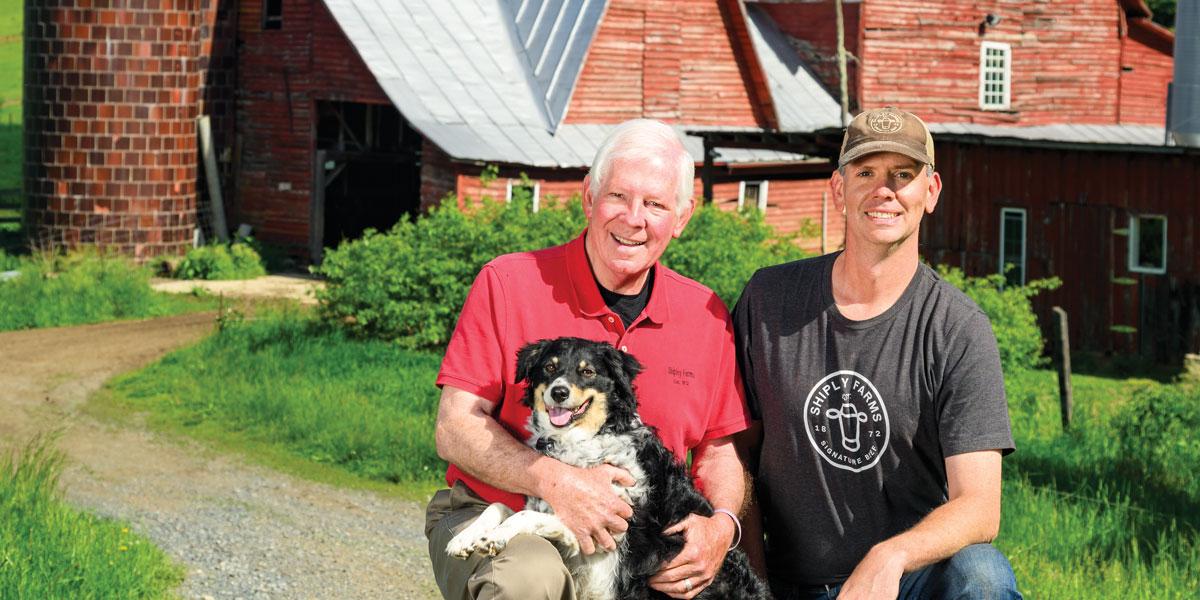
Shipley Farms represents something rare in American agriculture: a family that has kept its land, its knowledge, and its purpose intact across five generations. The farm contains physical artifacts of 150 years, the 1860 barn, the brick farmhouse, the springhouse, family photographs from the 1930s. The family itself is a living archive. The land is a preserved landscape in a region losing farmland at catastrophic rates. The cattle represent a genetic lineage stretching back to 1897.
Our practices, winter migration, dry-aging, Hereford/Angus crossbreeding, represent accumulated knowledge, not trends. We are ordinary people living in an extraordinary place. And we believe that if you have land, you should build or grow something. That belief has sustained this valley since 1872. We intend to keep it alive.
Read the Story Behind the Farm
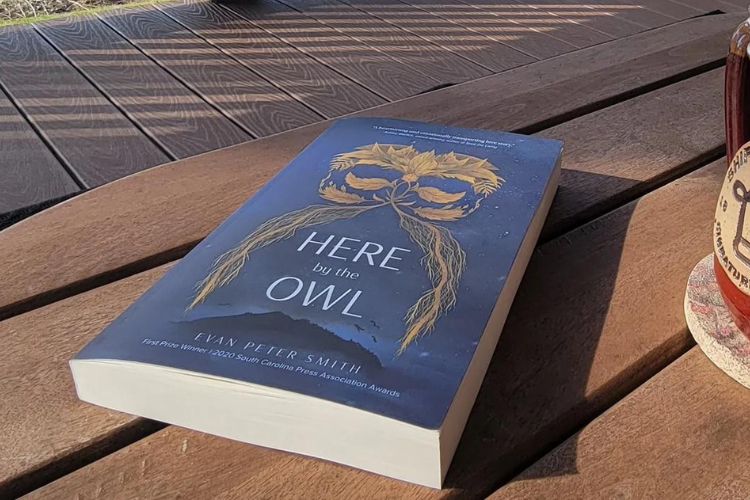
What began as R.G. Shipley’s effort to record a lifetime of stories became Here by the Owl, a historical account of R.G. and Agnes Shipley written by Evan Peter Smith, a gifted writer and storyteller with deep family ties to the Shipleys.
The book follows the love story of a Virginia storekeeper’s daughter and an Appalachian mountain farmer, while uncovering the drama of a secret World War II mission, agricultural innovation, and the trials that shaped one of the defining chapters in the Shipley family story.
A deeper look at the people, love, work, and wartime history behind the valley we still call home.
Closing, Our Promise
“Our Promise: To provide beef that taste better and is healthier for you because of where it comes from and how it is cared for.”
R.G. Shipley Sr.
This was his promise. We’re still keeping it.