A Guide to Beef Offal
Organ meats get lumped together and they should not be. They cook differently, taste nothing like each other, and some are much easier to start with than others.
Offal is a category of convenience. The cuts in it have almost nothing in common with one another, and treating them as one thing is why people try the hardest one first and never come back.
“And, so, yeah, I think we're seeing people paying attention to all of the different cuts and using all animal cooking with tallow is kind of a hot trend right now. So 10 years ago, I was trying to talk to anybody who would listen and, oh everybody wants to do it now.”
Gray Shipley
Our opinion on difficulty, easiest first.
The one rule that spans all of them
Every one of these is lean. None has the intramuscular fat that lets a ribeye forgive an extra two minutes. So every one of them is better slightly underdone than slightly over, and almost every bad experience anyone has had with offal is an overcooked one.
“And he would keep the weights of the cattle, his observations of the herd. If he noticed one that maybe wasn't eating as much or not drinking as much or separating, he would keep all of those notes and all of that data and years of notebooks that he always kept and he could go back and see.”
Gray Shipley
Where to actually start
Heart. It is the one that surprises people, because it is genuinely just lean beef and nothing about it tastes like what the word organ suggests. Full method in how to cook beef heart, and tongue is in its own guide.
“So yeah, hard is good. And hard work on the farm is something that you don't really need to get separated from. There's some real benefit from it in a lot of ways.”
Gray Shipley
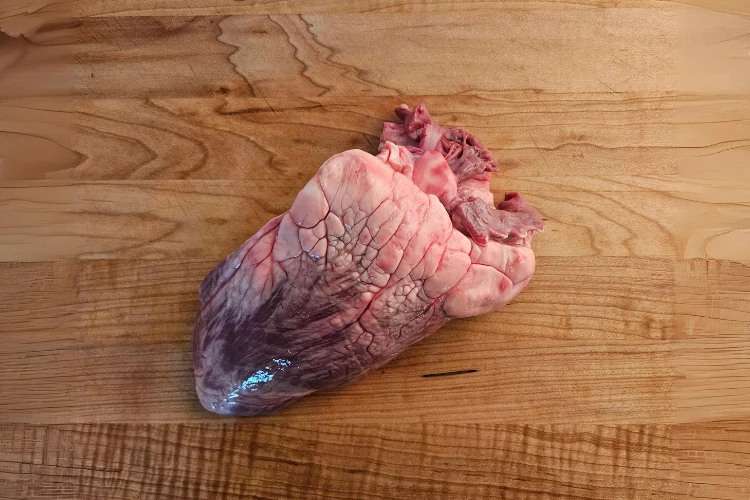
Beef heart. The least intimidating thing in this category by some distance.
View ProductWhich organ meats are worth cooking and how hard are they?
Heart and tongue are the easy ones, liver is the familiar one, and kidney is the one to try last.
- Cook to a Safe Minimum Internal Temperature, FoodSafety.gov
- Refrigeration & Food Safety, USDA FSIS
Food-safety temperatures and storage times on this page are cited to the agencies above rather than to us.
Written at Shipley Farms in Vilas, North Carolina: a family cattle farm raising and dry-aging beef in the Appalachian Mountains, now in its fifth generation. No shortcuts since 1872.
Every quote on this page is Gray Shipley talking, the man who runs this farm. We sat down with him, turned on a recorder, and kept his own words. Hesitations are trimmed so they read on the page. Nothing else is added or reworded, except where Gray revised his own words in review.
Nobody knows this beef better than we do. On food safety we leave it to USDA FSIS and FoodSafety.gov, and we have linked their pages above. Reviewed 3 October 2026.
Shipley Farms
Stories, recipes and news from Shipley Farms.