Ground Chuck vs Ground Round: What Is the Difference?
Ground beef labels are cut names, and cut names are fat content by another route.
Ground chuck, ground round, ground sirloin. These are cut names, and on a package of ground beef a cut name is mostly a proxy for fat.
Ground chuck
From the shoulder. The chuck carries a good deal of fat, so ground chuck is the fattier common grind and the traditional burger choice. It browns hard and stays moist.
Ground round
From the rear leg, which is lean hard-working muscle. Ground round is noticeably leaner. It is fine in a sauce where other fat is present and it makes a dry burger on its own.
“You don't want a lean burger. You don't want some silly 90-10. Get a good 80-20, 75-25 blend.”
Gray Shipley
Why it matters for burgers
Fat is what keeps a burger from drying out, and no technique rescues a grind that did not have enough to begin with. That is the first cause in why is my burger dry.
What to use when
- Burgers, meatballs, anything formed. The fattier grind.
- Chili, ragu, tacos. Either works; you can drain the fat if there is too much.
- A lean dish where fat comes from elsewhere. The leaner grind is genuinely useful here.
“So, making, I've sometimes done a ground beef and pork burger blend where you do like a two-thirds beef and a little bit of, and a third of a pork to make a burger that has a little interesting flavor. Or same thing with meatloaf, mixing beef and pork together. Most people don't think about doing that.”
Gray Shipley
“And I think people enjoy kind of getting to figure out what am I supposed to do with a sirloin tip? What am I supposed to do with a picanha or a tri-tip? I get to go learn and experiment in the kitchen some and figure out how to cook something.”
Gray Shipley
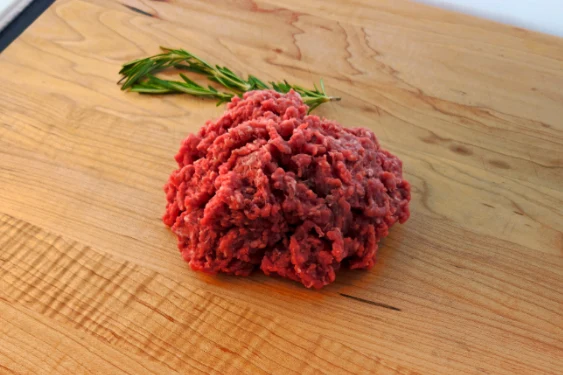
What is the difference between ground chuck and ground round?
Which part of the animal was ground, and therefore how much fat is in it.
- Cook to a Safe Minimum Internal Temperature, FoodSafety.gov
- The Color of Meat and Poultry, USDA FSIS
Food-safety temperatures and storage times on this page are cited to the agencies above rather than to us.
Written at Shipley Farms in Vilas, North Carolina: a family cattle farm raising and dry-aging beef in the Appalachian Mountains, now in its fifth generation. No shortcuts since 1872.
Every quote on this page is Gray Shipley talking, the man who runs this farm. We sat down with him, turned on a recorder, and kept his own words. Hesitations are trimmed so they read on the page. Nothing else is added or reworded, except where Gray revised his own words in review.
Nobody knows this beef better than we do. On food safety we leave it to USDA FSIS and FoodSafety.gov, and we have linked their pages above. Reviewed 3 October 2026.
Shipley Farms
Stories, recipes and news from Shipley Farms.