Plain Whipped Tallow, for Skin
This is the unseasoned version. Same fat, same technique, nothing folded in at the end. People use it on skin, and the method is worth getting right.
There are two whipped tallows and it is worth being clear which is which. Whipped with spices and salt, it is a bread dip. Whipped plain, with nothing folded in at all, it is what people put on their skin. This page is the plain one.
Said plainly up front: we sell rendered tallow as a food. This page describes a process people carry out with it. It makes no claim that tallow treats, heals or prevents anything, and we are not going to make one.
Six rungs. The third is the one people skip.
- 1. Start with properly rendered tallow
Use tallow that is clean and white at room temperature, with no cloudiness or sediment at the bottom of the jar.
You will know it worked when: Firm, uniformly white, and it smells of very little.
Most people get this wrong by: Starting with under-rendered fat that still carries meat solids. Those go rancid, and whipping does not fix it.
- 2. Melt it fully and gently
Melt over the lowest heat you have until it is completely clear with nothing solid left.
You will know it worked when: Entirely transparent, like water, with no cloudy streaks.
Most people get this wrong by: Overheating it. Hot fat whips badly afterwards and picks up a cooked smell that stays.
- 3. Cool it to the cloudy stage before you whip
Let it stand until it turns opaque and takes a thumbprint but is not hard. On a cool counter, roughly an hour.
You will know it worked when: Opaque, soft, holds a dent. Like cold butter rather than like oil or like a candle.
Most people get this wrong by: This is the one. Whipping while still liquid makes warm oil that sets hard. Whipping once fully hard makes crumbs.
- 4. Whip in stages, not continuously
Beat about two minutes, stop, scrape the bowl down, beat again. Three or four rounds.
You will know it worked when: It lightens in color and visibly grows in volume.
Most people get this wrong by: Running the mixer without stopping. Friction warms it back past the window and it collapses.
- 5. Add nothing
For the plain version, that is the entire ingredient list. One jar of tallow.
You will know it worked when: Pale, soft, holds a peak, smells faintly of almost nothing.
Most people get this wrong by: Folding in an oil because a recipe elsewhere said to. Liquid additions stop it holding air.
- 6. Jar it and leave it overnight
Spoon into a clean dry jar and let it settle at room temperature.
You will know it worked when: Soft peaks that still hold their shape the next day.
Most people get this wrong by: Refrigerating it. It goes hard and grainy and that texture does not come back.
Why the temperature window is the whole thing
Fat is a mix of molecules that solidify at different points. At the cloudy stage some has crystallized and some is still liquid, and that combination is what traps and holds air. Too warm and there is no structure to hold anything. Too cold and it has set into something you can only break rather than beat.
“We used to just kind of not try to outsmart God, let the animal do what it's supposed to do and stay out of the way.”
Gray Shipley
That is as close as this gets to a trick. The rest is patience and scraping the bowl.
If it goes wrong
- It collapsed back to liquid. Too warm. Let it set to cloudy and whip again. Tallow forgives restarting completely.
- It is grainy. It cooled too far or too fast. Melt fully and start over.
- It smells off. That is the render, not the whip. Start with cleaner tallow.
“Yeah, no shortcuts just means, it's a mindset, the mindset of looking for a shortcut. It doesn't mean that we don't look for improvement. It doesn't mean we don't look for ways to do things better.”
Gray Shipley
A sensible note
Patch test anything you put on skin, including this, and stop if it does not suit you. We are a cattle farm rather than a cosmetics company, and we would rather hand you an accurate method than an opinion about your skin.
“A certification, really what a certification is you're paying someone else to go tell you what is true. Tell you what is happening somewhere.”
Gray Shipley
If you want it made rather than making it, Twigs&Bark make a tallow balm we carry. If you came here for the food version, that is the bread dip.
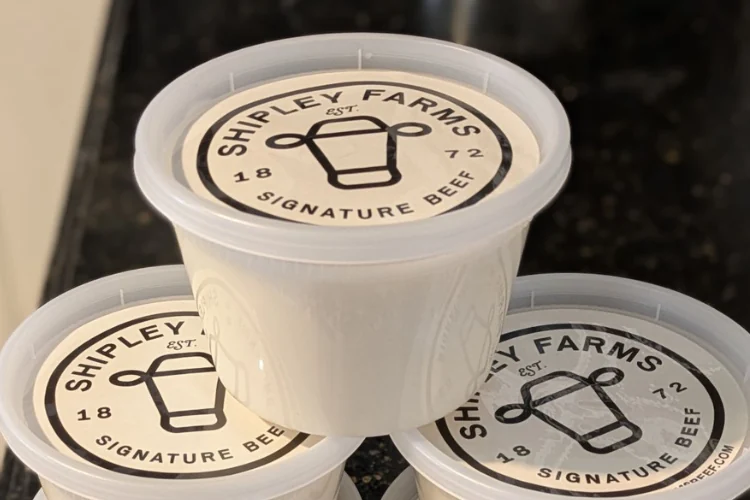
Rendered here, and sold as a food product. Clean, white and firm.
View Product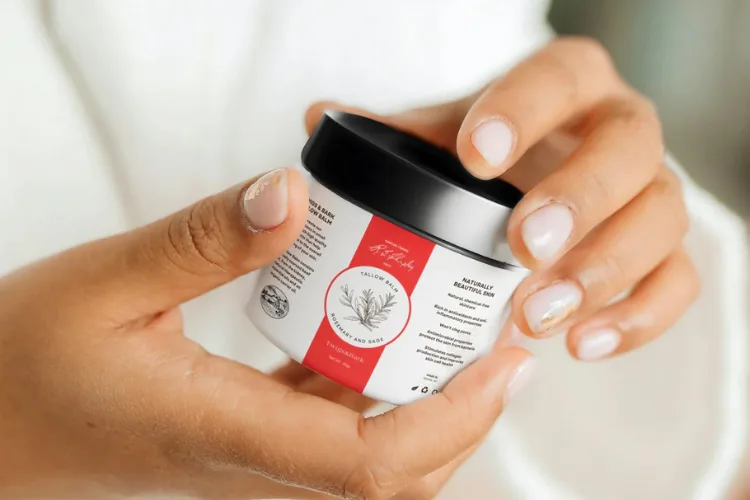
Shipley Tallow Balm by Twigs&Bark, if you would rather skip the mixer.
View ProductHow do I whip plain beef tallow for use on skin?
Melt it, cool it to the cloudy stage, and whip it in stages with nothing added.
- Freezing and Food Safety, USDA FSIS
Food-safety temperatures and storage times on this page are cited to the agencies above rather than to us.
Written at Shipley Farms in Vilas, North Carolina: a family cattle farm raising and dry-aging beef in the Appalachian Mountains, now in its fifth generation. No shortcuts since 1872.
Every quote on this page is Gray Shipley talking, the man who runs this farm. We sat down with him, turned on a recorder, and kept his own words. Hesitations are trimmed so they read on the page. Nothing else is added or reworded, except where Gray revised his own words in review.
Nobody knows this beef better than we do. On food safety we leave it to USDA FSIS, and we have linked their page above. Reviewed 3 October 2026.
Shipley Farms
Stories, recipes and news from Shipley Farms.