Beef for Restaurants and Chefs
Buying direct from a farm is not the same as buying from a distributor, and the difference is mostly about what each side can see coming.
Restaurants ask us for a price list. What actually determines whether this works is something else, and it is worth being straight about it.
We are not a distributor, and that cuts both ways
A distributor holds inventory so you do not have to think about it. A farm holds animals. When you order a case of ribeye from a distributor, somebody somewhere has already absorbed the problem of what happened to the rest of that animal. When you order it from us, we still have the rest of the animal.
“Because it's tough for smaller farmers to, you know, have something available, 200 pounds ready to go. And we don't know whether you're coming or not. Because if you're not coming, then we still have to find a home for it. And if you are, we have to have it ready.”
Gray Shipley
Which is why forecasting is the whole relationship
“Restaurants are just as hard a business as farming. They don't know who's coming to dinner tonight. It's hard for them to forecast how much do they need from week to week.”
Gray Shipley
That is Gray being fair about the other side of it. Nobody in this chain can see far ahead. The difference is that a kitchen can tell us roughly what it expects to need, and that single piece of information changes what we can do.
“A great wholesale partner is one that we can count on to keep our product on the menu and to tell our story. And one that gives us visibility to know what they need and what's coming. And especially one that, you know, works with us to use sometimes some of the cuts that, we may be sitting on at one particular time.”
Gray Shipley
On price
“So press is the pressure to control our cost and keep the price that we have to charge them as low as possible because we know how hard it is for them to.”
Gray Shipley
We would rather hold our own costs down than hold a margin up. That is not charity, it is the only version of this that lasts: a supplier who prices a restaurant out of business has lost a customer either way.
What a good partnership looks like
- You tell us what is coming, even roughly, rather than ordering only in the week you need it.
- You are willing to take cuts beyond the obvious ones, which is what makes whole-animal buying work for both of us.
- You tell the story on the menu. We are a family farm in Vilas and that is worth saying out loud.
- You accept that supply follows animals rather than a warehouse.
Our cut map is a useful starting point for the second one. Enquiries go through the wholesale page.
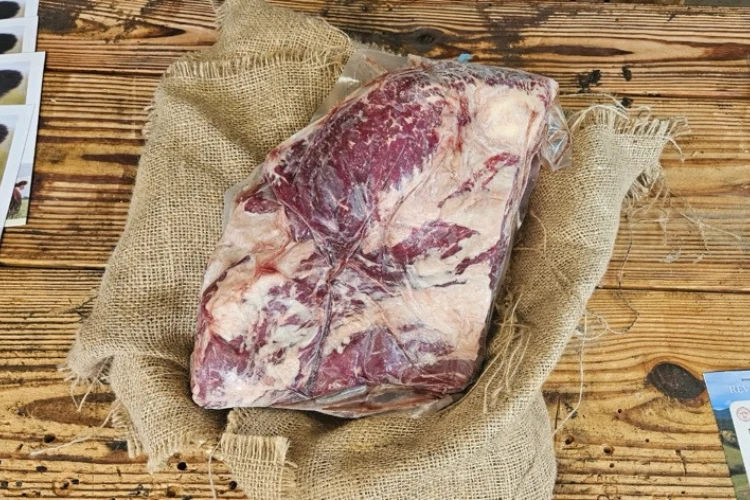
Whole dry-aged brisket, from a farm you can visit.
View Product- Grades and Standards: Beef, USDA AMS
- Freezing and Food Safety, USDA FSIS
Food-safety temperatures and storage times on this page are cited to the agencies above rather than to us.
Written at Shipley Farms in Vilas, North Carolina: a family cattle farm raising and dry-aging beef in the Appalachian Mountains, now in its fifth generation. No shortcuts since 1872.
Every quote on this page is Gray Shipley talking, the man who runs this farm. We sat down with him, turned on a recorder, and kept his own words. Hesitations are trimmed so they read on the page. Nothing else is added or reworded, except where Gray revised his own words in review.
Nobody knows this beef better than we do. On food safety we leave it to USDA FSIS, and we have linked their pages above. Reviewed 3 October 2026.
Shipley Farms
Stories, recipes and news from Shipley Farms.