Dry-Aged Smash Burgers
Smash burgers are not a seasoned-patty recipe. They are a surface-contact trick, and the window for it is about ten seconds wide.
Everything about a smash burger happens in the first ten seconds. After that you are just waiting.
| 1 lb Dry-Aged Signature Ground Beef | 1 4 loose balls, do not compact | 2 press hard, first 10 sec | 3 flip once, cheese on |
| 1 tsp coarse salt | |||
| 4 slices American cheese | |||
| 4 soft burger buns | 4 butter and toast | ||
| 2 Tbsp butter, softened | |||
| 5Salt after the press, not before. Salted beef left standing goes springy and will not spread. | |||
| 6Never press a second time. The first press makes the crust; the second squeezes it out. | |||
Numbers show the order to work in. Each cell spans exactly the ingredients it uses.
Why only the first ten seconds
While the beef is still raw and cold it spreads under pressure and makes maximum contact with the hot surface. That contact is the lacy brown edge. A few seconds later the surface has set, and pressing after that just forces the juice out.
“Or, you know, the other side of it is it's the lower quality meat is made cheaper because you're giving up something. You're giving up the authenticity and the quality and the process.”
Gray Shipley
Do not compact the balls
Roll them just enough to hold together. A tightly packed ball resists the press and cooks dense. A loose one flattens into the thin, ragged-edged patty you are actually after.
“There's a saying that farming isn't rocket science. It's way more complicated than that.”
Gray Shipley
Doneness for ground beef is a separate question with its own guidance, covered in ground beef temperature.
“Yeah, no shortcuts just means, you know, it's a mindset, the mindset of looking for a shortcut. You know, it doesn't mean that we don't look for improvement. It doesn't mean we don't look for ways to do things better.”
Gray Shipley
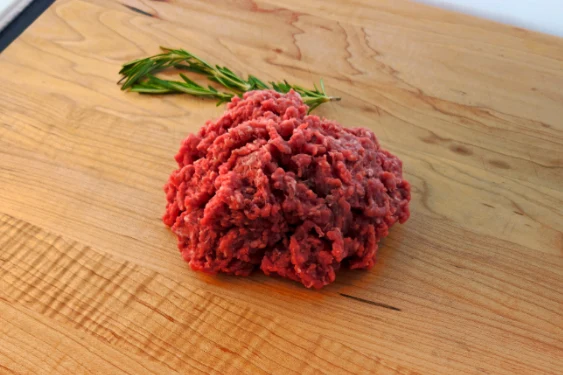
Coarse and dry-aged, so it browns rather than steams.
View Product- Cook to a Safe Minimum Internal Temperature, FoodSafety.gov
- The Color of Meat and Poultry, USDA FSIS
Food-safety temperatures and storage times on this page are cited to the agencies above rather than to us.
Written at Shipley Farms in Vilas, North Carolina: a family cattle farm raising and dry-aging beef in the Appalachian Mountains, now in its fifth generation. No shortcuts since 1872.
Every quote on this page is Gray Shipley talking, the man who runs this farm. We sat down with him, turned on a recorder, and kept his own words. Hesitations are trimmed so they read on the page. Nothing else is added or reworded, except where Gray revised his own words in review.
Nobody knows this beef better than we do. On food safety we leave it to USDA FSIS and FoodSafety.gov, and we have linked their pages above. Reviewed 3 October 2026.
Shipley Farms
Stories, recipes and news from Shipley Farms.