Ground Beef Temperature: 160F, and Telling a Burger Is Done
One hundred and sixty degrees Fahrenheit. That is the USDA figure for ground beef and it is not the same as the figure for a steak, for a reason worth understanding.
A steak and a burger are not the same food safety problem, and the difference explains the whole page.
Why ground beef is different from steak
On a whole cut, anything on the surface gets dealt with by the heat of the sear, and the inside was never exposed. Grinding takes that surface and distributes it all the way through. So a burger has to be cooked through in a way a steak does not.
The USDA figure for ground beef is 160 degrees Fahrenheit. For whole cuts of beef it is 145 with a three minute rest. Those are different numbers because they are different situations, not because anybody is being inconsistent.
| Beef | Safe minimum internal temperature |
|---|---|
| Ground beef, including burgers | 160 degrees Fahrenheit |
| Whole cuts, such as steaks and roasts | 145 degrees Fahrenheit, then rest three minutes |
Color tells you nothing
A burger can be brown in the middle and under temperature, or pink and fully cooked. Fat content, pH and how the beef was packed all change the color at a given temperature. This is the single most common way people get it wrong.
“So, I think that's the most common mistake is you're not sure, so you'll cook it a little longer. And you just don't need to.”
Gray Shipley
Gray's answer about steak applies even more here. The thermometer exists to replace doubt with a number.
How to check a burger
- Probe through the side, not down through the top. You want the tip in the middle, not out the other side.
- Check the thickest one in the batch and assume the rest are close.
- Check once. Repeated probing lets juice out of every hole you make.
Carryover, and why you pull slightly early
A burger keeps cooking after it leaves the heat, the same way a steak does, though less dramatically because it is thinner. Pulling at about 155 and letting it sit a couple of minutes lands you at 160 without overshooting into something dry.
Cooking to 160 without a dry burger
“You don't want a lean burger. You don't want some silly 90-10. You know, get a good 80-20, 75-25 blend.”
Gray Shipley
This is the practical argument for 80/20 again. At 160 degrees, a lean patty is dry and a fattier one is not. The ratio is how you get a burger that is both fully cooked and worth eating.
“I like a thicker burger. You know, when you get that sear and the crunch and the smash burger, that's pretty good. But I like a good, thick burger.”
Gray Shipley
Thickness helps too. A thicker patty takes longer to come up, which gives you a margin that a thin one never offers.
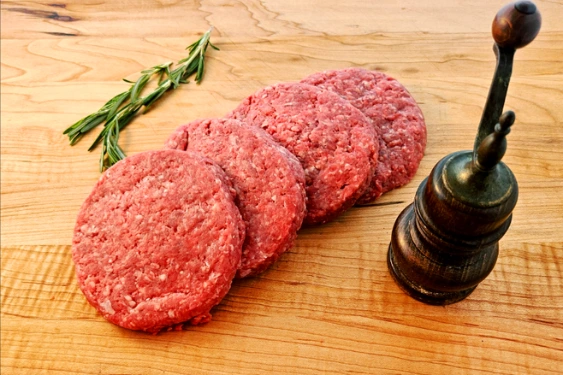
Dry-aged patties at 5.3 ounces, portioned already. Count heads, count patties, done.
View Product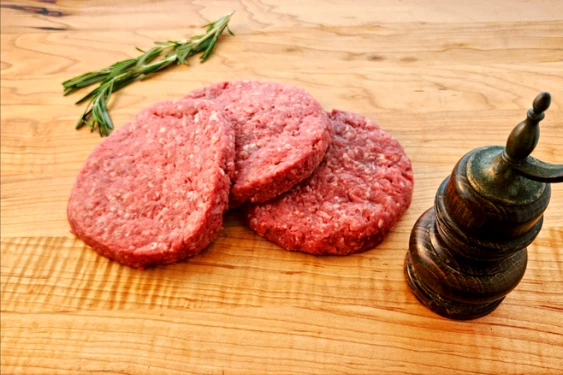
Steakburger patties, ground from the trim off whole steaks rather than from anything left over.
View Product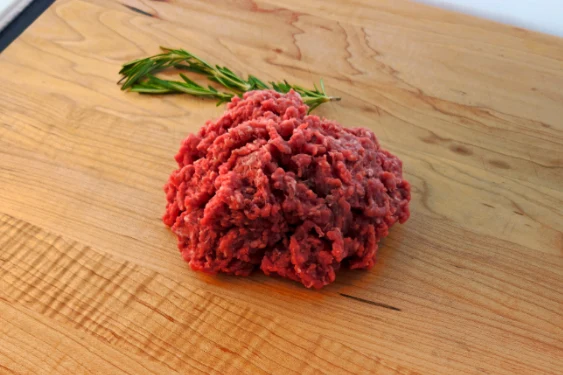
One pound packs of dry-aged ground beef. Four quarter-pounders or three third-pounders to the pack.
View ProductThermometer technique is covered in how to use a meat thermometer, and the grill method is in how to grill burgers.
- Cook to a Safe Minimum Internal Temperature, FoodSafety.gov
- The Color of Meat and Poultry, USDA FSIS
- Food Thermometers, USDA FSIS
Food-safety temperatures and storage times on this page are cited to the agencies above rather than to us.
Written at Shipley Farms in Vilas, North Carolina: a family cattle farm raising and dry-aging beef in the Appalachian Mountains, now in its fifth generation. No shortcuts since 1872.
Every quote on this page is Gray Shipley talking, the man who runs this farm. We sat down with him, turned on a recorder, and kept his own words. Hesitations are trimmed so they read on the page. Nothing else is added or reworded, except where Gray revised his own words in review.
Nobody knows this beef better than we do. On food safety we leave it to USDA FSIS and FoodSafety.gov, and we have linked their pages above. Reviewed 3 October 2026.
Quick answers
What temperature should ground beef reach?
160 degrees Fahrenheit, per USDA guidance. That is different from the 145-degree figure (plus a three-minute rest) used for whole cuts like steaks, because grinding distributes any surface bacteria through the meat.
How do you check if a burger is done without cutting it?
Probe a thermometer through the side into the middle of the thickest patty, check once, and pull at about 155 degrees since it keeps cooking a few more degrees as it rests.
Shipley Farms
Stories, recipes and news from Shipley Farms.