How to Use a Meat Thermometer for Steak
A thermometer is the cheapest way to stop ruining steaks. Not because temperature is complicated, but because it replaces guessing with a number. Gray Shipley is clear about what guessing costs you.
Most people who overcook steak are not bad cooks. They are uncertain cooks, and uncertainty always errs in the same direction.
“So, I think that's the most common mistake is you're not sure, so you'll cook it a little longer. And you just don't need to.”
Gray Shipley
USDA FSIS puts it bluntly: appearance and color are not reliable indicators of safety or doneness, and a food thermometer is the only way to know. A thermometer does not make you a better cook. It removes the reason you were about to make the one mistake that matters.
Where to put the probe
Through the side, not down through the top. You want the tip in the middle of the thickest part, and the only way to control that is to come in horizontally where you can see how far you have gone.
- Avoid bone. Bone conducts heat differently and reads warmer.
- Avoid pockets of fat. Fat reads warmer than the muscle around it.
- Stop at the center. Pushing through to the far side gives you the temperature of the pan.
- On a thin steak, go in at an angle so the probe has some meat to sit in.
Read once, not five times
Every puncture is a small hole for juice to leave through. One well-placed reading near the end is worth more than four anxious ones.
If you are reverse-searing, check during the low phase when the steak is nowhere near done and a hole costs you nothing.
Pull early, because it keeps climbing
A thick steak commonly rises about five degrees after it comes off the heat. So aim about five degrees below your target and let the rest finish the job.
“Not as long as I should. Really should go eight to ten minutes. I sometimes barely give it five.”
Gray Shipley
Which thermometer
- Instant-read digital. The useful one. Three to five seconds to a stable number.
- Leave-in probe with a cable. Good for roasts and reverse-searing, less good for a two-minute sear.
- Dial thermometers. Slow and often out of calibration. Check them in boiling water.
Which cuts make it worth the habit
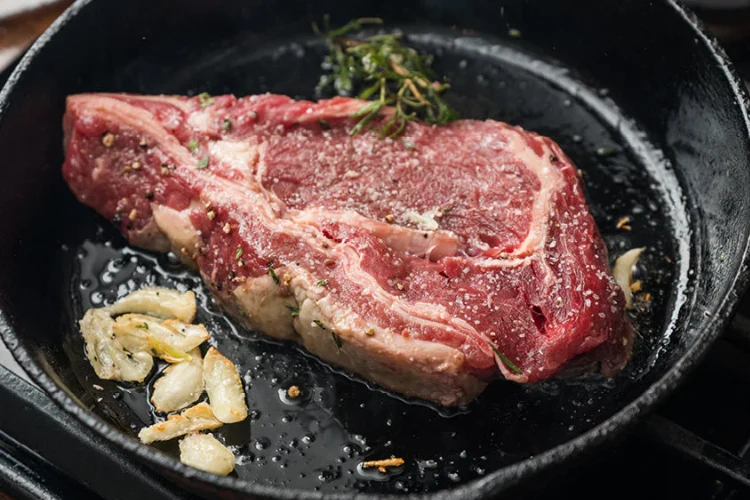
Thick cuts have a real temperature gradient, so a reading beats a guess by a wide margin.
View Product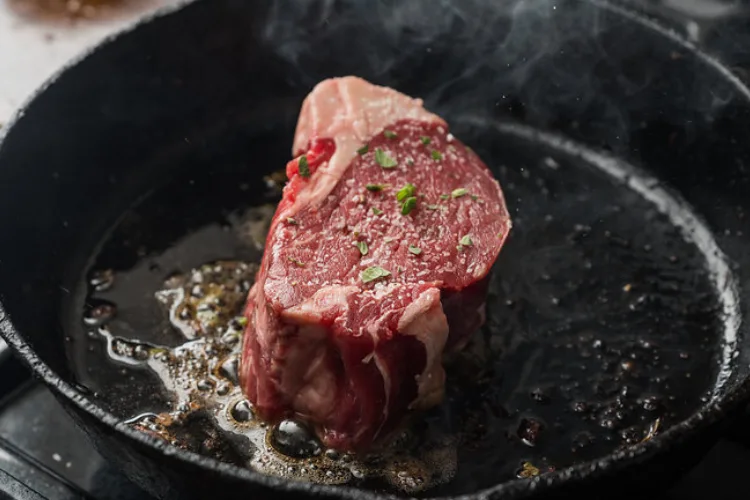
Lean and expensive. This is the cut you least want to overshoot.
View Product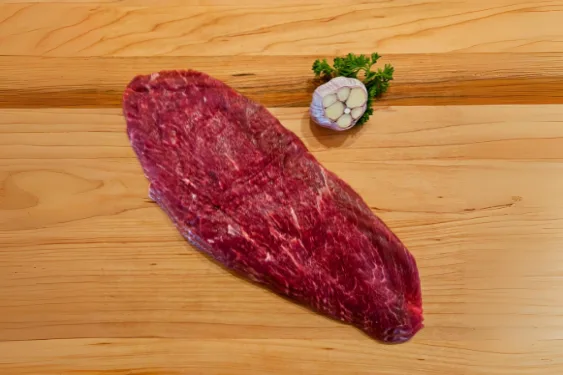
Useful for learning what a given temperature feels like under your thumb.
View ProductThe temperature chart has the ranges, resting explains the carryover, and reverse-searing is the method where a probe helps most.
A thermometer is a tool for getting out of the way, which is the same instinct Gray applies to cooking generally.
“When you have a chef that really understands the meat, that can really be a game changer with what a chef can create with good ingredients. Where he doesn't have to, he or she doesn't have to try to do too much, but just let the meat speak for itself.”
Gray Shipley
One reading, through the side, five degrees early. That is the whole skill.
- Food Thermometers, USDA FSIS
- Doneness Versus Safety, USDA FSIS
- Cook to a Safe Minimum Internal Temperature, FoodSafety.gov
Food-safety temperatures and storage times on this page are cited to the agencies above rather than to us.
Written at Shipley Farms in Vilas, North Carolina: a family cattle farm raising and dry-aging beef in the Appalachian Mountains, now in its fifth generation. No shortcuts since 1872.
Every quote on this page is Gray Shipley talking, the man who runs this farm. We sat down with him, turned on a recorder, and kept his own words. Hesitations are trimmed so they read on the page. Nothing else is added or reworded, except where Gray revised his own words in review.
Nobody knows this beef better than we do. On food safety we leave it to USDA FSIS and FoodSafety.gov, and we have linked their pages above. Reviewed 3 October 2026.
Shipley Farms
Stories, recipes and news from Shipley Farms.