Steak Temperature Chart: Rare to Well-Done
Medium-rare is 130 to 135 degrees Fahrenheit. The harder part is that a steak keeps cooking after you pull it, so the temperature you aim for is not the temperature you take it off at.
You are cooking for people you like, and you want to put a steak in front of them that is pink in the middle and not gray. The thermometer is the easy part. Knowing when to take the steak off is the part that gets people.
Here are the ranges cooks actually use.
| Doneness | Internal temperature | Center |
|---|---|---|
| Rare | 120 to 125 degrees Fahrenheit | Cool red |
| Medium-rare | 130 to 135 degrees Fahrenheit | Warm red |
| Medium | 135 to 145 degrees Fahrenheit | Warm pink |
| Medium-well | 145 to 155 degrees Fahrenheit | Faint pink |
| Well-done | 155 degrees Fahrenheit and above | No pink |
Medium-rare is where most of our cuts are at their best. For food safety, the USDA recommends cooking whole cuts of beef to 145 degrees Fahrenheit and resting for three minutes. Many cooks prefer medium-rare and accept that it sits below that guidance. That is a judgement for your own kitchen, and it is worth making deliberately rather than by accident.
Pull it early, because it keeps cooking
A steak does not stop at the moment it leaves the pan. Heat stored in the outside keeps moving inward while it rests. On a thick steak that carryover is commonly five degrees, sometimes more.
So if you want 133, take it off around 128. If you wait until the thermometer reads your target, you will eat your steak five degrees past it.
The mistake that actually ruins steaks
Ask Gray Shipley what people most often get wrong and he does not say temperature. He says doubt.
“So, I think that's the most common mistake is you're not sure, so you'll cook it a little longer. And you just don't need to.”
Gray Shipley
A thermometer is useful mostly because it replaces that doubt with a number. Check once, trust it, take the steak off.
Then let it rest
“Not as long as I should. Really should go eight to ten minutes. I sometimes barely give it five.”
Gray Shipley
Eight to ten minutes is the honest answer, and Gray is candid that he often gives it five. Five is better than none. Resting lets the juices settle so they stay in the steak instead of running onto the board.
Season simply and let the beef do the work
“You know, a lot of steaks can do fine with just a little salt and pepper. But a good steak doesn't need too much seasoning.”
Gray Shipley
Which steak gives you the most room for error
A thicker steak is more forgiving, because the middle takes longer to catch up with the outside. Thin steaks go from rare to medium in under a minute.
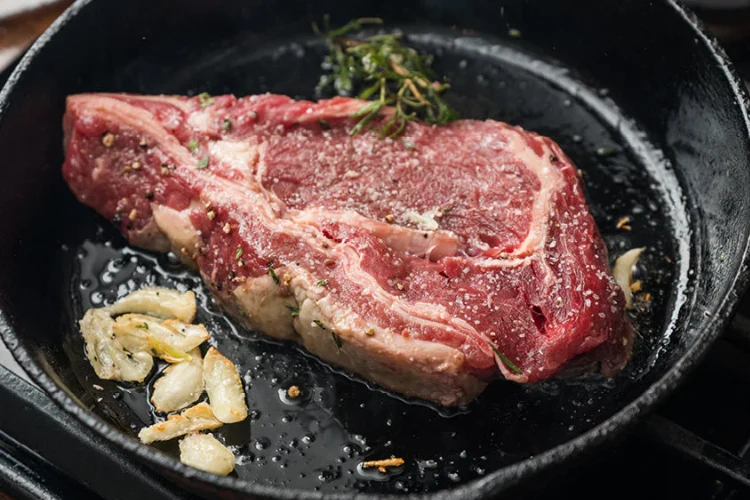
Thick enough to give you room for error, and marbled enough that a minute either way will not ruin it.
View Product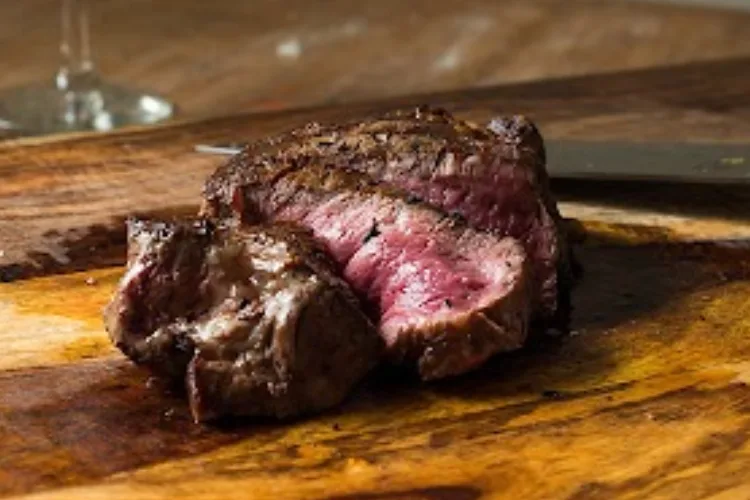
A strip takes temperature beautifully and has a firm fat cap that tells you when the pan is hot enough.
View Product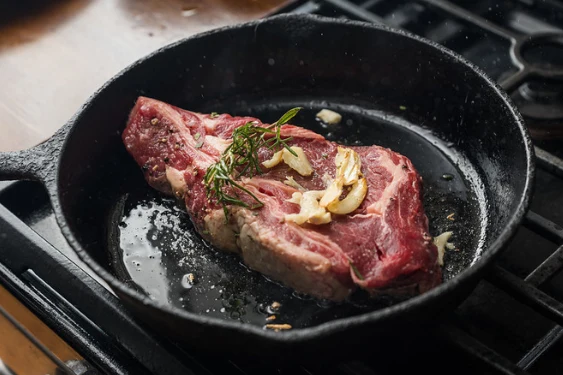
The same cut without the dry aging, for a weeknight where you still want a real steak.
View ProductOur steaks arrive frozen, so thaw fully in the refrigerator first, then dry the surface. A wet steak will not brown no matter what the thermometer says, and that is worth understanding before you cook. If you want a worked example on our flagship cut, there is a full Huston ribeye recipe here, and if you are wondering why we ship frozen at all, we explain that too.
One thermometer, one check, and the discipline to take it off early. That is the whole chart.
- Cook to a Safe Minimum Internal Temperature, FoodSafety.gov
- Doneness Versus Safety, USDA FSIS
- The Color of Meat and Poultry, USDA FSIS
Food-safety temperatures and storage times on this page are cited to the agencies above rather than to us.
Written at Shipley Farms in Vilas, North Carolina: a family cattle farm raising and dry-aging beef in the Appalachian Mountains, now in its fifth generation. No shortcuts since 1872.
Every quote on this page is Gray Shipley talking, the man who runs this farm. We sat down with him, turned on a recorder, and kept his own words. Hesitations are trimmed so they read on the page. Nothing else is added or reworded, except where Gray revised his own words in review.
Nobody knows this beef better than we do. On food safety we leave it to USDA FSIS and FoodSafety.gov, and we have linked their pages above. Reviewed 3 October 2026.
Quick answers
What temperature is medium-rare steak?
130 to 135 degrees Fahrenheit, with a warm red center. Pull it a few degrees early, since the steak keeps cooking while it rests.
What temperature is medium steak?
135 to 145 degrees Fahrenheit, with a warm pink center.
What temperature is medium-well steak?
145 to 155 degrees Fahrenheit, with a faint pink center.
What temperature does the USDA recommend for steak?
145 degrees Fahrenheit with a three-minute rest, for whole cuts of beef. Many cooks prefer medium-rare and knowingly cook below that guidance.
Shipley Farms
Stories, recipes and news from Shipley Farms.