How to Get a Great Crust on Steak
A great crust comes from a dry surface. That is the whole answer, and it is the one piece of steak advice Gray Shipley gives when he only gets to give one.
You bought a good steak to feed people you care about. Then it came off the heat gray and flat, and nobody said anything, and you knew.
A great crust comes from a dry surface. That is the whole answer. It is also the one piece of steak advice Gray Shipley gives when he only gets to give one.
“Get the moisture off the surface.”
Gray Shipley
The pan, the fat and the timing all matter. They matter less than whether the outside of your steak is dry when it meets the heat.
Why a wet steak cannot brown
Gray explains the reason better than most cookbooks do.
“If you've ever had a steak or a burger that kind of has a bland gray color to it, what's happened is you've got water on the surface. And that water, you know, boils at 212 degrees. It won't let the meat, it won't let that searing, maillard reaction that you need at 350, 400, it won't let it happen. And you effectively end up boiling or steaming the meat instead of grilling and searing it.”
Gray Shipley
Water boils at 212 degrees Fahrenheit. While there is liquid water on your steak, the surface cannot climb much past that. Browning needs a much hotter surface, around 350 degrees and up.
So the water has to leave before any browning can start. All the while, the inside of the steak keeps cooking. By the time the outside is dry enough to brown, the middle is further along than you wanted.
A wet steak does not sear slowly. It steams first, then sears. That is the problem. Worth noting alongside this: USDA FSIS cautions that the color of meat is not a reliable guide to doneness, so judge the crust by eye and the inside by thermometer.
How to dry the surface
- Thaw it all the way through. A steak that is still part frozen keeps sweating as it finishes, which puts water back on the surface at the worst moment. Thaw in the refrigerator, not on the counter. We ship frozen on purpose, and here is why that is a good thing.
- Pat both faces and the edges dry. Paper towel, pressed down, not wiped across.
- Leave it uncovered in the refrigerator. Thirty minutes on a rack does a lot. A few hours does more. Cold dry refrigerator air pulls surface moisture off meat very well.
- Salt early, or salt right at the pan. Salt draws moisture out, so there is an awkward middle window where the surface is wetter than when you started. Salt at least forty minutes ahead and let that moisture come out and dry off, or salt as the steak goes in. Salting five minutes before is the worst of the three.
- Use a dry fat. A wet pan or a watery oil undoes the work.
Then do not undo it
- Get the pan hot before the steak goes in. A steak lowered into a warm pan releases moisture into it and sits in the puddle.
- Do not crowd the pan. Two steaks in a pan sized for one will steam each other. Cook in batches instead.
- Leave it alone. Crust forms where meat stays against hot metal. Turning it every twenty seconds never lets the surface get hot enough.
- Dry it again if it has been waiting. A seasoned steak that sat while you got something else ready needs one more pat.
What a good crust looks like
Deep brown, not gray and not black. Continuous across the face of the steak rather than patchy. Dry and faintly crisp to the touch. It should release from the pan on its own when it is ready to turn.
One more thing worth knowing, because it is the most common way a good steak gets wasted. It is not technique. It is nerves.
“So, I think that's the most common mistake is you're not sure, so you'll cook it a little longer. And you just don't need to.”
Gray Shipley
Trust the crust and take it off. A steak you pulled a minute early and let rest will feed people better than one you held on for reassurance.
Which steak to practice on
Any steak will take a crust if you dry it. Some make it easier, and which one you reach for depends on who is at the table.
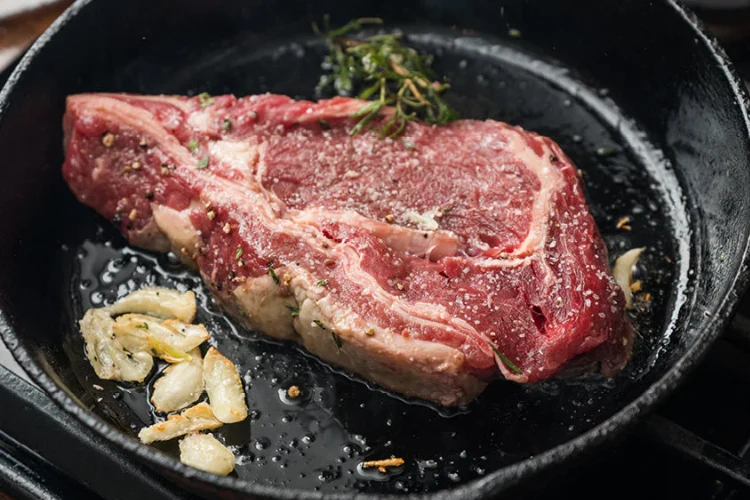
Dry aging pulls surface moisture out before the steak ever reaches your kitchen, so it starts closer to where you want it. There is enough fat here to reward a hard sear.
View Product“Let it dry before you put it on the skillet or put it on the grill so that you get the sear on the outside. You keep that moisture and juiciness on the inside.”
Gray Shipley
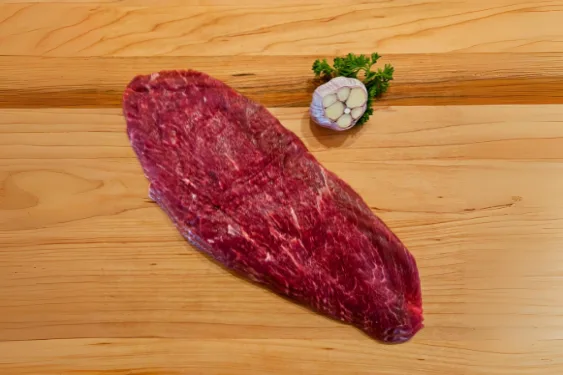
Gray's pick for anyone who does not cook steak often. The reason is forgiveness rather than flavor.
View Product“You know, you can grill it, you can pan fry it, and stays tender even if you mess up and overcook it a little bit. All it needs is a little salt and pepper. That's a really easy way to start.”
Gray Shipley
Same muscle as the ribeye, lower price, so you can put steak in front of more people.
Photograph coming soon for this cut.
View Product“Chuck-eye come from the same muscle of the animal as the ribeye does. It's just up in that shoulder area and that rib end of the chuck is just every bit as good, almost as tender, and just nobody knows about it.”
Gray Shipley
All three arrive frozen. Thaw them fully in the refrigerator, dry the surface, get the pan hot. If you want to watch the method on a thinner cut first, our pan-seared hanger steak follows the same order of operations, and there is a full recipe for the Huston ribeye here.
None of this needs equipment you do not own. It needs one unglamorous step, done ten minutes earlier than feels necessary. Do that, and the steak you put on the table is the one you paid for.
- The Color of Meat and Poultry, USDA FSIS
- Cook to a Safe Minimum Internal Temperature, FoodSafety.gov
Food-safety temperatures and storage times on this page are cited to the agencies above rather than to us.
Written at Shipley Farms in Vilas, North Carolina: a family cattle farm raising and dry-aging beef in the Appalachian Mountains, now in its fifth generation. No shortcuts since 1872.
Every quote on this page is Gray Shipley talking, the man who runs this farm. We sat down with him, turned on a recorder, and kept his own words. Hesitations are trimmed so they read on the page. Nothing else is added or reworded, except where Gray revised his own words in review.
Nobody knows this beef better than we do. On food safety we leave it to USDA FSIS and FoodSafety.gov, and we have linked their pages above. Reviewed 3 October 2026.
Shipley Farms
Stories, recipes and news from Shipley Farms.