How to Cook Steak in the Oven, Including Under the Broiler
An oven cannot give you a crust. It is too gentle and too even, which is exactly what makes it good at the other half of the job. Use it for what it is good at and do the browning somewhere else.
Dry heat at 400 degrees will cook a steak through perfectly well and leave it looking boiled. Browning needs direct contact with something much hotter than that.
The method that works: sear, then oven
- Heat an oven-safe skillet until it is genuinely hot, and heat the oven to 400.
- Dry the steak properly. Salt it. Oil the pan, not the steak.
- Sear hard, two to three minutes a side, until there is a real crust.
- Transfer the whole pan to the oven.
- Pull at about five degrees under your target and rest it.
“So, I think that's the most common mistake is you're not sure, so you'll cook it a little longer. And you just don't need to.”
Gray Shipley
A thermometer matters more here than on the stove, because an oven gives you no feedback. You cannot hear it or smell it changing.
“I think the easiest thing to do is to overcook it. And we've conditioned people to be fearful of foodborne illness, but clean, well-prepared meat that's raised responsibly, processed, handled responsibly, you know, that's not as much of a concern.”
Gray Shipley
An oven makes that easier to do, because nothing about it signals urgency. It is quiet, it is even, and it will happily take a steak ten degrees past where you wanted it while you set the table.
When to use the broiler instead
A broiler is the one part of an oven that does give you a crust, because it is radiant heat from above at close range. It suits thin steaks where searing and cooking through have to happen in the same ninety seconds.
- Rack high, two or three inches from the element.
- Preheat the broiler and the pan for a full five minutes.
- Do not leave the room. The window between browned and burnt is under a minute.
- One flip, and watch the second side more closely than the first.
The oven-only version, and when it is right
For a very thick steak, reverse searing inverts the order: low oven first, hard sear at the end. That is its own method and it is the better choice above about two inches.
Rest it the same as always
“Not as long as I should. Really should go eight to ten minutes. I sometimes barely give it five.”
Gray Shipley
An oven-finished steak holds more heat right through than a pan-finished one, so if anything it needs the rest more rather than less.
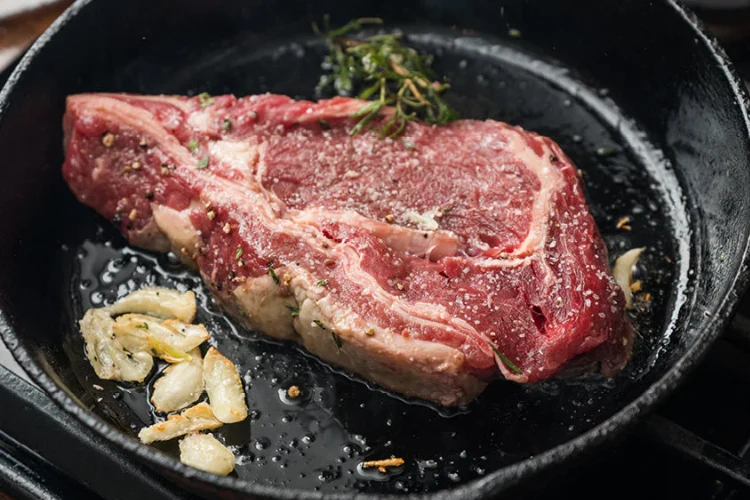
Our signature dry-aged ribeye. Heavily marbled, thick, and forgiving of a minute either way.
View Product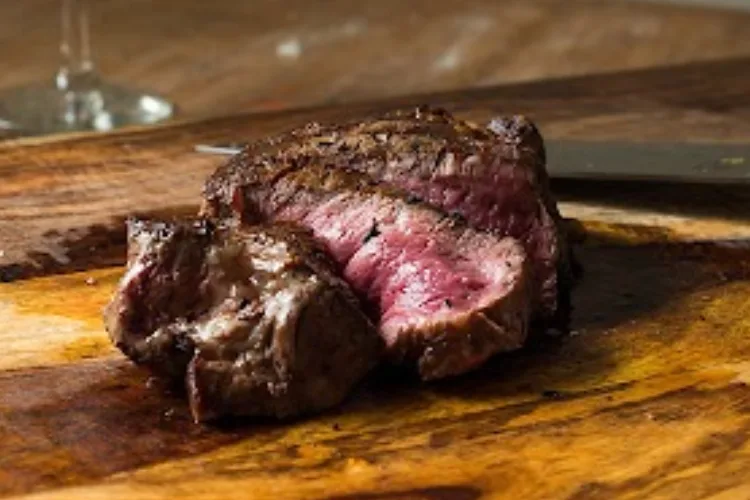
A dry-aged New York strip with a firm fat cap along one edge that tells you when the pan is ready.
View Product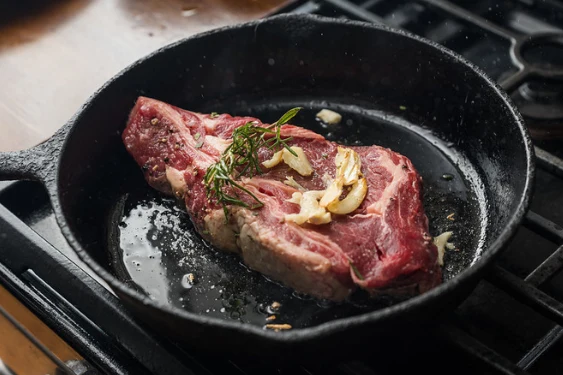
The same cut without the dry aging, for a weeknight where you still want a real steak.
View ProductThe stove-top method is in how to pan-sear steak, the thick-cut method in reverse searing, and the ranges in the temperature chart.
- Cook to a Safe Minimum Internal Temperature, FoodSafety.gov
Food-safety temperatures and storage times on this page are cited to the agencies above rather than to us.
Written at Shipley Farms in Vilas, North Carolina: a family cattle farm raising and dry-aging beef in the Appalachian Mountains, now in its fifth generation. No shortcuts since 1872.
Every quote on this page is Gray Shipley talking, the man who runs this farm. We sat down with him, turned on a recorder, and kept his own words. Hesitations are trimmed so they read on the page. Nothing else is added or reworded, except where Gray revised his own words in review.
Nobody knows this beef better than we do. On food safety we leave it to FoodSafety.gov, and we have linked their page above. Reviewed 3 October 2026.
Shipley Farms
Stories, recipes and news from Shipley Farms.