Best Steak Cuts for Pan-Searing
A pan is the most controllable heat most people have and the most limited. It is small, it is flat, and it loses temperature the moment something cold lands on it.
Three things decide whether a cut suits a pan: how thick it is, how flat it sits, and whether it fits without crowding.
What a pan is good at
Unbroken contact. A grill touches a steak in stripes; a pan touches all of it. That is why the best crust most people ever achieve happens in a skillet rather than outdoors.
“And then, you know, let the flavor do the work and don't try to do too much.”
Gray Shipley
The cuts that suit it best
- Strip. The best pan steak there is. Flat, even, and the fat cap renders against the surface.
- Flat iron. Uniform thickness end to end, which almost nothing else manages.
- Filet. Tall and small. Sear the sides as well as the faces and it works beautifully.
- Ribeye, if it fits. Wonderful, but a large one crowds a domestic pan.
The ones to keep out of a skillet
- Skirt and flank. Long, thin and they will not fit. These are grill or griddle cuts.
- Anything bone-in and large. The bone holds the meat off the surface, which is the one thing you were trying to avoid.
- Very thin steaks. They are through before a crust forms.
Thickness is the real variable
“I like a thicker burger. You know, when you get that sear and the crunch and the smash burger, that's pretty good. But I like a good, thick burger.”
Gray Shipley
An inch and a half is the sweet spot. At that thickness you can take the outside to a hard crust while the middle is still coming up, which is the entire objective. Under an inch, the two happen at once and you choose between them.
One pan, two steaks, no more
Crowding is the most common failure. Two steaks in a twelve inch skillet, with space between them, or the pan temperature drops and they steam. Cook in batches and rest them together.
“But if you're not looking for that top-end stuff, the flat iron steak is the second most tender. It's more tender than a ribeye.”
Gray Shipley
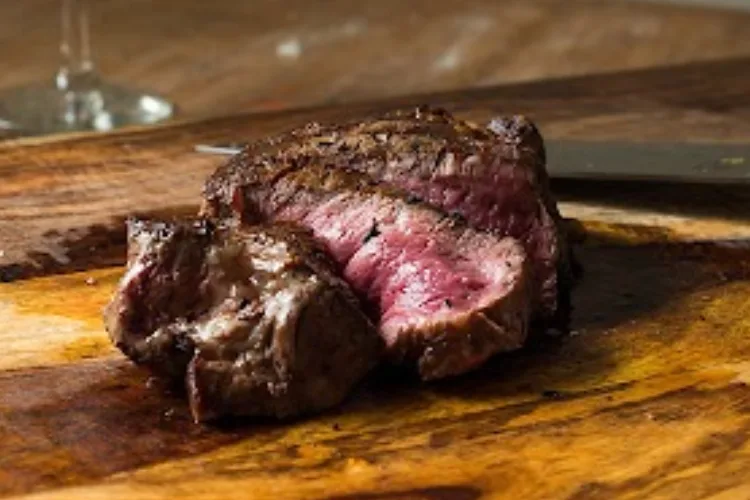
A dry-aged New York strip with a firm fat cap along one edge that tells you when the pan is ready.
View Product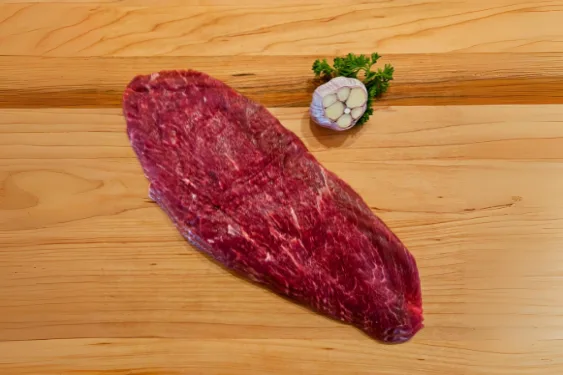
Dry-aged flat iron. Gray rates it above a ribeye for tenderness, and it costs considerably less.
View Product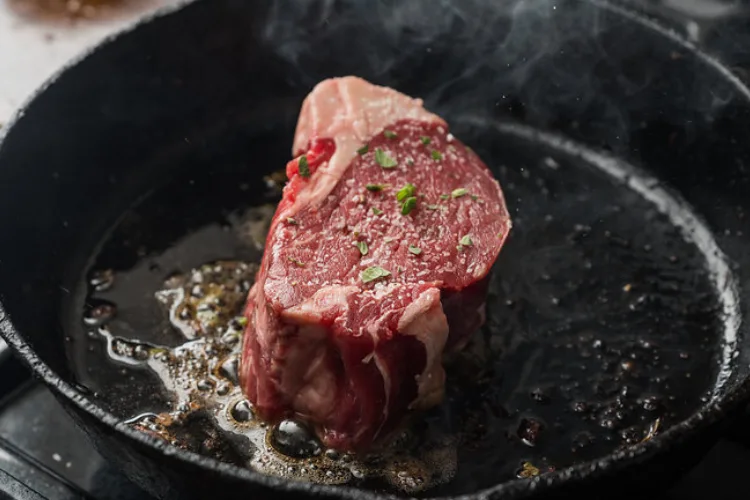
Dry-aged filet mignon. Very tender, very lean, and the one that needs the most help from fat and heat.
View ProductThe method itself is in how to pan-sear steak, the crust physics in how to get a great crust, and the cut comparison in ribeye vs strip vs filet.
- Cook to a Safe Minimum Internal Temperature, FoodSafety.gov
Food-safety temperatures and storage times on this page are cited to the agencies above rather than to us.
Written at Shipley Farms in Vilas, North Carolina: a family cattle farm raising and dry-aging beef in the Appalachian Mountains, now in its fifth generation. No shortcuts since 1872.
Every quote on this page is Gray Shipley talking, the man who runs this farm. We sat down with him, turned on a recorder, and kept his own words. Hesitations are trimmed so they read on the page. Nothing else is added or reworded, except where Gray revised his own words in review.
Nobody knows this beef better than we do. On food safety we leave it to FoodSafety.gov, and we have linked their page above. Reviewed 3 October 2026.
Shipley Farms
Stories, recipes and news from Shipley Farms.