How to Pan-Sear Steak
A good pan-seared steak needs three things: a dry surface, a hot pan, and the patience to leave it alone. Here is the order of operations, and the step most people skip.
Searing a steak indoors is the method most of us actually use most of the time. It is also the one where a small mistake shows up immediately, because there is nowhere for the moisture to go.
The answer in one line: dry the steak, get the pan properly hot, and then do not touch it.
Why the surface has to be dry first
“Get the moisture off the surface.”
Gray Shipley
That is Gray Shipley's whole answer to what matters most, and it applies more in a pan than on a grill. A grill lets steam escape past the grates. A pan traps it under the steak, so a wet steak sits in its own liquid and steams instead of browning.
“Let it dry before you put it on the skillet or put it on the grill so that you get the sear on the outside. You keep that moisture and juiciness on the inside.”
Gray Shipley
The method
- Thaw completely in the refrigerator. A part-frozen steak keeps releasing water as it finishes.
- Dry both faces and the edges. Paper towel, pressed, not wiped.
- Salt now or forty minutes ago. Not five minutes ago, which is the wettest the surface will ever be.
- Heat the pan until it is genuinely hot. A drop of water should skitter and vanish, not sit and bubble.
- Add a fat that can take the heat. Tallow, ghee or a neutral oil. Butter alone will burn before the steak browns.
- Lay the steak down and leave it. Two to three minutes on a steak around an inch thick. It will release from the pan when the crust has formed.
- Turn once. Another two to three minutes.
- Add butter at the end, not the start. Tilt the pan and spoon it over for the last thirty seconds.
- Rest it. Eight to ten minutes on a warm plate.
What goes wrong
- The pan was not hot enough. The steak turns gray and sticks.
- Two steaks in a one-steak pan. They steam each other. Cook in batches.
- Moving it too early. Crust forms where meat stays against hot metal.
- Butter in at the beginning. It browns, then burns, and the steak tastes of it.
Cast iron or something else
“I, to me, that's a question of weather more than anything else.”
Gray Shipley
Gray's point is that the choice is situational rather than a matter of quality. Indoors, cast iron holds heat better than thin stainless, which matters because a cold pan is the most common cause of a gray steak.
Which steak to use
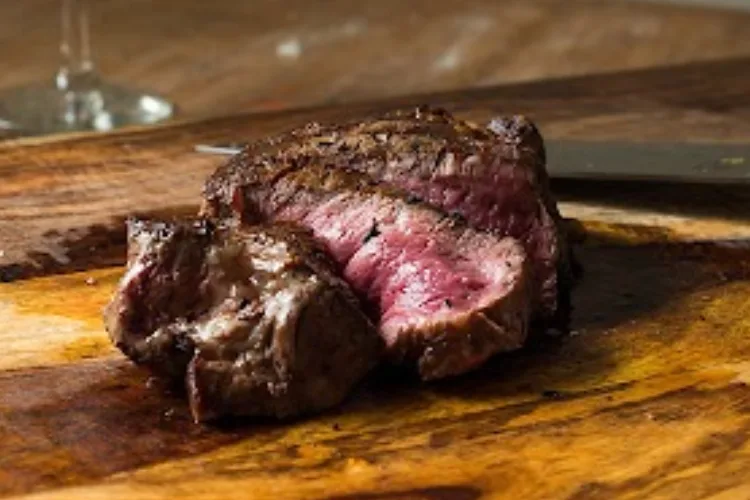
A strip sits flat, has one firm fat cap to render, and fits a skillet without crowding it.
View Product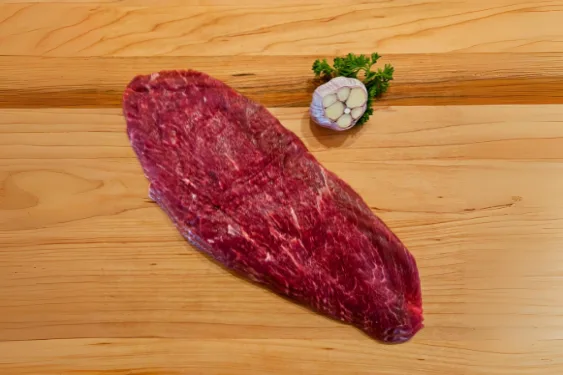
Forgiving, quick, and needs nothing but salt and pepper.
View Product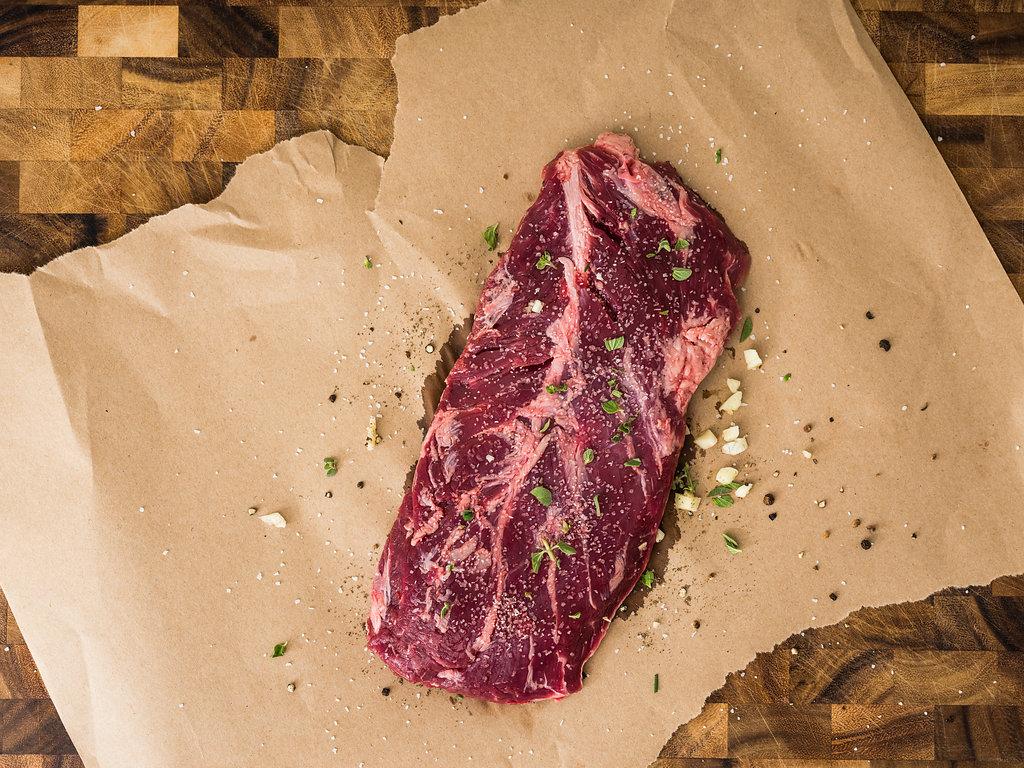
Loose grain, deep flavor, and it cooks fast. Trim the central sinew before you start.
View ProductIf you want the physics behind the crust in more detail, we go into it here. For a worked recipe on a looser-grained cut, try our pan-seared hanger steak, and keep the temperature chart within reach.
Dry surface, hot pan, hands off. Everything else on that list is a refinement.
- Cook to a Safe Minimum Internal Temperature, FoodSafety.gov
- The Color of Meat and Poultry, USDA FSIS
Food-safety temperatures and storage times on this page are cited to the agencies above rather than to us.
Written at Shipley Farms in Vilas, North Carolina: a family cattle farm raising and dry-aging beef in the Appalachian Mountains, now in its fifth generation. No shortcuts since 1872.
Every quote on this page is Gray Shipley talking, the man who runs this farm. We sat down with him, turned on a recorder, and kept his own words. Hesitations are trimmed so they read on the page. Nothing else is added or reworded, except where Gray revised his own words in review.
Nobody knows this beef better than we do. On food safety we leave it to USDA FSIS and FoodSafety.gov, and we have linked their pages above. Reviewed 3 October 2026.
Quick answers
How do you pan-sear a steak?
Dry the steak fully, heat the pan until a drop of water skitters and vanishes, add a high-heat fat like tallow or ghee, then lay the steak down and leave it two to three minutes per side without moving it.
How long do you sear a steak on each side?
About two to three minutes per side for a steak around an inch thick, then rest it eight to ten minutes before cutting.
Shipley Farms
Stories, recipes and news from Shipley Farms.