When Should You Salt Steak? Timing, and How Much
Salt forty minutes ahead, or salt as the steak goes in the pan. The worst time is five minutes before, which is when most of us do it. Here is why.
You have people coming, the steak is out of the refrigerator, and you are deciding whether to salt it now or later. The answer changes the result more than most people expect.
Salt at least forty minutes ahead, or salt as the steak goes into the pan. Do not salt five minutes before.
What salt actually does
Salt draws water out of the meat by osmosis. That water dissolves the salt, and the resulting brine is then slowly reabsorbed, seasoning the steak further in than the surface.
So the surface gets wetter, then drier again. The timing of your cooking decides which of those two states you catch.
- 0 to 5 minutes. Salt is still sitting on a dry surface. Fine.
- 5 to 30 minutes. Beads of moisture are being pulled out. This is the wet window. Avoid it.
- 40 minutes and beyond. The brine has been reabsorbed and the surface has dried. Best case.
- Several hours, uncovered in the refrigerator. Better still, because cold dry air keeps pulling surface moisture away.
Why the wet window costs you a crust
“Get the moisture off the surface.”
Gray Shipley
Surface water holds the outside of the steak at boiling point until it has all evaporated. Browning needs a much hotter surface than that, so every bead of moisture is time the steak spends steaming instead of searing.
“Let it dry before you put it on the skillet or put it on the grill so that you get the sear on the outside. You keep that moisture and juiciness on the inside.”
Gray Shipley
How much salt
More than feels polite. A thick steak is mostly interior, and only the surface is seasoned. Coarse kosher or sea salt is easier to judge by eye than fine table salt, which is easy to overdo.
Does it matter for a thin steak
Less. A thin cut cooks before a dry brine would have done much, so salt it as it goes in. The forty minute rule earns its keep on thicker cuts.
“So, I think that's the most common mistake is you're not sure, so you'll cook it a little longer. And you just don't need to.”
Gray Shipley
Which cuts reward salting ahead
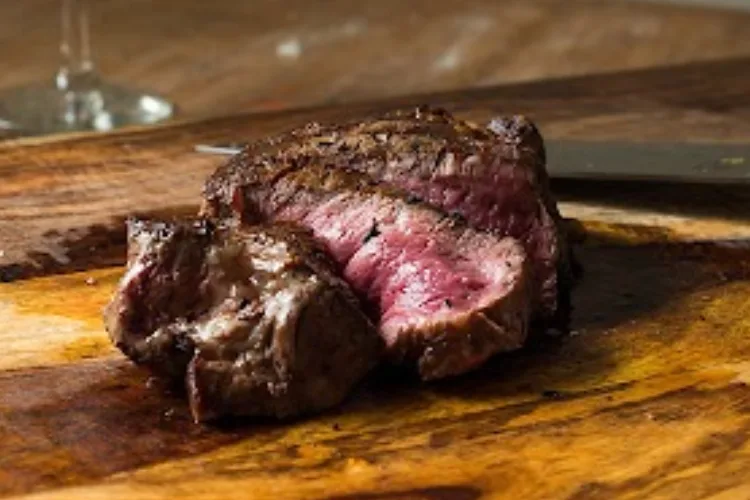
A thicker strip has the depth for a dry brine to work through, and the fat cap crisps better on a dry surface.
View Product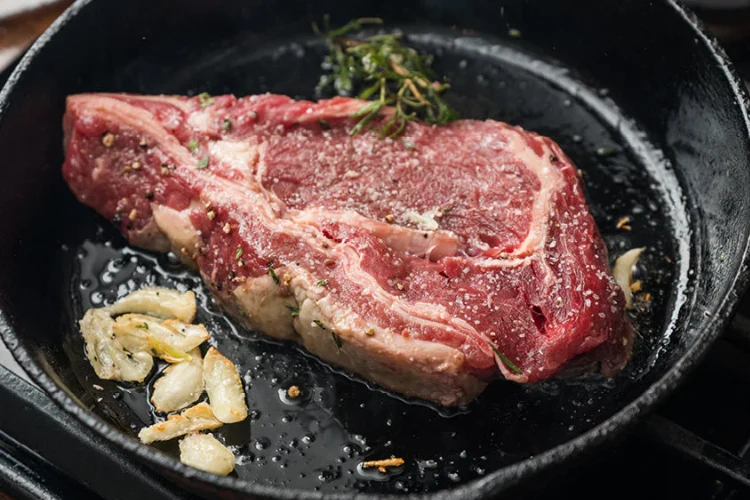
Dry aging has already pulled moisture out, so it starts ahead of where other steaks begin.
View Product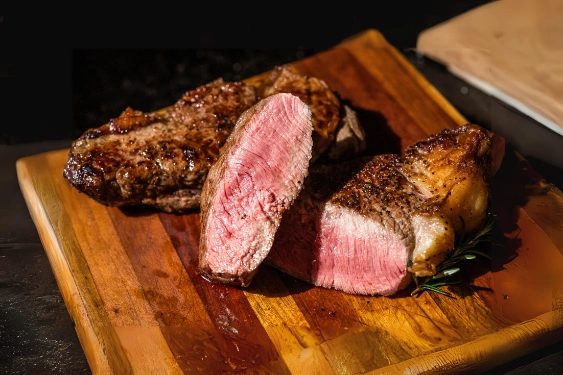
For what to add beyond salt, see how to season steak. The reasoning behind the dry surface is in getting a great crust, and the temperature chart tells you when to pull it.
Early or immediate. Those are the two good answers, and either beats the middle.
- Cook to a Safe Minimum Internal Temperature, FoodSafety.gov
- Refrigeration & Food Safety, USDA FSIS
Food-safety temperatures and storage times on this page are cited to the agencies above rather than to us.
Written at Shipley Farms in Vilas, North Carolina: a family cattle farm raising and dry-aging beef in the Appalachian Mountains, now in its fifth generation. No shortcuts since 1872.
Every quote on this page is Gray Shipley talking, the man who runs this farm. We sat down with him, turned on a recorder, and kept his own words. Hesitations are trimmed so they read on the page. Nothing else is added or reworded, except where Gray revised his own words in review.
Nobody knows this beef better than we do. On food safety we leave it to USDA FSIS and FoodSafety.gov, and we have linked their pages above. Reviewed 3 October 2026.
Quick answers
When should you salt steak?
At least forty minutes ahead, or right as it goes into the pan. Avoid the five-to-thirty-minute window, when salt has pulled moisture to the surface but it has not been reabsorbed yet.
Why does salting timing affect the crust?
Surface moisture holds the steak at boiling point until it evaporates, so a wet surface steams instead of searing. Salting early or immediately avoids leaving that moisture on the surface when it hits the pan.
Shipley Farms
Stories, recipes and news from Shipley Farms.