How to Cook Steak on a Gas Grill
Gas gets dismissed by people who grill twice a year. Gray Shipley is not one of them, and his reason is control.
Gas grills take a lot of criticism from people who do not use them much. The farm's own view is less romantic and more practical.
“I like the control of gas, the control of the temperature, the control of the heat. So, I'm kind of on either end of that spectrum, but I don't like being in the middle.”
Gray Shipley
That is worth sitting with. The reason gas gets good results on a Tuesday is that it does the same thing every Tuesday.
Preheat harder than feels necessary
This is where most gas-grilled steaks are lost. A gas grill heats its air quickly and its grates slowly, and it is the grates that make the crust.
All burners on high, lid down, ten to fifteen minutes. You want the grates hot enough that the steak hisses and sticks for a moment before releasing.
Make a cool zone
Once it is hot, turn the burners on one side down or off. Sear over the live side, then move the steak across to finish with the lid down.
- Preheat everything on high, lid down, ten to fifteen minutes.
- Dry the steak thoroughly and season it.
- Turn one side down or off.
- Sear two to three minutes a side over the hot zone, without moving it.
- Move to the cool zone, lid down, and bring it to about five degrees below target.
- Rest eight to ten minutes.
The dry surface still decides it
“Get the moisture off the surface.”
Gray Shipley
Gas produces more water vapor than charcoal as it burns, which means a closed lid is a slightly damper environment. Sear with the lid open, finish with it closed.
Getting more flavor without charcoal
- Leave the fat cap on and render it over the hot zone first.
- Use a cast-iron pan or griddle plate on the grates for edge-to-edge contact.
- Add a smoker box with hardwood chips if your grill takes one.
- Finish with butter in a pan on the cool zone rather than on the grates.
“When you have a chef that really understands the meat, that can really be a game changer with what a chef can create with good ingredients. Where he doesn't have to, he or she doesn't have to try to do too much, but just let the meat speak for itself.”
Gray Shipley
Which cut suits a gas grill
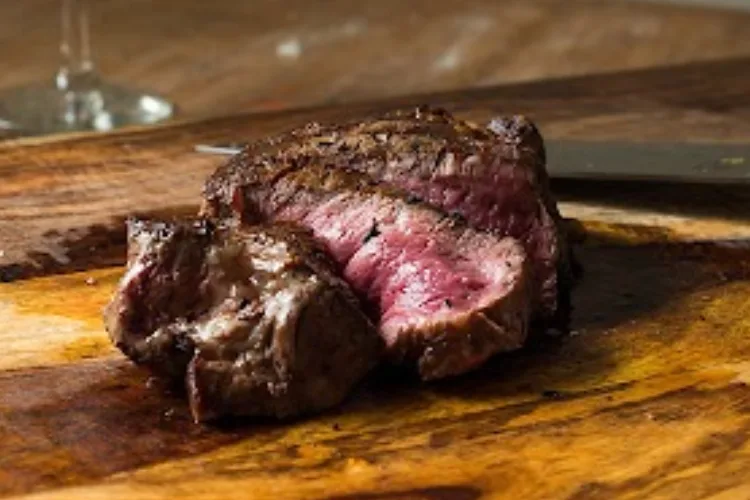
A strip has one straight fat cap that renders predictably, which suits a grill you can actually regulate.
View Product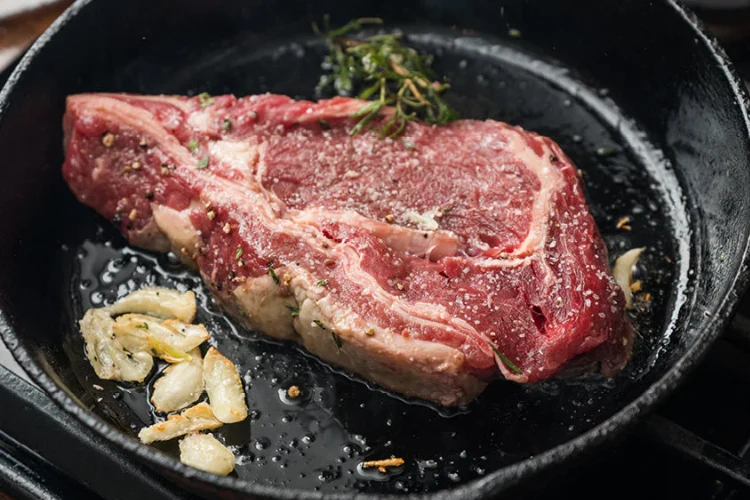
More fat means more flare-up, so keep a cool zone clear.
View Product
For the two-zone method in general see how to grill steak, the crust article covers the surface, and the temperature chart tells you when to stop.
Preheat longer, sear with the lid up, finish with it down. Gas will do the rest.
- Grilling and Food Safety, USDA FSIS
- Cook to a Safe Minimum Internal Temperature, FoodSafety.gov
Food-safety temperatures and storage times on this page are cited to the agencies above rather than to us.
Written at Shipley Farms in Vilas, North Carolina: a family cattle farm raising and dry-aging beef in the Appalachian Mountains, now in its fifth generation. No shortcuts since 1872.
Every quote on this page is Gray Shipley talking, the man who runs this farm. We sat down with him, turned on a recorder, and kept his own words. Hesitations are trimmed so they read on the page. Nothing else is added or reworded, except where Gray revised his own words in review.
Nobody knows this beef better than we do. On food safety we leave it to USDA FSIS and FoodSafety.gov, and we have linked their pages above. Reviewed 3 October 2026.
Shipley Farms
Stories, recipes and news from Shipley Farms.