Best Beef Cuts for Stir-Fry, and How to Slice Them
A stir-fry cooks in about ninety seconds, which rules out anything that needs time and makes the knife more important than the cut. Thin, across the grain, and a pan hotter than feels sensible.
Ninety seconds of cooking means the beef has to arrive tender. Nothing is going to become tender in that time.
The cuts that work
- Flat iron. Even thickness, tender, and cheap enough to use freely.
- Sirloin. Lean, firm, slices cleanly. The common choice for good reason.
- Hanger or bavette. More flavor, slightly looser, excellent sliced thin.
- The tenderloin chain. If you broke down a whole tenderloin, this is what it is for.
“But if you're not looking for that top-end stuff, the flat iron steak is the second most tender. It's more tender than a ribeye.”
Gray Shipley
| Cut | Why it works |
|---|---|
| Flat iron | Even thickness, tender, and cheap enough to use freely |
| Sirloin | Lean, firm, slices cleanly — the common choice for good reason |
| Hanger or bavette | More flavour, slightly looser, excellent sliced thin |
| The tenderloin chain | If you broke down a whole tenderloin, this is what it is for |
Slicing is the whole technique
Across the grain, as thin as you can manage. A quarter inch is good, thinner is better. Cut along the grain and the same beef is chewy, which is what people are describing when they say stir-fry beef came out tough.
The freezer trick
Firm the beef in the freezer for twenty to thirty minutes before slicing. Not frozen through, just firm. A knife goes through it cleanly and you can cut far thinner than you could at room temperature. This single step does more for a stir-fry than any marinade.
Cooking it
- Pan or wok screaming hot. Hotter than you think, and preheated longer.
- In batches. Crowding drops the temperature and the beef steams gray.
- Ninety seconds, then out. Finish it in the sauce at the end rather than cooking it in the sauce.
- Rest it off the heat while the vegetables cook.
“If you've ever had a steak or a burger that kind of has a bland gray color to it, what's happened is you've got water on the surface. And that water, you know, boils at 212 degrees. It won't let the meat, it won't let that searing, maillard reaction that you need at 350, 400, it won't let it happen. And you effectively end up boiling or steaming the meat instead of grilling and searing it.”
Gray Shipley
What not to use
“And I can't prove this, but muscles that get used, get flavor and muscles that don't get used, stay tender. And that's why the tenderloin, those back muscles on the animal, back muscles on a four-legged animal don't get used much. That's where the saying living high on the hog comes from.”
Gray Shipley
Anything from the shoulder, chest or leg. Chuck and brisket are wonderful cuts and they need hours, not ninety seconds. Using them here produces exactly the chewy result people blame on the technique.
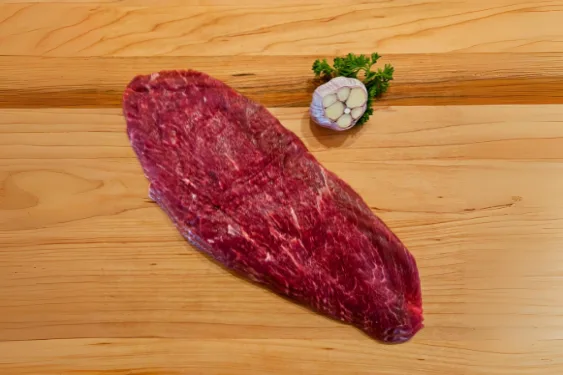
Dry-aged flat iron. Gray rates it above a ribeye for tenderness, and it costs considerably less.
View Product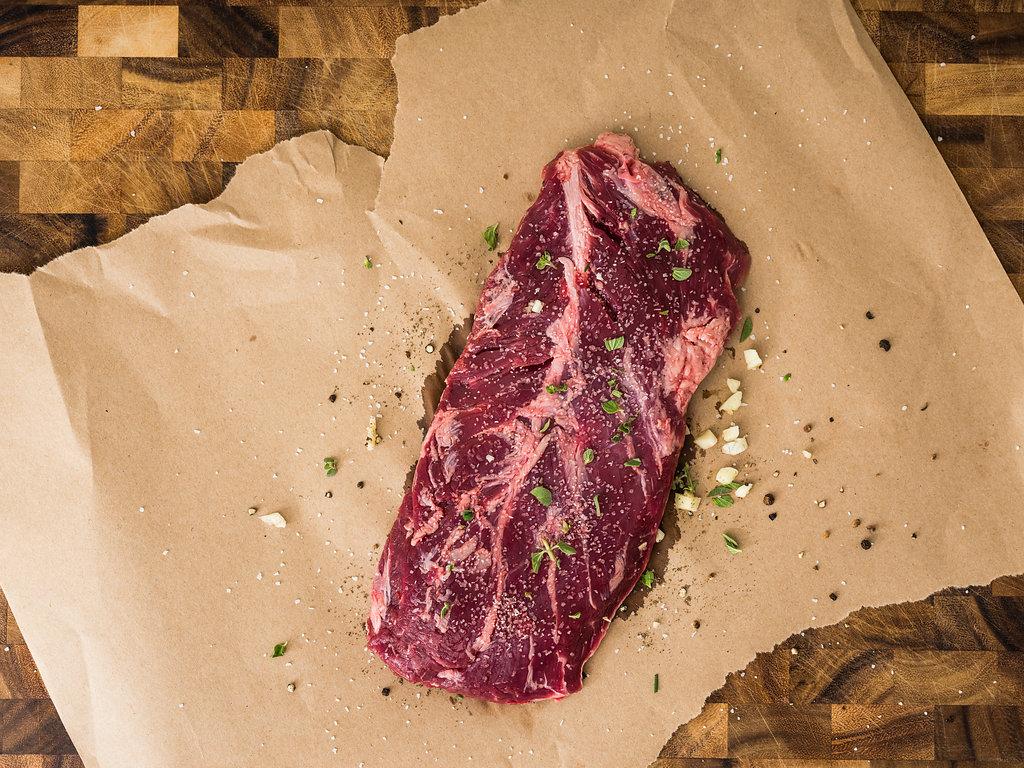
Hanger steak. One central sinew to remove, and then one of the most flavorful things on the animal.
View Product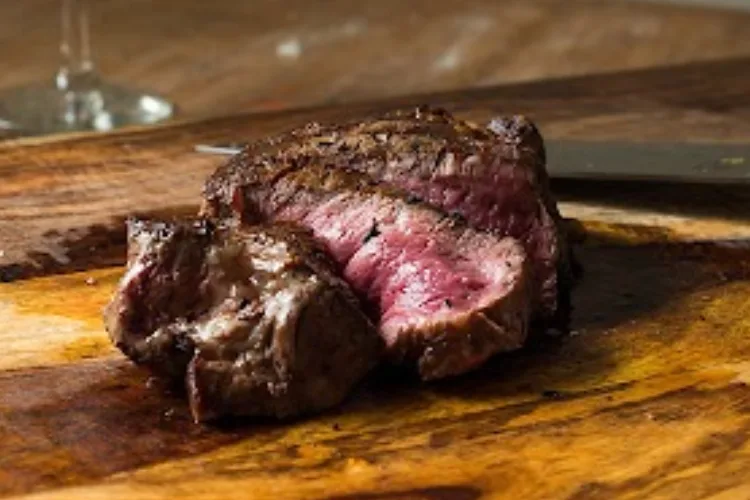
A dry-aged New York strip with a firm fat cap along one edge that tells you when the pan is ready.
View ProductThe thin steaks are compared in hanger vs skirt vs flank, and the map of the animal is in beef cuts explained.
- Cook to a Safe Minimum Internal Temperature, FoodSafety.gov
Food-safety temperatures and storage times on this page are cited to the agencies above rather than to us.
Written at Shipley Farms in Vilas, North Carolina: a family cattle farm raising and dry-aging beef in the Appalachian Mountains, now in its fifth generation. No shortcuts since 1872.
Every quote on this page is Gray Shipley talking, the man who runs this farm. We sat down with him, turned on a recorder, and kept his own words. Hesitations are trimmed so they read on the page. Nothing else is added or reworded, except where Gray revised his own words in review.
Nobody knows this beef better than we do. On food safety we leave it to FoodSafety.gov, and we have linked their page above. Reviewed 3 October 2026.
Quick answers
What is the best cut of beef for stir-fry?
Flat iron, sirloin, hanger or bavette, and the tenderloin chain all work well -- thin, even cuts that cook in under two minutes. Avoid shoulder, chest, or leg cuts like chuck and brisket, which need hours, not ninety seconds.
How do you slice beef for stir-fry so it is not tough?
Across the grain, as thin as you can manage -- a quarter inch or thinner. Firming the beef in the freezer for twenty to thirty minutes first makes it easier to slice thin cleanly.
Shipley Farms
Stories, recipes and news from Shipley Farms.