Beef Cuts Explained: A Complete Guide
There are forty or fifty cuts on a beef and most people can name six. You do not need to memorize the rest.
A side of beef looks complicated until somebody gives you the organizing idea, and then it is mostly obvious.
“And I can't prove this, but muscles that get used, get flavor and muscles that don't get used, stay tender. And that's why the tenderloin, those back muscles on the animal, back muscles on a four-legged animal don't get used much. That's where the saying living high on the hog comes from.”
Gray Shipley
That is the whole guide in one sentence. Muscles that worked hard have flavor and connective tissue. Muscles that barely moved are tender and taste of less. Everything else follows.
The cuts that barely worked
Along the spine, where the animal carries very little load. Tenderloin, and the loin cuts beside it. Tender, lean, expensive, and in need of fat, salt and heat because they bring less flavor of their own.
- Tenderloin and filet. The most tender thing on the animal. Also the leanest.
- Strip. From the short loin. Firm, even grain, clean flavor and a fat cap along one edge.
- Ribeye. From the rib. The marbling is what makes it the one most people mean.
The cuts that worked hard
Shoulder, leg, chest. These carried the animal around, and they are full of connective tissue that turns to gelatin given hours of low heat. Cook them fast and they are tough. Cook them slowly and they beat a steak for depth.
- Chuck. Shoulder. The best-value roast on the animal.
- Brisket. Chest. The most rewarding and the least forgiving.
- Shin and shank. The most collagen of anything here.
The ones in between, which are where the value is
“I go for the lesser-known cuts. But to me, I'm more interested in things like the flat iron and the chuck eye and the bavette steak that people know a little bit less about.”
Gray Shipley
Flat iron, bavette, hanger, flank, skirt. These worked moderately, which means they have flavor and are still quick-cooking if you treat them right. They are also cheaper, because fewer people ask for them.
“But if you're not looking for that top-end stuff, the flat iron steak is the second most tender. It's more tender than a ribeye.”
Gray Shipley
Why ours are not quite the same as flatland cattle
“Well, our animals use their muscles a little differently and a little more than flatland animals because they're going up and down the hills. And so they're getting a little bit different workout and getting a little bit different utilization of their muscle. And I feel like that contributes a little bit to the uniqueness in the flavor.”
Gray Shipley
That is a real difference and it is not marketing. Animals that spend their lives walking up and down mountains use their muscles differently from animals on flat ground, and the cuts reflect it.
How to use this at a counter
- Quick and hot for anything from the loin or rib.
- Low and long for anything from the shoulder, chest or leg.
- Marinate and slice thin across the grain for the in-between cuts.
- When in doubt, ask where on the animal it came from. That answer tells you the method.
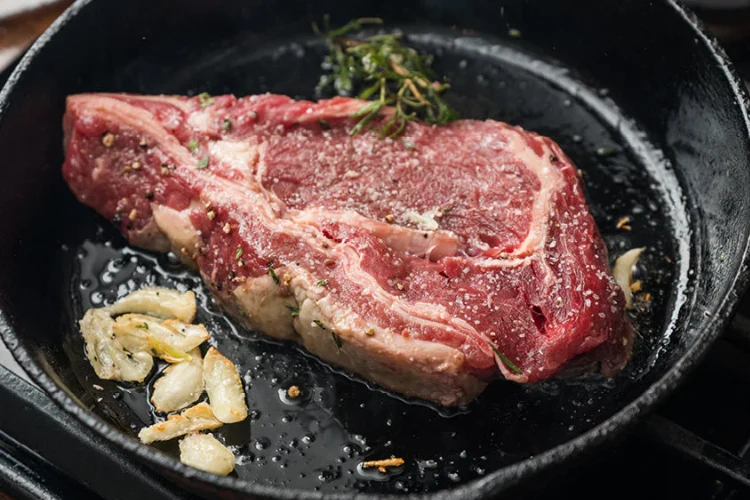
Our signature dry-aged ribeye. Heavily marbled, thick, and forgiving of a minute either way.
View Product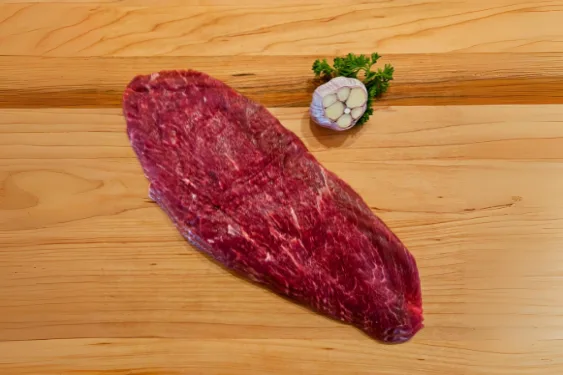
Dry-aged flat iron. Gray rates it above a ribeye for tenderness, and it costs considerably less.
View Product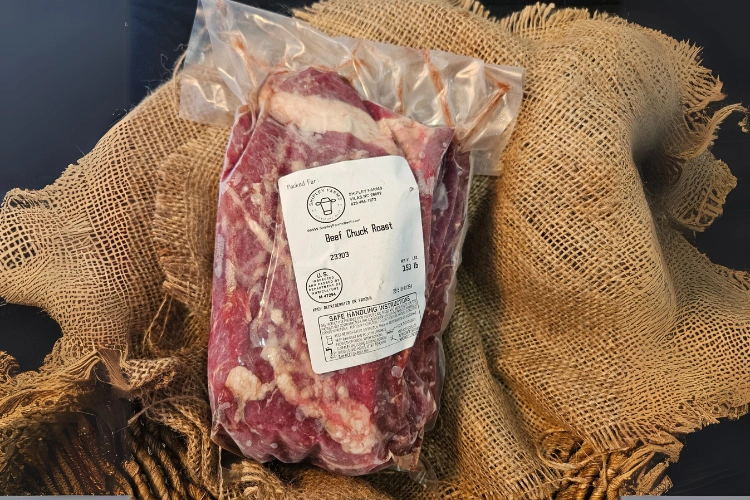
Dry-aged boneless chuck roast. In early, left alone, and it will be the thing people remember.
View ProductTenderness by cut is in most tender cuts of beef, flavor in most flavorful cuts, and the three steaks people actually choose between in ribeye vs strip vs filet.
- Cook to a Safe Minimum Internal Temperature, FoodSafety.gov
Food-safety temperatures and storage times on this page are cited to the agencies above rather than to us.
Written at Shipley Farms in Vilas, North Carolina: a family cattle farm raising and dry-aging beef in the Appalachian Mountains, now in its fifth generation. No shortcuts since 1872.
Every quote on this page is Gray Shipley talking, the man who runs this farm. We sat down with him, turned on a recorder, and kept his own words. Hesitations are trimmed so they read on the page. Nothing else is added or reworded, except where Gray revised his own words in review.
Nobody knows this beef better than we do. On food safety we leave it to FoodSafety.gov, and we have linked their page above. Reviewed 3 October 2026.
Shipley Farms
Stories, recipes and news from Shipley Farms.