What Are the Most Flavorful Cuts of Beef?
Flavor lives in the muscles that worked. That is the whole principle, and it is Gray Shipley's own explanation rather than something borrowed from a textbook. Here are the cuts it points you toward.
If you have eaten a brisket that someone took seriously, you already know the answer to this. The cuts that taste of the most are the ones that did the most.
“But the muscles that get used, that's where the flavor comes from. That's why the brisket is so good if you can cook it right.”
Gray Shipley
The principle, in Gray's words
He offers it as his own reasoning rather than a fact, and the hedge is worth keeping.
“Those two things, I think, are a little bit of the combination that maybe has a little bit of whatever our secret sauce is that has people to come in and say, this is the best thing I've ever eaten. That's the best guess I have as to how to explain it.”
Gray Shipley
So the map is simple. Find the muscles that worked. Those are the shoulder, the belly, the leg and the diaphragm. They need time or they need to be cut thin across the grain, and in exchange they taste like beef rather than like texture.
The flavorful cuts, and what each one needs
- Chuck. The shoulder. Slow and low, or dry-aged and smoked. Our own best meal story involves a dry-aged chuck roast.
- Brisket. The chest. Long, slow, patient. The most rewarding and least forgiving.
- Short rib. Braise it or smoke it. Rich enough to serve in small portions.
- Hanger. The diaphragm. Deep and mineral. Hot and fast, then slice across the grain.
- Skirt and bavette. Loose grain that takes a marinade. Minutes, not hours.
- Oxtail and shank. Collagen heavy, so they turn silky rather than tender.
- Ribeye. The exception. A tender cut with enough marbling to taste like a working one.
Why ours might taste different
Gray has a theory about this too, and it is also offered as a theory rather than a claim. The animals here move up and down hills rather than across flat ground, and what they eat varies across the pasture through the season. He thinks both show up in the fat.
Whether that is the whole explanation is not something a farm can prove about its own beef. It is at least an honest attempt at one.
Cooking for flavor rather than tenderness
- Dry the surface. Browning is flavor, and browning needs a dry steak.
- Go hotter on the thin cuts. Hanger, skirt and bavette want a hard, short sear.
- Go longer on the thick ones. Chuck, brisket and short rib need hours, not minutes.
- Slice across the grain. On a loose-grained cut this matters more than the cooking.
“Get the moisture off the surface.”
Gray Shipley
Which to buy
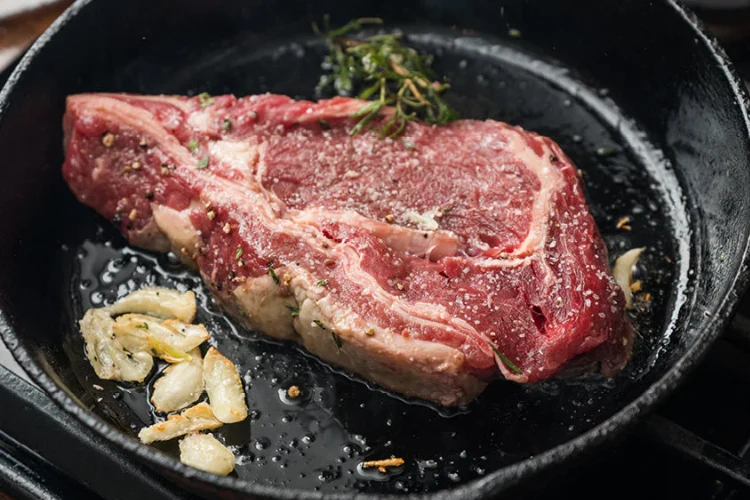
Heavy marbling and a fat cap, so you get flavor without a long cook.
View Product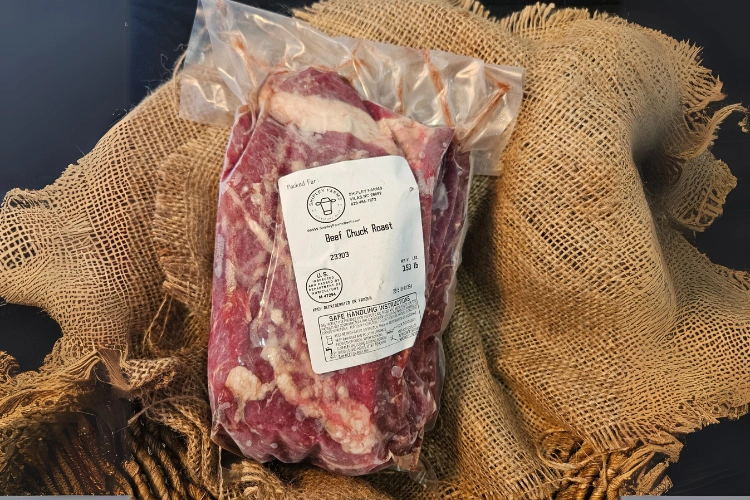
A working muscle. Give it time and it gives back more than any steak at the price.
View Product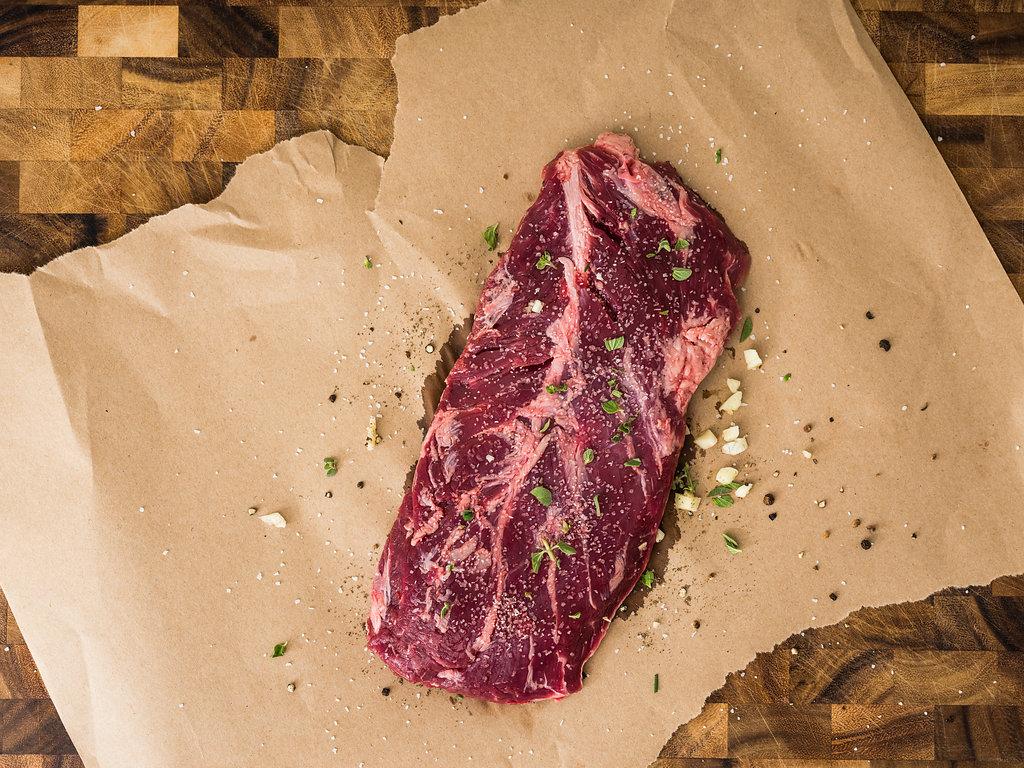
Loose grain, deep mineral flavor, and it cooks in minutes.
View ProductIf softness matters more to you, the tender cuts are here. For the long cooks, see the best cuts for slow cooking, and the crust article covers the browning.
Follow the work. The animal already told you where the flavor is.
- Cook to a Safe Minimum Internal Temperature, FoodSafety.gov
Food-safety temperatures and storage times on this page are cited to the agencies above rather than to us.
Written at Shipley Farms in Vilas, North Carolina: a family cattle farm raising and dry-aging beef in the Appalachian Mountains, now in its fifth generation. No shortcuts since 1872.
Every quote on this page is Gray Shipley talking, the man who runs this farm. We sat down with him, turned on a recorder, and kept his own words. Hesitations are trimmed so they read on the page. Nothing else is added or reworded, except where Gray revised his own words in review.
Nobody knows this beef better than we do. On food safety we leave it to FoodSafety.gov, and we have linked their page above. Reviewed 3 October 2026.
Shipley Farms
Stories, recipes and news from Shipley Farms.