Best Beef Cuts for Steak Sandwiches
A steak sandwich fails in one of two ways: the beef pulls out of the bread in a single strip, or it is so lean it tastes of nothing.
The enemy of a steak sandwich is a slice that will not bite through. Everything below is about avoiding that.
Slice thin, across the grain, always
A thick slice in a sandwich pulls out whole on the first bite and takes the filling with it. Thin slices across the grain sit in layers, bite cleanly and carry sauce between them.
“And I can't prove this, but muscles that get used, get flavor and muscles that don't get used, stay tender. And that's why the tenderloin, those back muscles on the animal, back muscles on a four-legged animal don't get used much. That's where the saying living high on the hog comes from.”
Gray Shipley
The cuts that suit it
- Flat iron. Even, tender, slices beautifully, and inexpensive enough to use generously.
- Bavette or hanger. More flavor than anything at the price, loose grain, made for this.
- Strip. If you want it to feel like a steakhouse sandwich. Trim the cap or render it hard.
- Leftover roast. Chilled roast slices thinner than anything you cut warm.
“I go for the lesser-known cuts. But to me, I'm more interested in things like the flat iron and the chuck eye and the bavette steak that people know a little bit less about.”
Gray Shipley
The ones that disappoint
- Filet. Tender but bland in a sandwich, where it is competing with bread and sauce.
- Anything well done. It tightens, and tight beef in bread is chewy.
- Thick-cut anything. See above.
Cook it rare
Rarer than you would eat it on a plate. The beef sits in a warm sandwich and carries on cooking, and a steak cooked to medium before it is sliced will be medium-well by the time anybody eats it.
“I think the easiest thing to do is to overcook it. And we've conditioned people to be fearful of foodborne illness, but clean, well-prepared meat that's raised responsibly, processed, handled responsibly, you know, that's not as much of a concern.”
Gray Shipley
Using up leftovers
A sandwich is the best use for yesterday's steak, and the only one that improves on reheating it. Slice it cold, thin, and let the warm bread and sauce bring it up rather than putting it back in a pan. There is more on that in how to reheat steak.
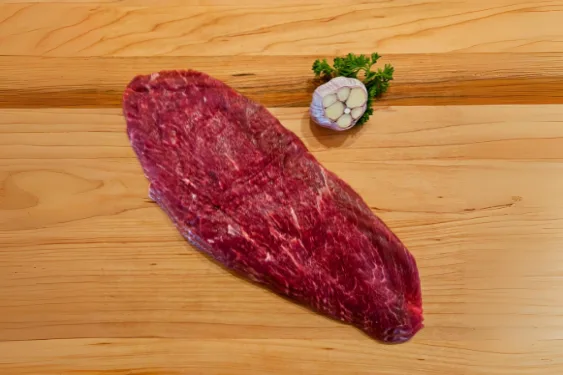
Dry-aged flat iron. Gray rates it above a ribeye for tenderness, and it costs considerably less.
View Product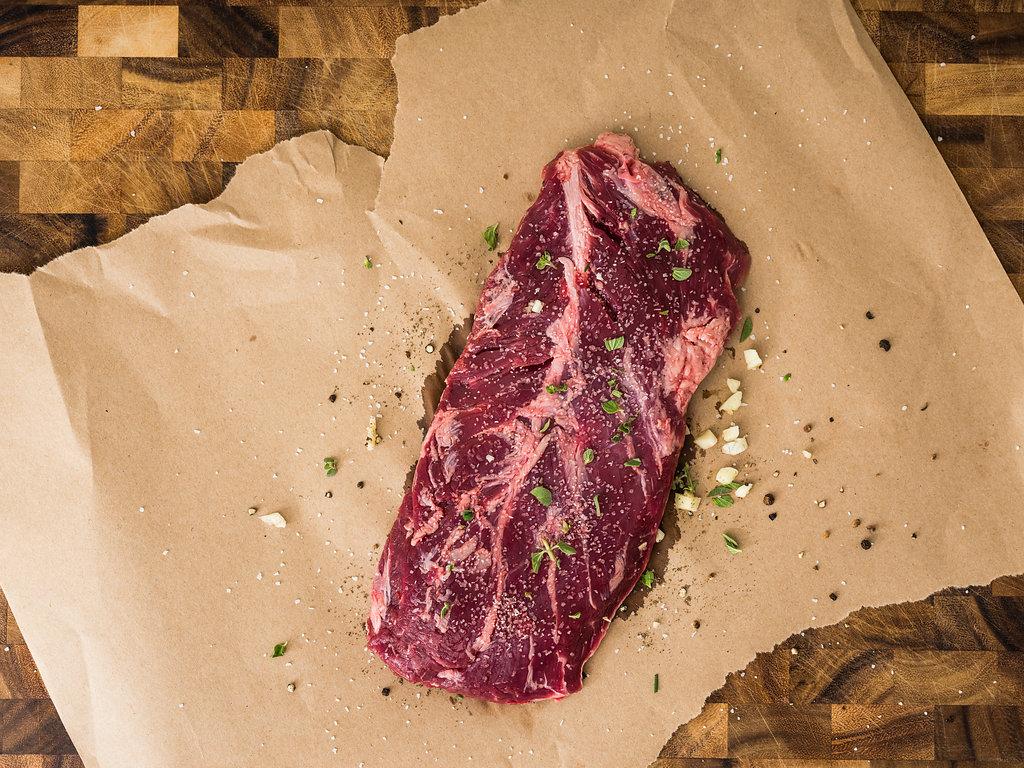
Hanger steak. One central sinew to remove, and then one of the most flavorful things on the animal.
View Product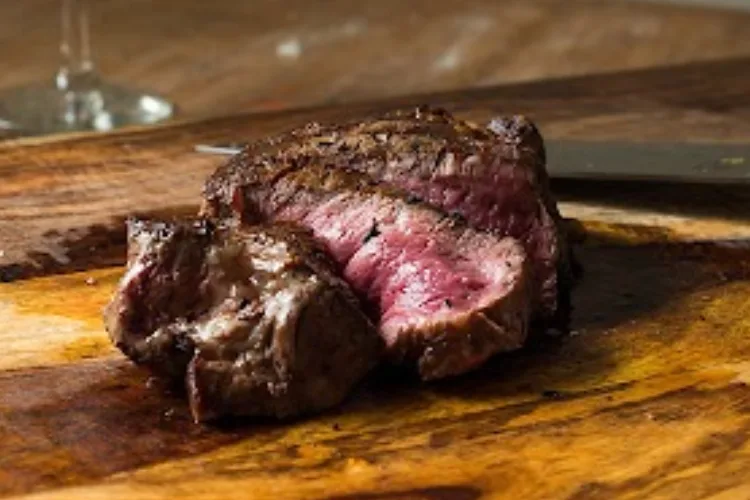
A dry-aged New York strip with a firm fat cap along one edge that tells you when the pan is ready.
View ProductThe thin cuts are compared in hanger vs skirt vs flank, and flavor by cut in most flavorful cuts of beef.
- Cook to a Safe Minimum Internal Temperature, FoodSafety.gov
- Leftovers and Food Safety, USDA FSIS
Food-safety temperatures and storage times on this page are cited to the agencies above rather than to us.
Written at Shipley Farms in Vilas, North Carolina: a family cattle farm raising and dry-aging beef in the Appalachian Mountains, now in its fifth generation. No shortcuts since 1872.
Every quote on this page is Gray Shipley talking, the man who runs this farm. We sat down with him, turned on a recorder, and kept his own words. Hesitations are trimmed so they read on the page. Nothing else is added or reworded, except where Gray revised his own words in review.
Nobody knows this beef better than we do. On food safety we leave it to USDA FSIS and FoodSafety.gov, and we have linked their pages above. Reviewed 3 October 2026.
Quick answers
What is the best cut of beef for a steak sandwich?
Flat iron, bavette, or hanger -- tender, flavorful cuts that slice thin across the grain. A dry-aged strip works too for a steakhouse feel. Avoid filet, which is bland in a sandwich, and anything thick-cut or well-done.
Should steak be cooked rare for sandwiches?
Yes, rarer than you would eat it on a plate. The beef keeps cooking from the warm bread, so a steak sliced at medium ends up medium-well by the time it is eaten.
Shipley Farms
Stories, recipes and news from Shipley Farms.