How to Cook Steak in a Cast-Iron Skillet
Cast iron is the most forgiving pan for steak, for one reason: it holds its heat when cold meat lands on it. That advantage is wasted if the skillet is not properly preheated. Here is how to use it.
Most of the steak anyone cooks at home gets cooked in a skillet on a weeknight, for two or three people who are hungry. Cast iron is the right tool for that, and it is forgiving in a way thin pans are not.
The reason is simple. Cast iron is heavy, so it stores heat. When a cold steak lands on it the surface temperature barely drops, and browning continues. A thin pan loses its heat to the steak and starts steaming instead.
Preheat longer than feels sensible
Put the dry skillet on medium-high and give it four or five minutes. Test it with a single drop of water. If the drop sits and simmers, the pan is not ready. If it skitters across the surface and disappears, it is.
Only then add the fat, and only a thin film of it.
Dry the steak first
“Get the moisture off the surface.”
Gray Shipley
This matters more in a pan than anywhere else, because a skillet gives surface water nowhere to escape to. Pat both faces and the edges, and if the steak has been sitting seasoned on a plate, pat it again.
The sequence
- Dry the steak and season it.
- Preheat the empty skillet until a water drop skitters.
- Add a thin film of tallow, ghee or a neutral oil.
- Lay the steak down away from you and leave it alone.
- Turn once, when it releases from the pan by itself.
- Add butter, garlic or thyme only in the last thirty seconds.
- Rest the steak off the heat, on a warm plate, for eight to ten minutes.
Grill or skillet
“I, to me, that's a question of weather more than anything else.”
Gray Shipley
That is Gray's honest answer, and it is a useful one. Neither method is the serious choice. Cast iron is simply the one that works in February.
Let the beef carry it
“When you have a chef that really understands the meat, that can really be a game changer with what a chef can create with good ingredients. Where he doesn't have to, he or she doesn't have to try to do too much, but just let the meat speak for itself.”
Gray Shipley
Which cut suits the pan
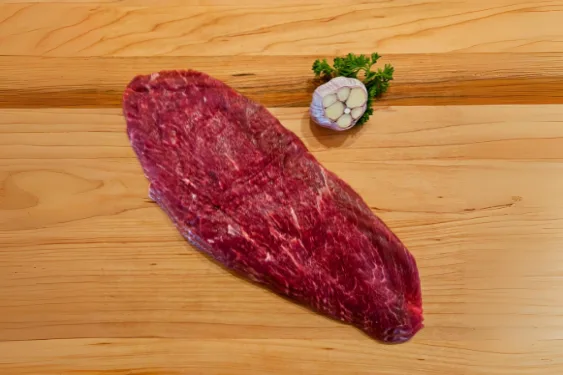
Flat, even thickness, and it sits in full contact with the pan, which is exactly what cast iron rewards.
View Product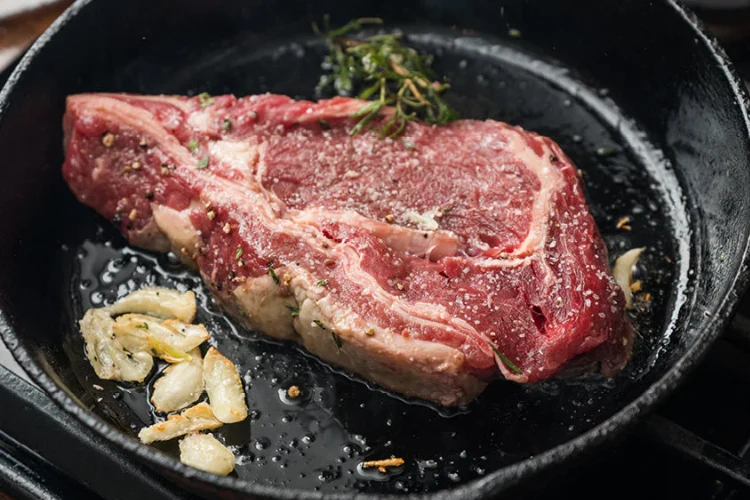
Enough fat to render into the pan and baste itself.
View Product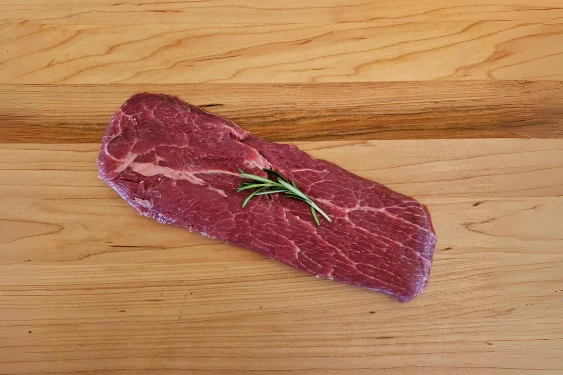
For the reasoning behind the crust, see getting a great crust on steak. The general pan-searing method covers other pans, and the temperature chart tells you when to pull it.
A hot pan, a dry steak, and the restraint to leave it where you put it.
- Cook to a Safe Minimum Internal Temperature, FoodSafety.gov
- The Color of Meat and Poultry, USDA FSIS
Food-safety temperatures and storage times on this page are cited to the agencies above rather than to us.
Written at Shipley Farms in Vilas, North Carolina: a family cattle farm raising and dry-aging beef in the Appalachian Mountains, now in its fifth generation. No shortcuts since 1872.
Every quote on this page is Gray Shipley talking, the man who runs this farm. We sat down with him, turned on a recorder, and kept his own words. Hesitations are trimmed so they read on the page. Nothing else is added or reworded, except where Gray revised his own words in review.
Nobody knows this beef better than we do. On food safety we leave it to USDA FSIS and FoodSafety.gov, and we have linked their pages above. Reviewed 3 October 2026.
Shipley Farms
Stories, recipes and news from Shipley Farms.