Can You Cook Steak From Frozen?
We ship frozen, so this question comes up a lot.
Frozen beef is not compromised beef. It is beef with the clock stopped, which is the whole reason we ship it that way.
“But the other factor is you can't tell, we've had chefs that taste our frozen burger and doing a blind taste test have been shocked that the burger that we serve was frozen compared to the burger that they're used to eating fresh. The quality is night and day difference.”
Gray Shipley
Chefs tasting blind could not pick it out. So the question is not whether frozen beef is good. It is whether cooking it from frozen gives you a good result.
When it works
On a thick steak, surprisingly well. A frozen center actually helps: the outside can take a hard sear for longer without the middle running away from you, which is the same reason thickness helps generally.
- Sear from frozen in a very hot pan, three to four minutes a side.
- Then move it to a low oven, around 275, to carry the middle up.
- Use a thermometer. There is no judging this by feel.
- Expect it to take roughly half again as long as a thawed steak.
When it does not
Thin steaks. There is no margin at all: by the time the center has thawed the outside is past saving. Under an inch, thaw it.
Why thawing is still the better plan
A thawed steak browns better, because you can dry the surface. A frozen steak carries frost that turns to water in the pan, and water is what stops a crust forming. You can mitigate it by patting the steak as it goes in, but you cannot eliminate it.
The USDA names three safe ways to thaw and the refrigerator is the one that suits a steak. About twenty-four hours on a plate, and we have written it up properly.
“So, I think that's the most common mistake is you're not sure, so you'll cook it a little longer. And you just don't need to.”
Gray Shipley
“I think the easiest thing to do is to overcook it. And we've conditioned people to be fearful of foodborne illness, but clean, well-prepared meat that's raised responsibly, processed, handled responsibly, you know, that's not as much of a concern.”
Gray Shipley
Cooking from frozen makes that temptation worse, because the steak looks underdone for longer than you are used to. Trust the thermometer rather than the appearance.
The one thing not to do
Do not thaw on the counter. It is the method people reach for when they forgot, and it is the one the USDA specifically rules out. If you forgot, cook it from frozen instead. That is what the method above is for.
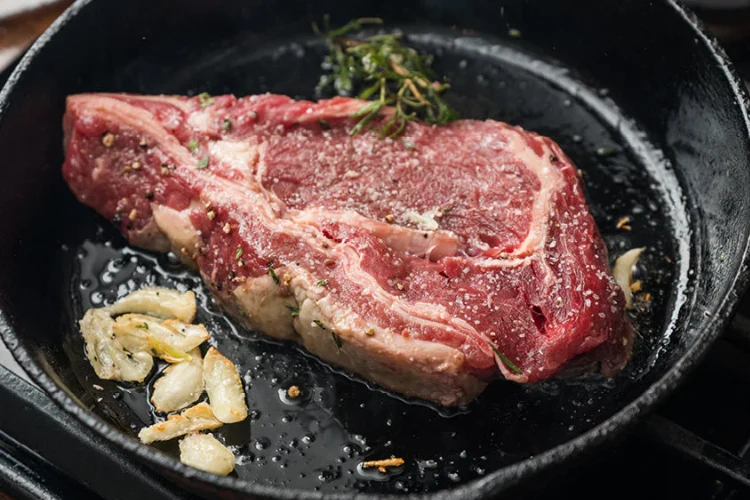
Our signature dry-aged ribeye. Heavily marbled, thick, and forgiving of a minute either way.
View Product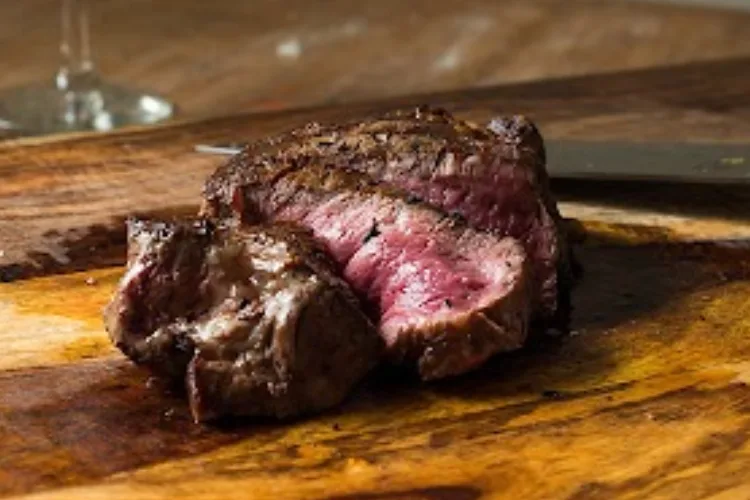
A dry-aged New York strip with a firm fat cap along one edge that tells you when the pan is ready.
View Product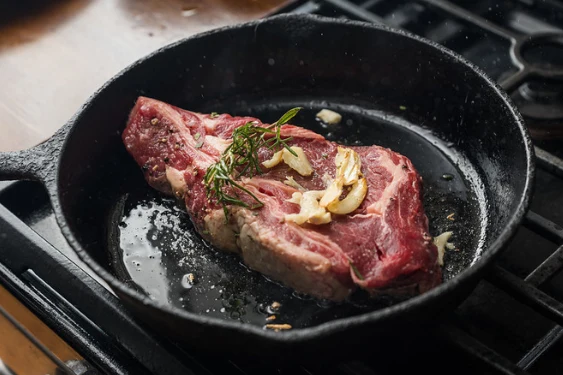
The same cut without the dry aging, for a weeknight where you still want a real steak.
View ProductThawing is covered in how to thaw steak safely, and why thickness decides so much in does steak thickness change how you cook it.
- The Big Thaw — Safe Defrosting Methods, USDA FSIS
- Freezing and Food Safety, USDA FSIS
- Cook to a Safe Minimum Internal Temperature, FoodSafety.gov
Food-safety temperatures and storage times on this page are cited to the agencies above rather than to us.
Written at Shipley Farms in Vilas, North Carolina: a family cattle farm raising and dry-aging beef in the Appalachian Mountains, now in its fifth generation. No shortcuts since 1872.
Every quote on this page is Gray Shipley talking, the man who runs this farm. We sat down with him, turned on a recorder, and kept his own words. Hesitations are trimmed so they read on the page. Nothing else is added or reworded, except where Gray revised his own words in review.
Nobody knows this beef better than we do. On food safety we leave it to USDA FSIS and FoodSafety.gov, and we have linked their pages above. Reviewed 3 October 2026.
Shipley Farms
Stories, recipes and news from Shipley Farms.