How to Grill a New York Strip Steak
A strip steak has a firm fat cap running along one edge, and most people cook it flat and leave that cap chewy and white. Stand it on the edge first and the whole steak improves.
The fat cap is the defining feature of this cut and the most commonly wasted part of it.
Render the cap first
Stand the steak on its fat edge, using tongs or by leaning two steaks against each other, and give it a minute or two over the heat before either face goes down. The fat softens, browns and starts to render, and what was a white rubbery strip becomes the best bite on the plate.
It also tells you whether the grill is hot enough. If the cap is not sizzling within fifteen seconds, the grill is not ready and neither are you.
Then the faces
- Two zones: hot direct, and a cool side with nothing under it.
- Faces down over the hot zone, three minutes, turn once.
- Move to the cool side if it needs longer.
- Pull five degrees under target.
“If you've ever had a steak or a burger that kind of has a bland gray color to it, what's happened is you've got water on the surface. And that water, you know, boils at 212 degrees. It won't let the meat, it won't let that searing, maillard reaction that you need at 350, 400, it won't let it happen. And you effectively end up boiling or steaming the meat instead of grilling and searing it.”
Gray Shipley
Why a strip is the easiest steak to grill well
It is even. There is no large internal fat pocket to render unevenly and no tapering end that overcooks. A strip of consistent thickness cooks consistently, which is why it is the steak to hand someone who is still learning.
“So, I think that's the most common mistake is you're not sure, so you'll cook it a little longer. And you just don't need to.”
Gray Shipley
Slicing
Across the grain, which on a strip runs the length of the steak, so cut crosswise. Leave the rendered cap attached to the slices rather than trimming it off at the board.
“Not as long as I should. Really should go eight to ten minutes. I sometimes barely give it five.”
Gray Shipley
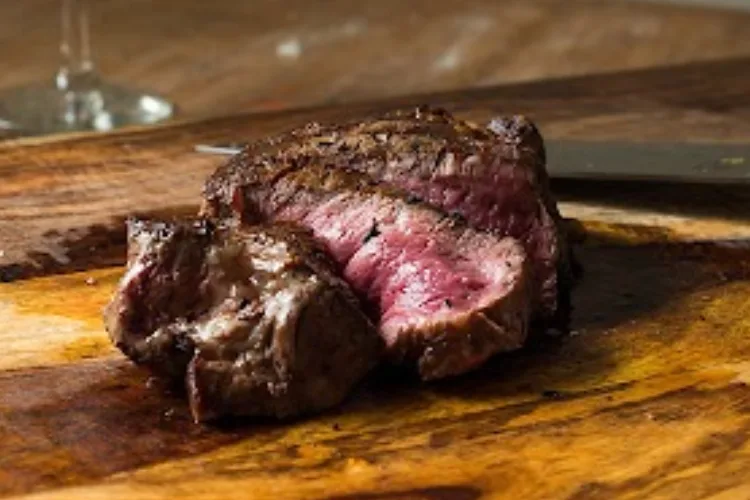
A dry-aged New York strip with a firm fat cap along one edge that tells you when the pan is ready.
View Product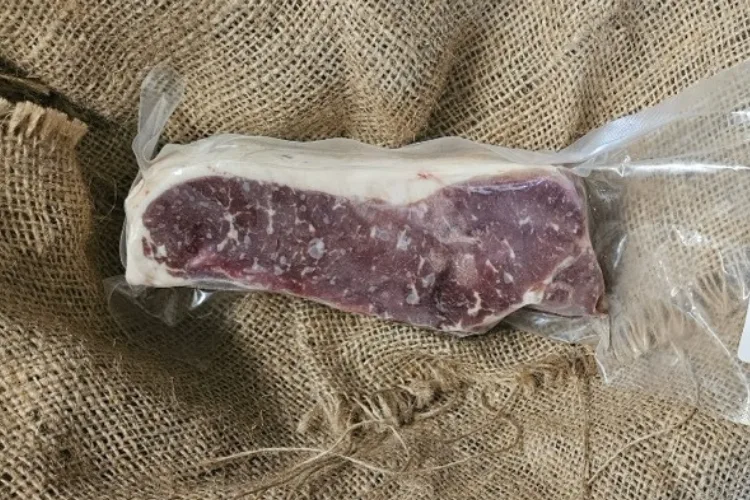
A whole boneless strip loin. Cut your own steaks, exactly as thick as you want them.
View Product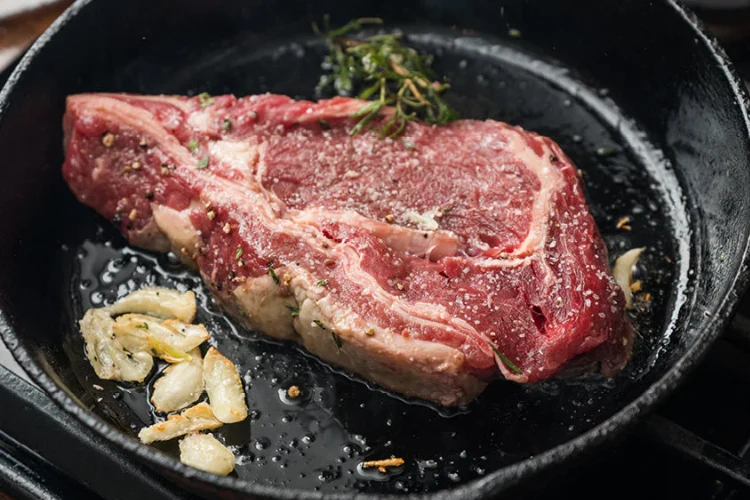
Our signature dry-aged ribeye. Heavily marbled, thick, and forgiving of a minute either way.
View ProductThe general grill method is in how to grill steak, and the comparison in ribeye vs strip vs filet.
- Cook to a Safe Minimum Internal Temperature, FoodSafety.gov
- Grilling and Food Safety, USDA FSIS
Food-safety temperatures and storage times on this page are cited to the agencies above rather than to us.
Written at Shipley Farms in Vilas, North Carolina: a family cattle farm raising and dry-aging beef in the Appalachian Mountains, now in its fifth generation. No shortcuts since 1872.
Every quote on this page is Gray Shipley talking, the man who runs this farm. We sat down with him, turned on a recorder, and kept his own words. Hesitations are trimmed so they read on the page. Nothing else is added or reworded, except where Gray revised his own words in review.
Nobody knows this beef better than we do. On food safety we leave it to USDA FSIS and FoodSafety.gov, and we have linked their pages above. Reviewed 3 October 2026.
Shipley Farms
Stories, recipes and news from Shipley Farms.