Does Steak Thickness Change How You Should Cook It?
People choose a steak by cut and then cook every steak the same way. Thickness matters more.
The outside of a steak needs to get far hotter than the inside ever should. Thickness is what decides whether you can do both at once.
Thick, which is an inch and a half or more
A thick steak gives you two separate jobs and time to do them in sequence. You can take the surface to a hard crust while the middle is still coming up, because heat moves through beef slowly.
“I like a thicker burger. You know, when you get that sear and the crunch and the smash burger, that's pretty good. But I like a good, thick burger.”
Gray Shipley
- Hot sear, then lower heat to carry the middle, or the reverse.
- A thermometer is worth it, because you cannot see what is happening in the middle.
- Carryover is larger. Pull five degrees early, sometimes more.
Thin, which is under an inch
Here the two jobs collide. By the time a crust forms, the middle is already where you did not want it. There is no technique that fully solves this, so the honest approach is to accept it and work with it.
- Maximum heat, minimum time. Get the surface screaming and move fast.
- Dry the surface obsessively. You have no time to evaporate water in the pan.
- Accept medium. Chasing rare in a thin steak usually means no crust at all.
- Or smash it. If it is very thin, lean into surface area rather than fighting it.
Why thickness forgives mistakes
“I think the easiest thing to do is to overcook it. And we've conditioned people to be fearful of foodborne illness, but clean, well-prepared meat that's raised responsibly, processed, handled responsibly, you know, that's not as much of a concern.”
Gray Shipley
A thick steak gives you a margin measured in minutes. A thin one gives you about thirty seconds. Most of what people call being bad at cooking steak is really having bought a thin one.
The rest is longer too
“Not as long as I should. Really should go eight to ten minutes. I sometimes barely give it five.”
Gray Shipley
A thicker steak holds more heat and needs longer to settle. Five minutes is fine for a thin one. A two inch steak wants ten, and it will still be hot when it reaches the table.
What to buy
If you have a choice, buy fewer, thicker steaks and share them rather than one thin one each. A pound of ribeye cut thick and sliced across the board eats better than two half-pound steaks cooked separately, and it is usually cheaper.
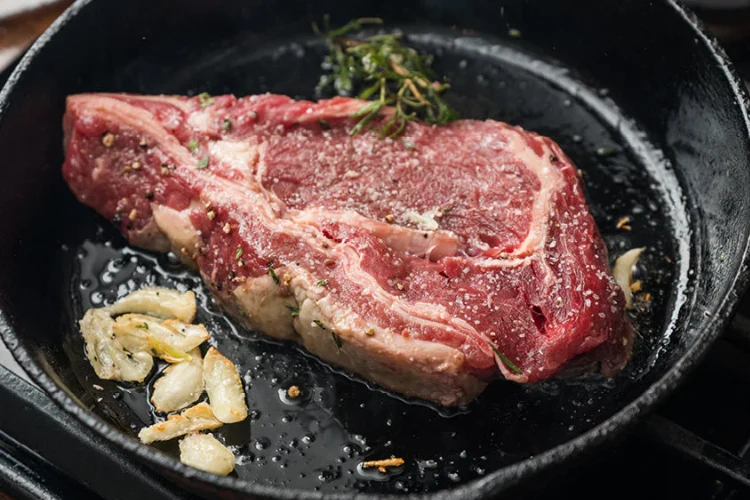
Our signature dry-aged ribeye. Heavily marbled, thick, and forgiving of a minute either way.
View Product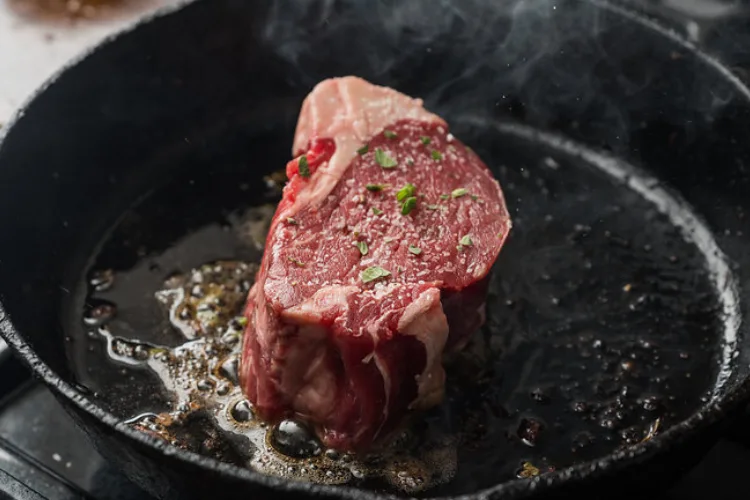
Dry-aged filet mignon. Very tender, very lean, and the one that needs the most help from fat and heat.
View Product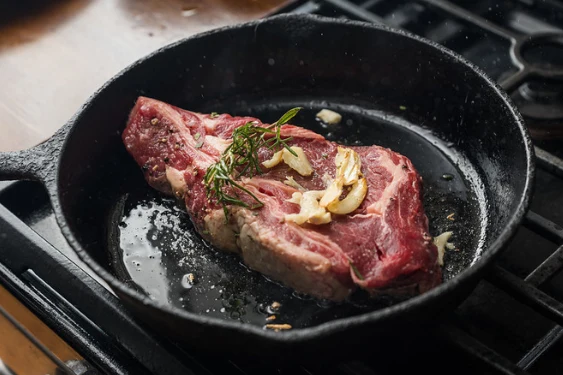
The same cut without the dry aging, for a weeknight where you still want a real steak.
View ProductThe ranges are in the temperature chart, the method for very thick cuts is reverse searing, and resting is covered in how long should steak rest.
- Cook to a Safe Minimum Internal Temperature, FoodSafety.gov
- Food Thermometers, USDA FSIS
Food-safety temperatures and storage times on this page are cited to the agencies above rather than to us.
Written at Shipley Farms in Vilas, North Carolina: a family cattle farm raising and dry-aging beef in the Appalachian Mountains, now in its fifth generation. No shortcuts since 1872.
Every quote on this page is Gray Shipley talking, the man who runs this farm. We sat down with him, turned on a recorder, and kept his own words. Hesitations are trimmed so they read on the page. Nothing else is added or reworded, except where Gray revised his own words in review.
Nobody knows this beef better than we do. On food safety we leave it to USDA FSIS and FoodSafety.gov, and we have linked their pages above. Reviewed 3 October 2026.
Shipley Farms
Stories, recipes and news from Shipley Farms.