How to Season Burgers
Almost every burger seasoning debate is really a debate about timing.
Start with what you are trying to taste.
“And then, you know, let the flavor do the work and don't try to do too much.”
Gray Shipley
That is the whole brief. Everything below is in service of not getting in the way of beef that is already worth eating.
Salt goes on the outside, late
Salt mixed into ground beef dissolves protein and makes the texture springy and bouncy, the way a sausage is. That is a real food and it is not a burger. Salting the formed patty on the outside, a minute or two before it meets heat, seasons the crust and leaves the interior loose.
What to actually use
- Coarse salt. More generously than feels right. Most of it ends up on the pan or the grate.
- Black pepper. Fresh, on the outside, same timing as the salt.
- That is the list. Everything else is a topping decision rather than a seasoning one.
Why not garlic powder, onion, Worcestershire and the rest
Because they are usually compensating. A burger that needs five things mixed into it is a burger made from beef that was not interesting on its own. If the beef is good, the job is to get out of its way.
“And, what the livestock eat really translates into the quality of the fat. So the diversity of the forage on the pasture and staying on pasture as a primary diet, the way that the ruminants are designed.”
Gray Shipley
On pasture-raised beef the flavor is coming from the fat, and the fat is coming from what the animal ate. That is the thing you are seasoning around rather than over.
Put the personality in the toppings
“I think, what don't I like, you know, I don't like just like low-grade store-bought condiments. I don't like putting, you know, seed or vegetable oil-based mayonnaise on it.”
Gray Shipley
This is where the interesting decisions belong. The patty stays plain and the sauce, the pickles and the cheese carry the character. It also means one batch of burgers suits a table of people who want different things.
One exception
A blended patty is the one place to add something to the mix rather than the surface, because you are deliberately building a different texture rather than improving a plain one.
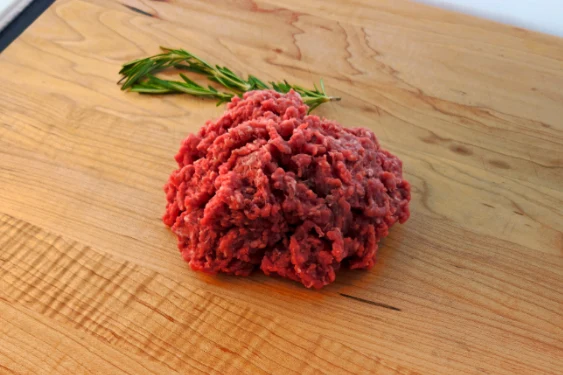
One pound packs of dry-aged ground beef. Four quarter-pounders or three third-pounders to the pack.
View Product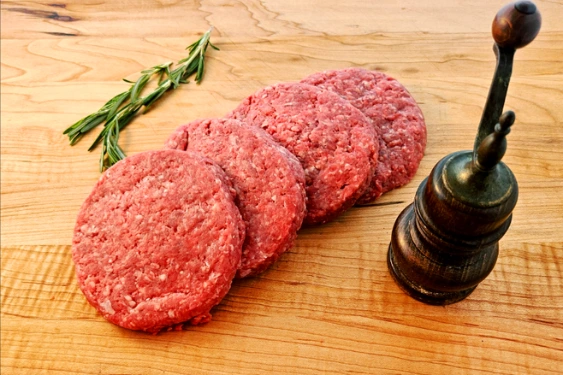
Dry-aged patties at 5.3 ounces, portioned already. Count heads, count patties, done.
View Product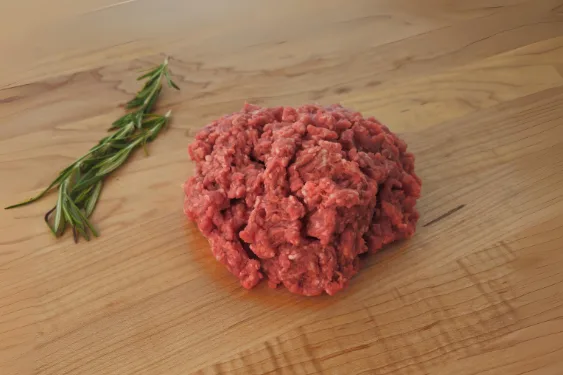
Proper Meats ground beef by the pound. The one to buy by the handful for a week of dinners.
View ProductForming is covered in how to make hamburger patties, the ratio in 80/20 vs 90/10, and toppings in how to set up a burger bar.
- Cook to a Safe Minimum Internal Temperature, FoodSafety.gov
Food-safety temperatures and storage times on this page are cited to the agencies above rather than to us.
Written at Shipley Farms in Vilas, North Carolina: a family cattle farm raising and dry-aging beef in the Appalachian Mountains, now in its fifth generation. No shortcuts since 1872.
Every quote on this page is Gray Shipley talking, the man who runs this farm. We sat down with him, turned on a recorder, and kept his own words. Hesitations are trimmed so they read on the page. Nothing else is added or reworded, except where Gray revised his own words in review.
Nobody knows this beef better than we do. On food safety we leave it to FoodSafety.gov, and we have linked their page above. Reviewed 3 October 2026.
Shipley Farms
Stories, recipes and news from Shipley Farms.