What Ground Beef Ratio Is Best for Burgers? 80/20 vs 90/10
Eighty-twenty. If you take one thing from this page, take that.
The ratio on the pack is fat to lean. Eighty-twenty means twenty percent fat, and that twenty percent is doing almost all of the work people associate with a good burger.
“You don't want a lean burger. You don't want some silly 90-10. You know, get a good 80-20, 75-25 blend.”
Gray Shipley
What the fat actually does
- It carries flavor. Most of what you taste in beef lives in the fat, not the muscle.
- It keeps the burger juicy. Fat renders as it cooks and stays in the patty if you have not pressed it out.
- It forgives you. A fattier patty survives thirty seconds too long on the grill. A lean one does not.
When leaner is the right call
Ninety-ten is not useless. It is the better choice when the beef is one component in a dish that already has fat and liquid in it.
- Chili and bolognese. Long cooking, plenty of liquid. Lean works.
- Tacos. You are draining fat anyway, so start with less.
- Meatloaf and meatballs. Somewhere in between. There is usually bread and egg carrying moisture.
| Dish | Ratio | Why |
|---|---|---|
| Burgers | 80/20 | Fat carries the flavour, keeps the patty juicy, and forgives thirty seconds too long |
| Chili and bolognese | 90/10 works | Long cooking, plenty of liquid |
| Tacos | Leaner | You are draining fat anyway, so start with less |
| Meatloaf and meatballs | In between | There is usually bread and egg carrying the moisture |
Why the ratio matters more than the grade
“And, what the livestock eat really translates into the quality of the fat. So the diversity of the forage on the pasture and staying on pasture as a primary diet, the way that the ruminants are designed.”
Gray Shipley
What the animal ate ends up in the fat. So on a pasture-raised beef, the fat is not a filler to be minimized, it is the part carrying everything that makes it taste of somewhere.
Read the pack, not the marketing
“And then just what's on the label and what's actually in it? Is there anything that I can't pronounce? Is there anything that comes from a chemical factory? Is there anything made of petroleum instead of something that grows out of the ground or walks on it?”
Gray Shipley
Ground beef is the easiest place in the meat case for things to be added. One ingredient on the label is the standard to hold to: beef.
A note on freezing it
Ground beef has more surface than any other form of beef, which is why it is worth wrapping tightly and getting into the coldest part of the freezer. At zero degrees Fahrenheit it keeps safely, so buy the pack count you will actually use and freeze the rest flat.
The practical answer
Buy 80/20 for burgers and keep a pound of leaner ground for the nights it goes into a pot. If you are only going to buy one, buy the 80/20, because you can always drain fat out and you cannot put it back.
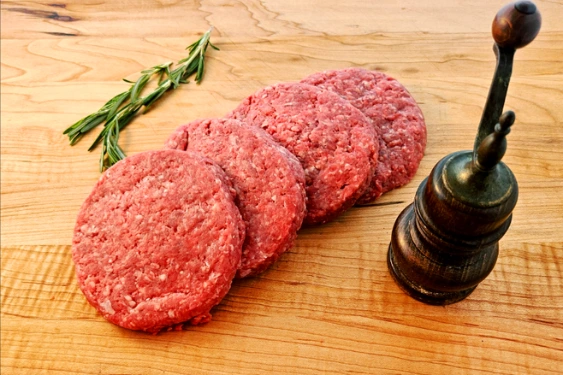
Dry-aged patties at 5.3 ounces, portioned already. Count heads, count patties, done.
View Product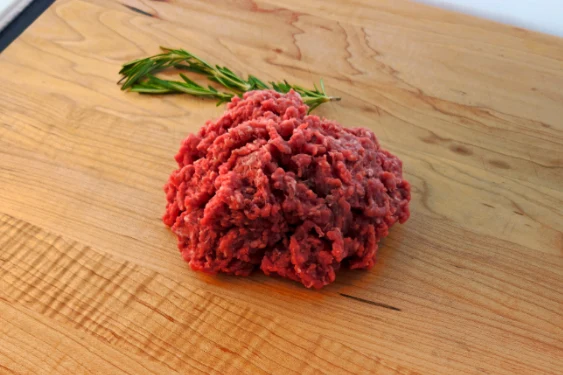
One pound packs of dry-aged ground beef. Four quarter-pounders or three third-pounders to the pack.
View Product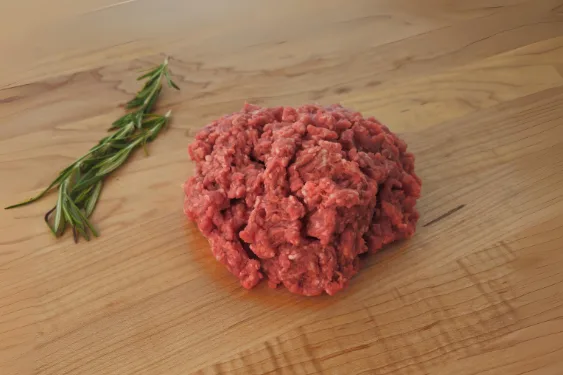
Proper Meats ground beef by the pound. The one to buy by the handful for a week of dinners.
View ProductForming them is covered in how to make hamburger patties, seasoning in how to season burgers, and quantities in how much beef per person.
- Cook to a Safe Minimum Internal Temperature, FoodSafety.gov
- Freezing and Food Safety, USDA FSIS
Food-safety temperatures and storage times on this page are cited to the agencies above rather than to us.
Written at Shipley Farms in Vilas, North Carolina: a family cattle farm raising and dry-aging beef in the Appalachian Mountains, now in its fifth generation. No shortcuts since 1872.
Every quote on this page is Gray Shipley talking, the man who runs this farm. We sat down with him, turned on a recorder, and kept his own words. Hesitations are trimmed so they read on the page. Nothing else is added or reworded, except where Gray revised his own words in review.
Nobody knows this beef better than we do. On food safety we leave it to USDA FSIS and FoodSafety.gov, and we have linked their pages above. Reviewed 3 October 2026.
Shipley Farms
Stories, recipes and news from Shipley Farms.