How to Feed a Crowd With Beef
Cooking for four is about the food. Cooking for twenty is about the order you do things in. The cooks who make it look easy are not better at steak.
The mistake is almost always the same: somebody chooses a cut that has to be cooked to order, and then spends the party at the heat while the party happens behind them.
Choose something that cooks in batches
- Best for a crowd. Brisket, chuck, anything slow. It goes in early, it needs attention twice, it comes out when you are ready.
- Good for a crowd. Burgers. They cook fast, in batches, and nobody minds waiting two minutes for the next round.
- Hard for a crowd. Steaks cooked to individual doneness. Wonderful for six, miserable for twenty.
“And then, you know, let the flavor do the work and don't try to do too much.”
Gray Shipley
That is the instruction that matters most when the numbers go up. The temptation at scale is to compensate with sauces and toppings. The better move is fewer things done properly.
Buy more of a cheaper cut, not less of an expensive one
Twenty people fed well on sirloin beats twenty people given a sliver of ribeye each. The cut matters less than whether there is enough, and running short is the only outcome a guest actually remembers.
“Yeah, there's probably about six or seven different cuts you get out of a pig. There's 40 or 50 that you can get out of a beef. And so there's so much there that people just don't realize.”
Gray Shipley
That range is the opportunity. A beef is not only steaks, and the cuts people have not heard of are usually the ones that feed a crowd for less.
“I like a thicker burger. You know, when you get that sear and the crunch and the smash burger, that's pretty good. But I like a good, thick burger.”
Gray Shipley
Thickness is also a crowd decision. A thicker patty takes slightly longer but holds its heat while a batch builds up, which matters when you are cooking in rounds rather than to order.
Cook ahead where you can
Anything braised is better the next day, and reheats without penalty. If you are feeding twenty, cooking on the day before is the single biggest thing you can do for your own evening.
A simple plan that works
- Day before. Braise or smoke the slow cut. Cool it whole.
- Morning. Form patties, prep toppings, get everything out of the refrigerator.
- An hour before. Reheat the slow cut gently. Light the grill.
- On the day. Cook burgers in batches while the slow cut holds. Nobody waits.
What to do about doneness when there are twenty people
Do not take twenty orders. Cook the batch to medium, pull a few early for the people who want them pink and leave a few on for the people who want them through. Anyone with a strong preference will tell you, and everyone else is happy with medium.
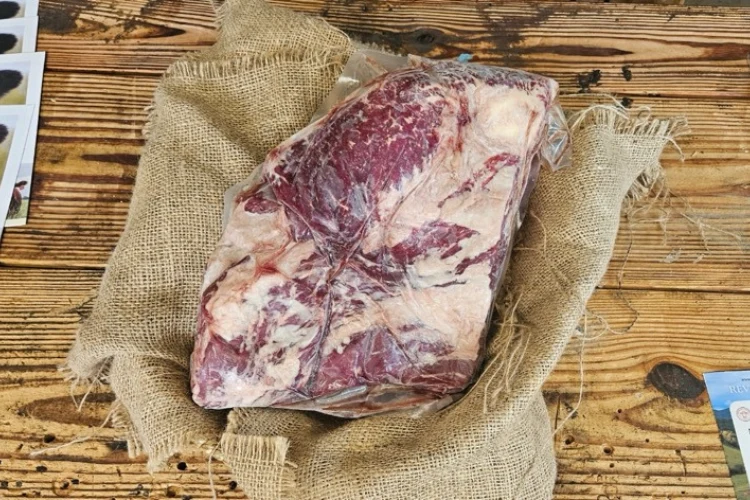
Whole dry-aged brisket. Feeds a crowd from one piece of meat, and rewards an early start.
View Product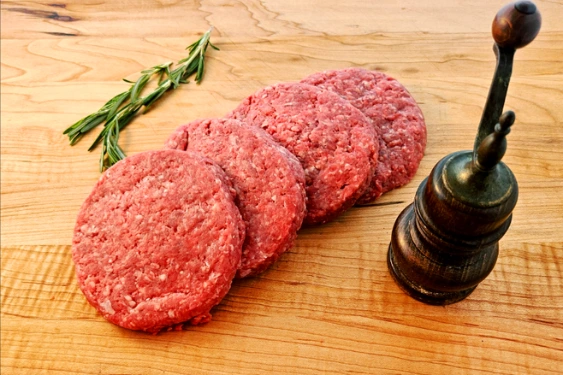
Dry-aged patties at 5.3 ounces, portioned already. Count heads, count patties, done.
View ProductSame portion, everyday pricing. This is the one to buy by the case when the number gets large.
View ProductWork out the numbers first with how much beef per person. If the slow cut is the route you take, these are the cuts for it, and the full cookout plan is here.
- Cook to a Safe Minimum Internal Temperature, FoodSafety.gov
- “Danger Zone” (40°F - 140°F), USDA FSIS
Food-safety temperatures and storage times on this page are cited to the agencies above rather than to us.
Written at Shipley Farms in Vilas, North Carolina: a family cattle farm raising and dry-aging beef in the Appalachian Mountains, now in its fifth generation. No shortcuts since 1872.
Every quote on this page is Gray Shipley talking, the man who runs this farm. We sat down with him, turned on a recorder, and kept his own words. Hesitations are trimmed so they read on the page. Nothing else is added or reworded, except where Gray revised his own words in review.
Nobody knows this beef better than we do. On food safety we leave it to USDA FSIS and FoodSafety.gov, and we have linked their pages above. Reviewed 3 October 2026.
Shipley Farms
Stories, recipes and news from Shipley Farms.