How to Plan a Backyard Cookout
A cookout goes wrong in the week before it, not on the day.
Start from the end. Decide the hour you want to be sitting down with a drink, and work backwards from there. Everything below is in that order.
Two weeks out: the number
Get a headcount and then add two, because somebody brings somebody. Work the quantities from half a pound of boneless beef per adult and buy on the generous side. Beef that does not get eaten goes in the freezer and keeps.
One week out: the order
Order the beef. This is the step people leave too late, and it is the one that decides whether you are choosing or taking what is left. Frozen beef arrives with its clock stopped, so early is free.
The day before: everything that is not cooking
- Move the beef from the freezer to the refrigerator. A thick cut wants a full day.
- Form the patties if you are forming them, and separate them with paper.
- Make the sauces and the slaw. Both are better overnight.
- Clean the grill. Nobody wants to do this with guests in the yard.
What to buy, briefly
“You don't want a lean burger. You don't want some silly 90-10. You know, get a good 80-20, 75-25 blend.”
Gray Shipley
Fat ratio is the one specification worth being fussy about at a cookout. A lean patty on a hot grill over a long afternoon dries out while it waits; an eighty-twenty patty forgives the wait.
“I like a thicker burger. You know, when you get that sear and the crunch and the smash burger, that's pretty good. But I like a good, thick burger.”
Gray Shipley
Scaling it up
A reunion of forty and a company cookout of eighty are the same plan with two changes. First, move to something that batches: a slow cut carried through the afternoon, with burgers alongside. Second, delegate the toppings table entirely, because it is the one job anyone can do and the one that eats your time.
“And then, you know, let the flavor do the work and don't try to do too much.”
Gray Shipley
On the day
- Two hours out. Take the beef out of the refrigerator. Light the coals late rather than early.
- One hour out. Toppings on the table, drinks in ice, plates and napkins out where people can reach them.
- Thirty minutes out. First batch on. Cook in rounds rather than trying to serve everyone at once.
- Through the afternoon. Keep one batch ahead of the queue and you will never be cooking while people wait.
The two things that actually go wrong
- Running out. It is the only failure anyone remembers. Buy more than the arithmetic says.
- Cooking while people wait. Stay one batch ahead and the grill stops being the bottleneck.
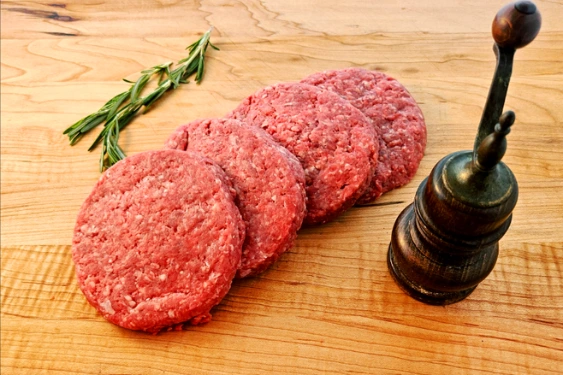
Dry-aged patties at 5.3 ounces, portioned already. Count heads, count patties, done.
View Product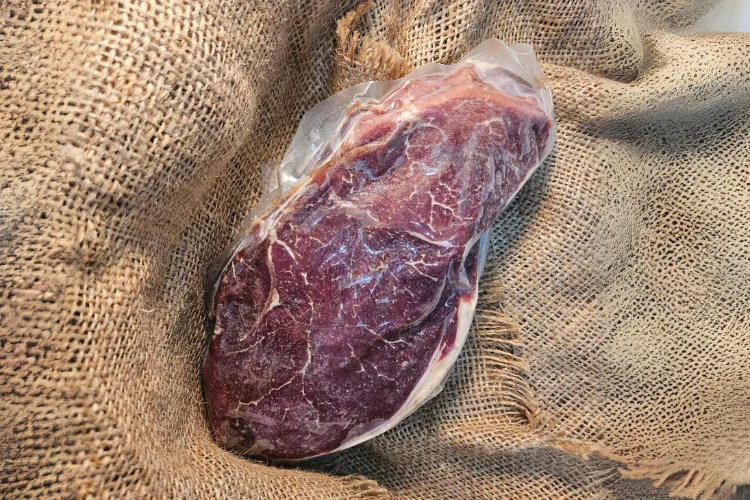
Lean, even and considerably easier on a budget when you are cooking for eight rather than two.
View Product
Everyday cuts that end up in a Tuesday dinner instead of sitting in the freezer waiting for a special enough night.
View ProductThe shopping is laid out in the complete cookout shopping list, and if the number is genuinely large, feeding a crowd has its own guide.
- Cook to a Safe Minimum Internal Temperature, FoodSafety.gov
- Freezing and Food Safety, USDA FSIS
Food-safety temperatures and storage times on this page are cited to the agencies above rather than to us.
Written at Shipley Farms in Vilas, North Carolina: a family cattle farm raising and dry-aging beef in the Appalachian Mountains, now in its fifth generation. No shortcuts since 1872.
Every quote on this page is Gray Shipley talking, the man who runs this farm. We sat down with him, turned on a recorder, and kept his own words. Hesitations are trimmed so they read on the page. Nothing else is added or reworded, except where Gray revised his own words in review.
Nobody knows this beef better than we do. On food safety we leave it to USDA FSIS and FoodSafety.gov, and we have linked their pages above. Reviewed 3 October 2026.
Shipley Farms
Stories, recipes and news from Shipley Farms.