Brisket vs Chuck Roast: Which Should You Cook?
Brisket has the reputation and chuck has the better odds. Both are hard-working muscles that reward hours of low heat, and one of them will forgive you if you get distracted.
Both come from muscles that worked hard, which is why both want hours rather than minutes.
“And I can't prove this, but muscles that get used, get flavor and muscles that don't get used, stay tender. And that's why the tenderloin, those back muscles on the animal, back muscles on a four-legged animal don't get used much. That's where the saying living high on the hog comes from.”
Gray Shipley
Brisket
From the chest. It is two muscles, the flat and the point, with different thicknesses and different amounts of fat, lying on top of each other. That is the entire reason brisket is difficult: you are cooking two things at once and they do not finish together.
Twelve to fourteen hours on a smoker, a stall in the middle that unnerves people, and a result that is genuinely exceptional when it works.
Chuck roast
From the shoulder. One cut, more evenly marbled through, and no second muscle to argue with. Six to eight hours, or three in a covered pot in the oven, and it shreds into something very close to brisket at a fraction of the cost and risk.
“If you've got time to get out the smoker, that's a really easy way to put, you know, one of the best things I've ever eaten is one of our dry-aged chuck roasts that my buddy Joel Davis smoked one time.”
Gray Shipley
Which to choose
- First time cooking low and slow. Chuck. Nothing about this is a compromise.
- Feeding a crowd on a budget. Chuck, and more of it.
- You want sliced brisket with a bark. Then it has to be brisket. Nothing else gives you that.
- Shredded, in a sandwich or a taco. Chuck. Once it is pulled, almost nobody can tell.
The thing both of them need
“Love a good, well-done brisket. Not well done, but done well.”
Gray Shipley
Taken far past where a steak would be ruined, and held there until the connective tissue has given up. A brisket or a chuck pulled early is tough, and the fix is always more time rather than less.
The practical test
Not a clock and not a temperature alone. A probe should slide in with no resistance, like going into room-temperature butter. Until it does, it is not done, whatever the thermometer reads.
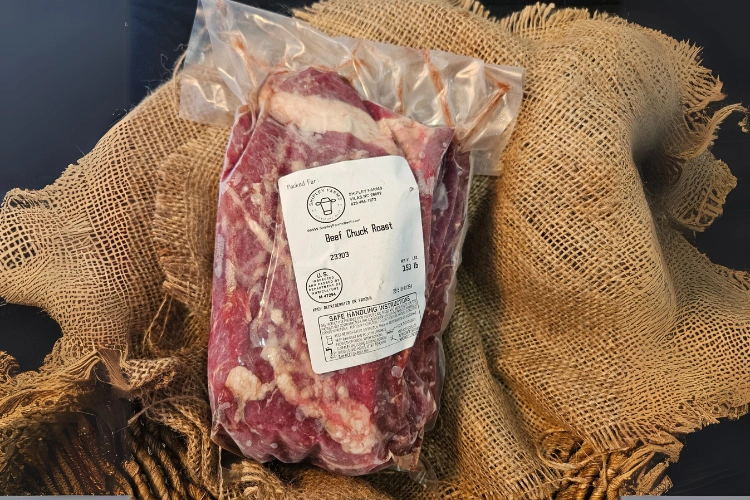
Dry-aged boneless chuck roast. In early, left alone, and it will be the thing people remember.
View Product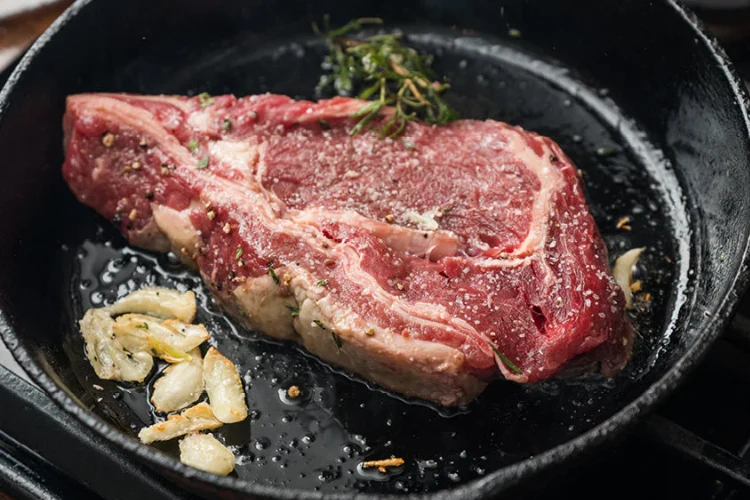
Our signature dry-aged ribeye. Heavily marbled, thick, and forgiving of a minute either way.
View Product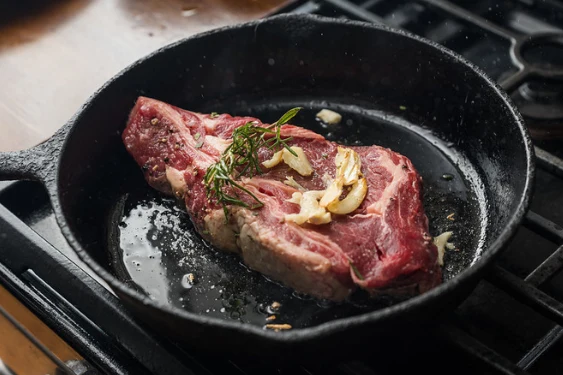
The same cut without the dry aging, for a weeknight where you still want a real steak.
View ProductThe smoker version is in best beef cuts for smoking, the oven version in chuck roast vs pot roast.
- Cook to a Safe Minimum Internal Temperature, FoodSafety.gov
Food-safety temperatures and storage times on this page are cited to the agencies above rather than to us.
Written at Shipley Farms in Vilas, North Carolina: a family cattle farm raising and dry-aging beef in the Appalachian Mountains, now in its fifth generation. No shortcuts since 1872.
Every quote on this page is Gray Shipley talking, the man who runs this farm. We sat down with him, turned on a recorder, and kept his own words. Hesitations are trimmed so they read on the page. Nothing else is added or reworded, except where Gray revised his own words in review.
Nobody knows this beef better than we do. On food safety we leave it to FoodSafety.gov, and we have linked their page above. Reviewed 3 October 2026.
Quick answers
What is the difference between brisket and chuck roast?
Brisket comes from the chest and is two muscles, the flat and the point, that cook unevenly and need twelve to fourteen hours on a smoker. Chuck comes from the shoulder, is a single, more evenly marbled cut, and shreds just as well in six to eight hours, or three hours braised in a covered pot.
Should a beginner cook brisket or chuck roast?
Chuck roast. It is more forgiving, cheaper, and nothing about starting with it is a compromise -- save brisket for when you specifically want sliced meat with a bark.
Shipley Farms
Stories, recipes and news from Shipley Farms.