Dry-Aged Chuck Roast on the Smoker for Thanksgiving
How to smoke a dry-aged chuck roast for Thanksgiving: smoker temperature, timing, the stall, and how to tell when it is done.
Ask the man who runs a cattle farm what belongs at the center of the Thanksgiving table and you get a straight answer.
Asked for the beef answer to a turkey table, Gray Shipley said:
“I love this question, because of all the proteins, turkey to me is the most unimpressive. It's something that is difficult to cook without it drying out, big huge bird, and I've had a good turkey when it's been smoked or when it's sometimes maybe deep fried, but you can also set a house on fire. So I really like to see people break the turkey tradition and move to a beef or a pork roast at the center of the table.”
Gray Shipley
Word for word, as recorded
I love this question because of all the proteins turkey to me is the most unimpressive it's something that is difficult to cook without it drying out big huge bird and I've had a good turkey when it's been smoked or when it's sometimes maybe deep fried but you can also set a house on fire so I really like to see people break the turkey tradition and move to a beef or a pork roast at the center of the table.
He did not say rib roast, though families do call the farm for those in November. He did not stop at brisket either, though he would happily eat one. He went one roast further.
“Thanksgiving brisket seems to make a whole lot more sense, but the other secret roast out there that really doesn't get its due is a chuck roast.”
Gray Shipley
Word for word, as recorded
Thanksgiving brisket seems to make a whole lot more sense but the other secret roast out there that really doesn't get its due is a chuck roast.
Why a chuck roast, and why dry-aged
Chuck comes from the shoulder, a muscle that works all day. That work gives it two things: deep beef flavor and a lot of fat and connective tissue running through it. Cooked fast, that tissue is tough. Cooked low and slow, it melts into the meat and keeps every slice moist. It is the same reason brisket smokes so well, in a smaller and more forgiving piece. Brisket vs chuck roast sets the two side by side.
Dry aging adds a second layer. A dry-aged roast has rested in cold, moving air before it is cut, so some of its water is gone and the flavor that is left is more concentrated. On a smoker, that concentrated beef flavor and the smoke meet in the crust.
“My friend Joel Davis smoked one of our chuck roast, dry aged chuck roast, on his smoker, and it was one of the best things I've ever eaten. Chuck roast with that fat that's beautifully marbled in there, you cook it low and slow, the flavor in that is absolutely amazing. Chuck roast or a brisket, I think, should be at the center of the Thanksgiving table. That should be the new tradition.”
Gray Shipley
Word for word, as recorded
My friend Joel Davis smoked one of our chuck roast dry aged chuck roast on his smoker and it was one of the best things I've ever eaten chuck roast with that fat that's beautifully marbled in there you cook it low and slow the flavor in that is absolutely amazing chuck roast or a brisket I think should be at the center of the Thanksgiving table that should be the new tradition.
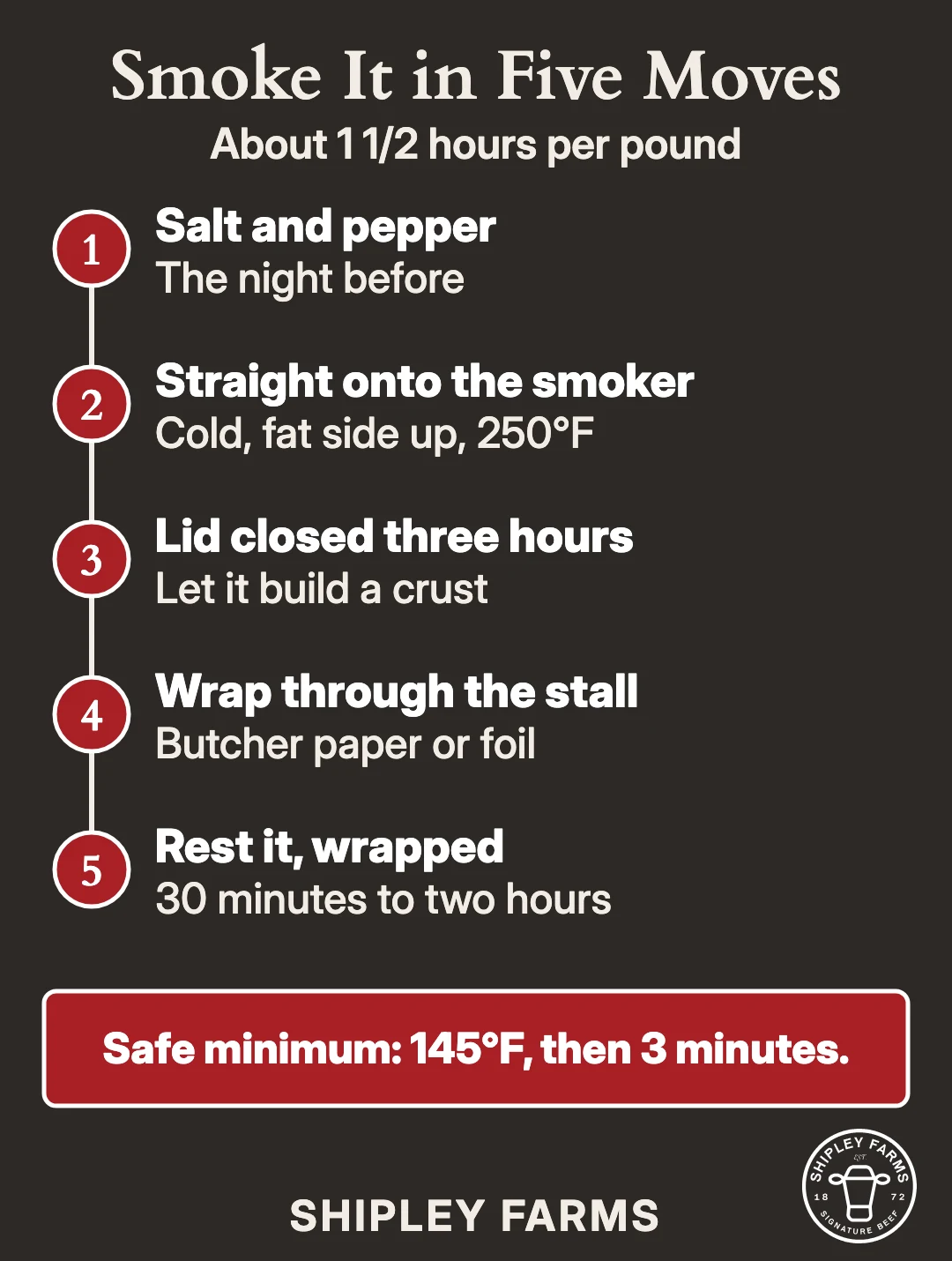
How to smoke a dry-aged chuck roast
- Roast size. A boneless chuck roast of 3 to 4 pounds feeds six to eight, at about half a pound per adult. How much beef per person has the full working.
- Seasoning. Coarse salt and black pepper, generously, the night before if you can. Dry-aged beef does not need much help.
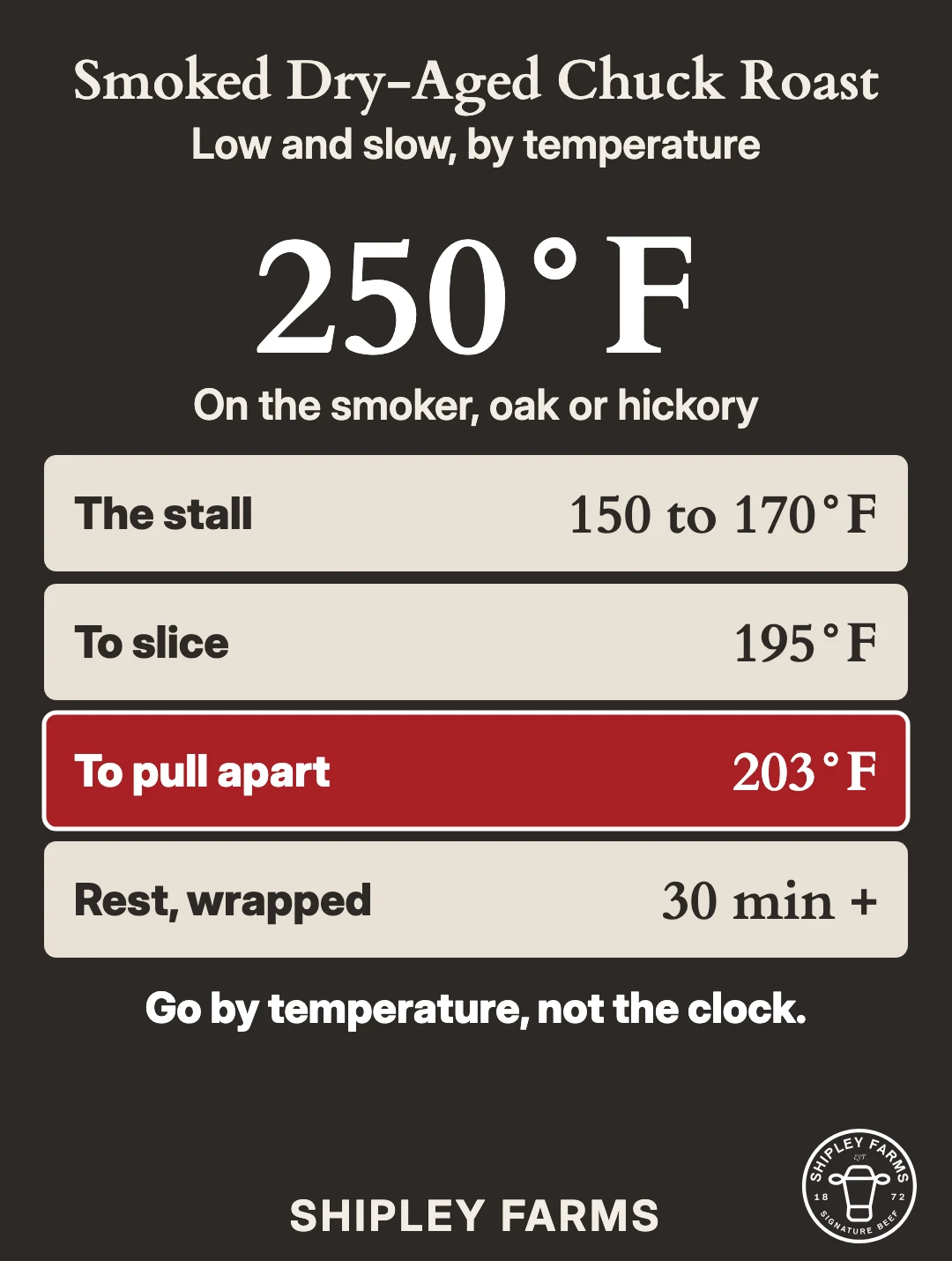
- Smoker temperature. 250°F, with oak or hickory. Steady heat matters more than the exact number.
- Time. Plan on roughly an hour and a half per pound, and give yourself an extra hour. Go by temperature and feel, not by the clock.
- Start it cold. Put the roast straight from the refrigerator onto the smoker, fat side up. Cold meat takes on more smoke.
- Let it build a crust. Leave the lid closed for the first three hours. Every look costs you heat.
- Ride out the stall. Somewhere around 150°F to 170°F inside, the temperature will stop climbing for an hour or more while moisture evaporates from the surface. That is normal. Why did my brisket stall? explains what is happening. To push through it, wrap the roast tightly in butcher paper or foil once the crust is set.
- Decide how you want to serve it. For slices that hold together, take it off around 195°F. For meat that pulls apart with a fork, take it to about 203°F, when a probe slides in like it is going into soft butter.
- Rest it. Keep it wrapped and rest it for at least 30 minutes, or up to two hours in a dry cooler lined with towels. That rest is what lets you time the roast to the meal instead of the other way around.
For the record, the safe minimum for a whole cut of beef is 145°F with a three-minute rest. A smoked chuck roast goes well past that, because the goal here is tenderness, not doneness.
No smoker? Use the oven
Season it the same way, brown it hard in a heavy pot, then cover it and give it 3 to 4 hours at 275°F with a cup of broth in the bottom of the pot. You lose the smoke and keep everything else. Chuck roast vs pot roast covers the braising side.
How it fits the Thanksgiving day
A turkey wants your attention at exactly the hour your family is arriving. A chuck roast on the smoker wants an early start and then very little from you, and it will hold, wrapped and resting, while everybody finds their way to the table. If you are weighing the rest of the beef options for the holiday, what if beef is the Thanksgiving centerpiece? walks through them.
What to do with leftover chuck roast
Smoked chuck keeps its flavor for days. Pull what is left into a freezer meal beef stew, or toss it with egg noodles in easy beef and noodles. Get it into the refrigerator within two hours of serving.
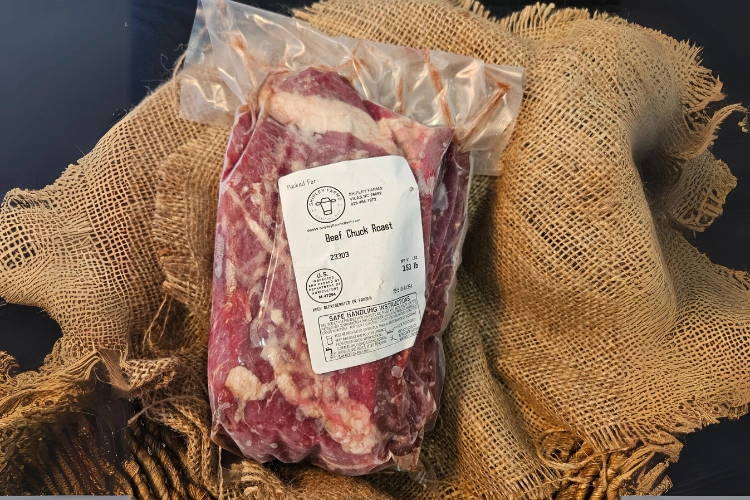
Dry-aged, boneless and well marbled. Low and slow on the smoker and it will be the thing people remember.
View Product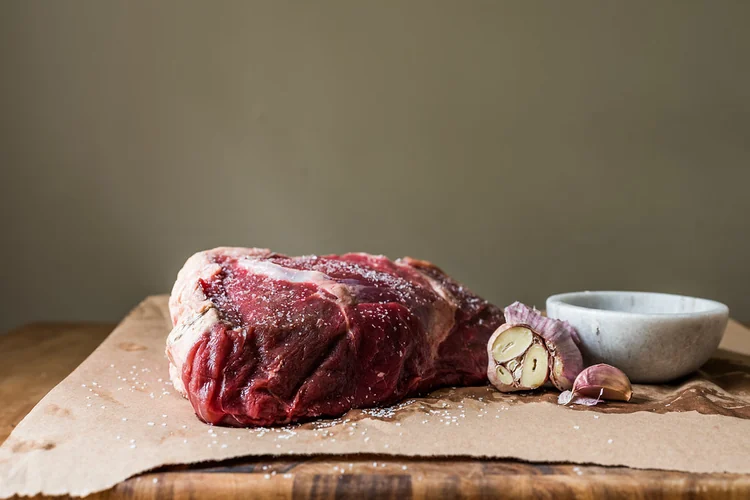
A roast feeds a table and asks very little of you once it is cooking.
View Product- Cook to a Safe Minimum Internal Temperature, FoodSafety.gov
Food-safety temperatures and storage times on this page are cited to the agencies above rather than to us.
Written at Shipley Farms in Vilas, North Carolina: a family cattle farm raising and dry-aging beef in the Appalachian Mountains, now in its fifth generation. No shortcuts since 1872.
Every quote on this page is Gray Shipley talking, the man who runs this farm. He recorded these answers himself, at the farm, in the autumn of 2026. The play button under each quote is that recording, exactly as he said it, and the words under it are a word-for-word transcript. In the written quotes, hesitations are trimmed so they read on the page. Nothing else is added or reworded, except where Gray revised his own words in review.
On food safety we leave it to USDA FSIS and FoodSafety.gov, and we have linked their pages above. Reviewed 8 November 2026.
Shipley Farms
Stories, recipes and news from Shipley Farms.