Why Did My Brisket Stall?
Your brisket sat at the same temperature for three hours and you assumed something broke. Nothing broke.
Hours in, the thermometer stops moving. It sits at roughly the same reading for two or three hours while the fire is still going. This is the stall and it happens to everyone.
What is actually happening
Moisture is evaporating off the surface of the brisket, and evaporation takes heat with it. For a long stretch the cooling from that evaporation almost exactly cancels the heat going in. The meat is still cooking; it is just not getting hotter.
It is the same reason sweating cools you down. Nothing is wrong with your smoker, your fire or your meat.
“Love a good, well-done brisket. Not well done, but done well.”
Gray Shipley
Your two options
- Wait it out. Once the surface has dried enough, evaporation slows and the temperature climbs again. This gives you the best bark, and it costs two or three hours.
- Wrap it. Butcher paper or foil stops the evaporation, so the stall ends quickly. Foil ends it fastest and softens the bark most. Paper is the compromise most people settle on.
What not to do
Do not turn the heat up. A hotter fire does not beat evaporative cooling, it just dries the outside harder and tightens the meat. The stall is not a problem heat solves.
“If it's the right way, that's what no shortcuts is, we'll put in the extra effort to do things right.”
Gray Shipley
“So, I think that's the most common mistake is you're not sure, so you'll cook it a little longer. And you just don't need to.”
Gray Shipley
Full method in how to smoke a brisket.
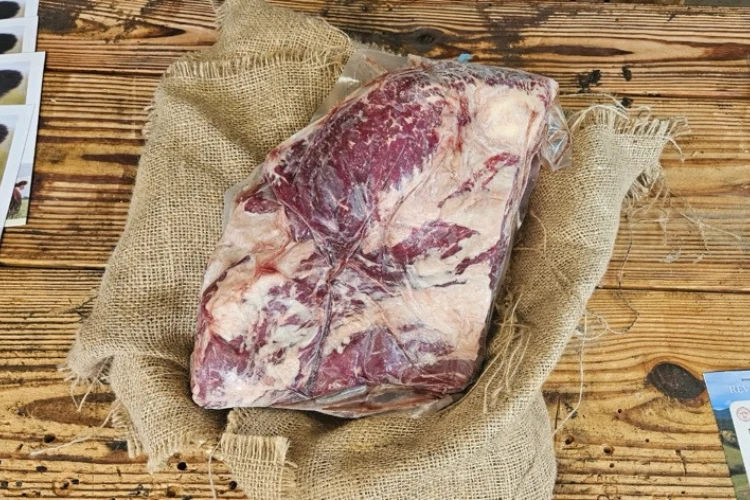
Whole dry-aged brisket. Expect the stall and plan for it.
View ProductWhy did my brisket stop rising in temperature?
Evaporative cooling. The surface is losing heat as fast as the smoker adds it.
- Cook to a Safe Minimum Internal Temperature, FoodSafety.gov
- “Danger Zone” (40°F - 140°F), USDA FSIS
Food-safety temperatures and storage times on this page are cited to the agencies above rather than to us.
Written at Shipley Farms in Vilas, North Carolina: a family cattle farm raising and dry-aging beef in the Appalachian Mountains, now in its fifth generation. No shortcuts since 1872.
Every quote on this page is Gray Shipley talking, the man who runs this farm. We sat down with him, turned on a recorder, and kept his own words. Hesitations are trimmed so they read on the page. Nothing else is added or reworded, except where Gray revised his own words in review.
Nobody knows this beef better than we do. On food safety we leave it to USDA FSIS and FoodSafety.gov, and we have linked their pages above. Reviewed 3 October 2026.
Shipley Farms
Stories, recipes and news from Shipley Farms.