How to Smoke a Brisket
A brisket takes twelve hours and the last two are the ones that decide whether it worked.
Brisket comes off the chest, which on the cut map is bottom row, front. It carries the animal's weight all day. That is why it is tough and why it is worth twelve hours.
“But the muscles that get used, that's where the flavor comes from. That's why the brisket is so good if you can cook it right.”
Gray Shipley
Trim, then season simply
Take the hard fat off the top down to about a quarter inch and square the edges so nothing thin burns. Salt and coarse black pepper is genuinely enough; a brisket is already the most flavorful thing on the animal.
“A lot of steaks can do fine with just a little salt and pepper. But a good steak doesn't need too much seasoning.”
Gray Shipley
Low and slow, then the stall
Around 250 degrees, fat side up, for hours. Somewhere around the middle the internal temperature will stop rising and sit there for two or three hours. That is the stall, it is normal, and it is covered in why did my brisket stall.
Wrap it in butcher paper at that point if you want to push through it, or wait it out if you have the time and want the bark.
Done is a feel, not a number
“Love a good, well-done brisket. Not well done, but done well.”
Gray Shipley
A probe should slide into the thickest part like it is going into room-temperature butter. Temperature gets you close; the probe tells you the truth. Then rest it for at least an hour, and two is better.
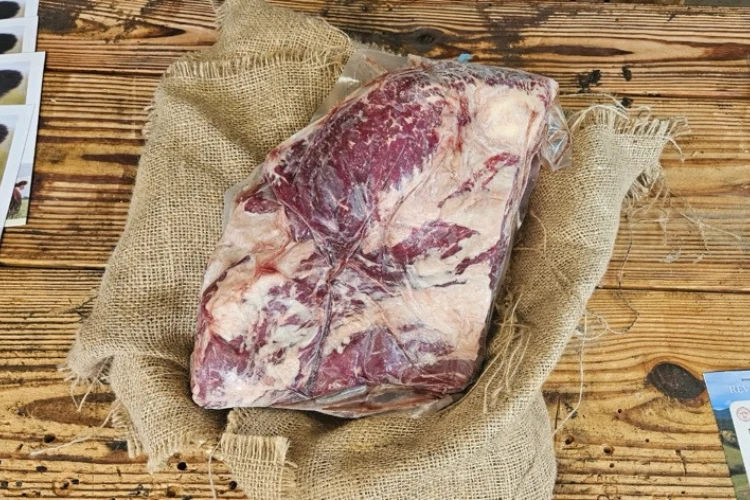
How do I smoke a beef brisket?
Low and slow for hours, wrapped when it stalls, and pulled when a probe slides in with no resistance.
- Cook to a Safe Minimum Internal Temperature, FoodSafety.gov
- “Danger Zone” (40°F - 140°F), USDA FSIS
Food-safety temperatures and storage times on this page are cited to the agencies above rather than to us.
Written at Shipley Farms in Vilas, North Carolina: a family cattle farm raising and dry-aging beef in the Appalachian Mountains, now in its fifth generation. No shortcuts since 1872.
Every quote on this page is Gray Shipley talking, the man who runs this farm. We sat down with him, turned on a recorder, and kept his own words. Hesitations are trimmed so they read on the page. Nothing else is added or reworded, except where Gray revised his own words in review.
Nobody knows this beef better than we do. On food safety we leave it to USDA FSIS and FoodSafety.gov, and we have linked their pages above. Reviewed 3 October 2026.
Shipley Farms
Stories, recipes and news from Shipley Farms.