Freezer Meal Beef Stew: Make Two, Freeze One
The best freezer meal beef stew is the one you were going to make anyway. Cook a big pot from a whole chuck roast, serve half tonight, cool the rest quickly and freeze it flat in labeled bags. On a busy night it thaws in the fridge, reheats on the stove in about 15 minutes, and tastes as if you spent the afternoon on it.
Beef stew freezes better than most dinners. The beef has already been cooked slowly in liquid, so freezing and reheating do little to it. The vegetables are the part to think about. Carrots and celery hold up well, but potatoes can turn soft and grainy, which is why this recipe uses waxy Yukon Golds cut into small pieces.
At a glance: makes 8 servings, two meals of 4. Prep 30 minutes, cook about 2 3/4 hours, cool and pack 30 minutes.
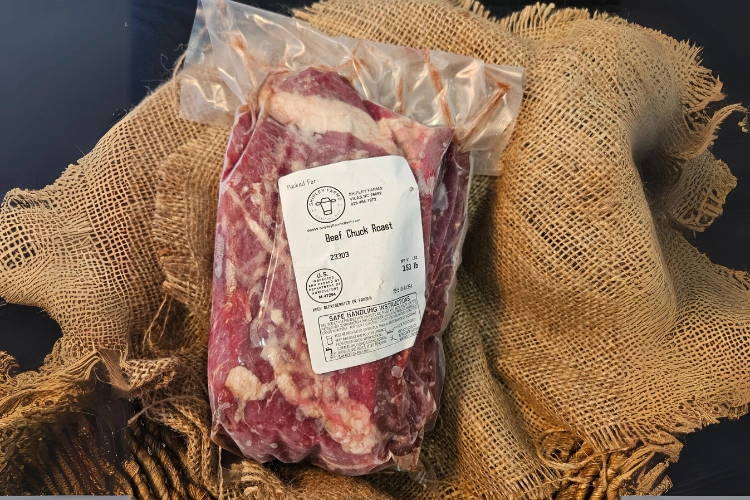
This recipe uses 1 chuck roast, cut into cubes, which makes two meals of four servings each.
Add 1 chuck roast to cartView ProductFilling the whole freezer instead? See the 1/8 beef share subscription.
On frozen food, Gray Shipley, who runs the farm, said this:
“Very few people have the ability to really tell any difference whatsoever of something that's been frozen.”
Gray Shipley
A stew is an easy place to put that to the test. Cooled quickly, frozen flat and reheated gently, a bag from the freezer comes back much as it went in.
Ingredients
- 1 boneless chuck roast, about 3 pounds
- 2 teaspoons kosher salt, plus more to taste
- 1 teaspoon freshly ground black pepper
- 3 tablespoons all-purpose flour
- 3 tablespoons neutral oil, divided
- 2 medium yellow onions, chopped
- 4 cloves garlic, minced
- 2 tablespoons tomato paste
- 6 cups low-sodium beef stock
- 1 tablespoon Worcestershire sauce
- 1 teaspoon dried thyme
- 2 bay leaves
- 4 medium carrots, cut into 1-inch pieces
- 3 celery ribs, cut into 1-inch pieces
- 1 1/2 pounds Yukon Gold potatoes, cut into 3/4-inch pieces
- 1 cup frozen peas (optional, for the meal you serve tonight)
- 2 tablespoons chopped fresh parsley
Instructions
- Trim off any large pieces of hard fat and cut the chuck into 1 1/2-inch cubes. Pat them dry, season with the salt and pepper, and toss with the flour.
- Heat 1 tablespoon of the oil in a large (7- to 8-quart) Dutch oven or soup pot over medium-high heat. Brown the beef in three batches, without crowding, 5 to 6 minutes per batch, adding more oil as needed. Move each batch to a bowl.
- Lower the heat to medium and add the onions. Cook, scraping the bottom, until soft, about 5 minutes. Stir in the garlic and tomato paste and cook for 1 minute.
- Pour in 1 cup of the stock and scrape up every browned bit. Add the rest of the stock, the Worcestershire, thyme, bay leaves, and the beef with its juices. Bring to a simmer, cover, and cook at a gentle simmer over low heat for 1 1/2 hours.
- Add the carrots, celery and potatoes. Cover and simmer for 45 minutes to 1 hour more, until the beef is tender and the potatoes are just cooked. Remove the bay leaves and season to taste.
- For tonight, ladle half the stew into a smaller pot, stir in the peas and heat for 3 to 4 minutes, until they are warmed through. Scatter with parsley and serve.
- Cool the other half fast: spread it in a wide, shallow pan, or set the pot in a sink of ice water and stir. Refrigerate it within two hours of cooking.
- When it is cold, ladle it into quart freezer bags, 2 to 3 cups in each. Press out the air, seal, and label each bag with the name, the date and how to reheat it. Lay the bags flat on a sheet pan to freeze, then stand them upright like files.
Beef stew freezer meal: cool it fast, freeze it flat
How you cool and pack the stew matters more than anything else. A deep pot of hot stew takes hours to cool in the fridge and warms everything around it, so spread it out or chill it in an ice bath first. Freezing in flat bags, rather than tubs, means the stew freezes quickly, stacks neatly and thaws overnight in the fridge instead of over two days. Leave a little room in each bag, since liquid expands as it freezes.
Label every bag. A freezer full of identical frozen blocks is no help on a busy night, and the guide to labeling a freezer below has a simple system. For how long to keep it, see the guide to beef in the freezer.
Reheating frozen beef stew
Thaw the bag overnight in the refrigerator, then empty it into a pot and heat it over medium, stirring now and then, until it bubbles and reaches 165 degrees F, about 15 minutes. In a hurry, run the sealed bag under cool water until the block slides out, put it in a pot with 1/4 cup of water, cover, and heat it over low heat, stirring as it softens, until it reaches 165 degrees F. Stew thickens in the freezer, so add a splash of stock if it needs it. Reheat it on the stove or in the microwave, not in a slow cooker.
Slow cooker freezer meals with beef
The other way to make freezer meals with beef is the raw bag, sometimes called a dump bag: everything for a slow cooker stew packed raw into one bag and frozen, ready to tip into the pot. It works, with one rule from USDA FSIS. Thaw the bag completely in the refrigerator, usually overnight or for a full day, before it goes into the slow cooker. FSIS advises always thawing meat before slow cooking it.
To make a raw bag from this recipe, cube and season the chuck, skip the flour, and pack it in a gallon freezer bag with the onions, garlic, tomato paste, Worcestershire, thyme, bay leaves, carrots and celery. Leave out the stock, which goes in on the day, and the potatoes, which do not freeze well raw. On the day, tip the thawed bag into the slow cooker with 4 cups of stock and freshly cut potatoes, and cook on low for about 8 hours. Browning the beef first is optional. It adds flavor, but it also takes the shortcut out of the shortcut.
Food safety
USDA FSIS lists 145 degrees F, followed by a rest of at least 3 minutes, as the safe minimum for whole cuts of beef; a stew simmered for hours passes that long before the beef is tender. Reheat leftovers to 165 degrees F. For slow cooker meals, FSIS advises always thawing meat first, refrigerating leftovers within two hours, and reheating them on the stove, in the microwave or in the oven rather than in the slow cooker. See the FSIS guidance on slow cookers and food safety and the FSIS Safe Minimum Internal Temperature Chart.
- Safe Minimum Internal Temperature Chart, USDA FSIS
- Slow Cookers and Food Safety, USDA FSIS
Food-safety temperatures on this page are cited to USDA FSIS rather than to us.
Published by Shipley Farms. The quote on this page is Gray Shipley, who runs the farm, in his own words from a recorded interview, quoted exactly, or as he revised it in review.
On food safety we follow USDA FSIS, linked above.