How to Cook Steak on a Charcoal Grill
Charcoal gives you flavor that gas cannot.
If you have decided to light charcoal on a weeknight, you are already doing this for the flavor rather than the convenience. The method should respect that.
Use lump hardwood, not the cheap bag
This is the part of charcoal cooking Gray is most direct about, and it is not about flavor.
“But, you know, one thing I don't trust about charcoal is, if you're going to use charcoal, you really need to use a good hardwood charcoal that's not treated with chemicals. And you don't want to use just kind of a base level bag from the store.”
Gray Shipley
Standard briquettes are compressed sawdust held together with binders, sometimes with accelerants added. You are cooking food directly in that smoke. Lump hardwood charcoal is carbonized wood and nothing else. It also burns hotter, which is what you want for a sear.
Skip lighter fluid entirely. A chimney starter and a sheet of newspaper does the job in fifteen minutes without putting petroleum distillates into your dinner.
Bank the coals
Pour the lit coals into one half of the grill and leave the other half empty. That gives you a searing zone and a finishing zone, which is the whole trick.
- Light a chimney of lump hardwood and wait until the top coals are ashed over.
- Pour them into one half of the grill.
- Put the grate on and let it heat for five minutes, then brush it clean.
- Dry and season the steak.
- Sear directly over the coals, two to three minutes a side, lid off.
- Move to the empty side, lid on, vents open, until five degrees below target.
- Rest eight to ten minutes.
Why the dry surface matters even over fire
“Get the moisture off the surface.”
Gray Shipley
Charcoal runs hotter than gas, which hides a damp surface better. It does not fix it. A dry steak over coals browns almost immediately, and that is the difference between grill marks and a whole-surface crust.
Where Gray lands on the whole question
“I like the control of gas, the control of the temperature, the control of the heat. So, I'm kind of on either end of that spectrum, but I don't like being in the middle.”
Gray Shipley
Read that as permission rather than a verdict. If you are going to the trouble of fire, go properly: hardwood, live coals, no shortcuts in the fuel.
Which cut to cook over coals
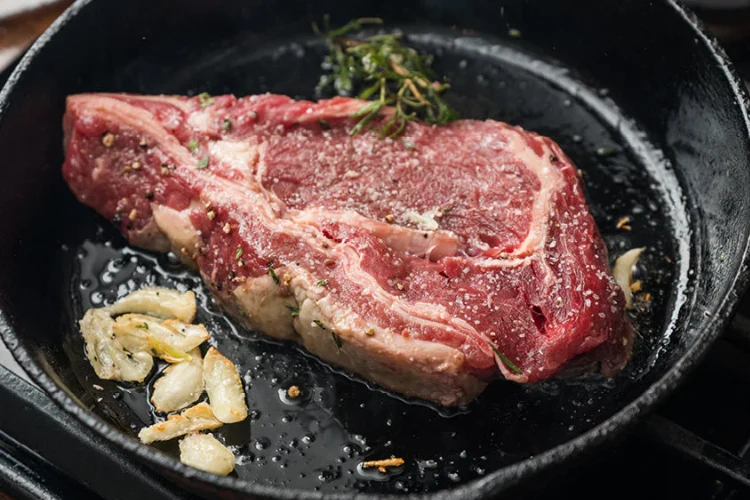
Marbling renders into the coals and comes back as smoke. This is the cut charcoal flatters most.
View Product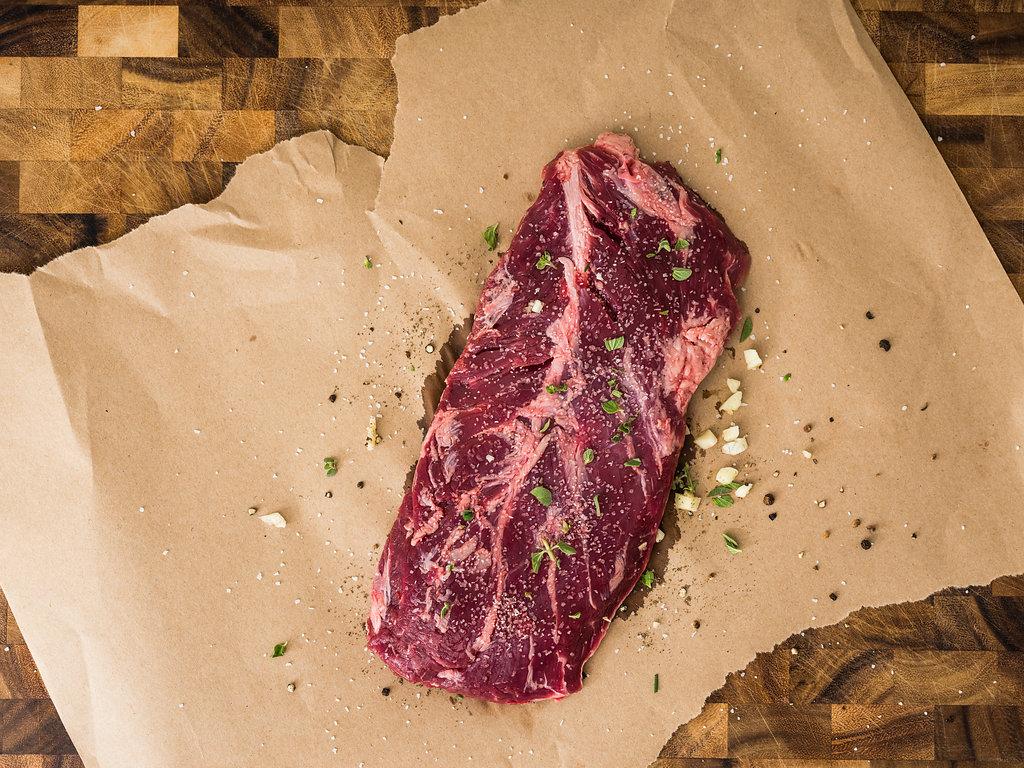
Loose grain takes smoke deeply, and it cooks fast enough to stay over live coals the whole time.
View Product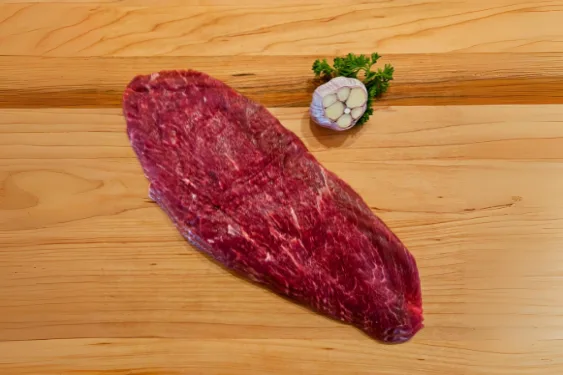
Cooks in minutes, so a small chimney of coals is enough.
View ProductThe general two-zone approach is in how to grill steak, the surface science is in getting a great crust, and do not skip resting it.
Clean fuel, banked coals, dry steak. Charcoal rewards all three.
- Grilling and Food Safety, USDA FSIS
- Cook to a Safe Minimum Internal Temperature, FoodSafety.gov
Food-safety temperatures and storage times on this page are cited to the agencies above rather than to us.
Written at Shipley Farms in Vilas, North Carolina: a family cattle farm raising and dry-aging beef in the Appalachian Mountains, now in its fifth generation. No shortcuts since 1872.
Every quote on this page is Gray Shipley talking, the man who runs this farm. We sat down with him, turned on a recorder, and kept his own words. Hesitations are trimmed so they read on the page. Nothing else is added or reworded, except where Gray revised his own words in review.
Nobody knows this beef better than we do. On food safety we leave it to USDA FSIS and FoodSafety.gov, and we have linked their pages above. Reviewed 3 October 2026.
Shipley Farms
Stories, recipes and news from Shipley Farms.