Dry-Aged vs Wet-Aged Beef: What Is the Difference?
Almost all beef sold in America is aged. Very little of it is dry-aged, and the difference is not subtlety, it is economics.
Aging beef means holding it after slaughter while enzymes in the muscle break down connective tissue. That part is common to both methods and it is why aged beef is more tender than fresh. What differs is whether moisture is allowed to leave.
Wet aging
The beef goes into a vacuum bag and sits refrigerated, often for the time it spends in transit and distribution. Enzymes do their work, nothing evaporates, and the beef weighs the same coming out as going in.
This is how the overwhelming majority of beef is aged, and the reason is simple: it costs nothing. No weight is lost, no space is tied up, and it happens while the product is already moving.
Dry aging
The beef hangs in controlled cold air, uncovered. Three things happen that cannot happen in a bag:
- Moisture leaves. The beef loses weight and what remains is more concentrated.
- A crust forms. The dried exterior has to be trimmed off and thrown away.
- Flavor changes. Nutty and deeper, rather than simply more beefy.
Both of those first two are losses. The farm pays for the weight that evaporates, the weight that gets trimmed, and the refrigerated space the beef occupied for weeks while doing nothing.
“Yeah, quality means we use the term no shortcuts, you know, the way that we've always done it, the way that my granddad and his granddad did it before, there were, you know, chemical genetic modifications.”
Gray Shipley
Can you actually taste it?
Yes, and more than people expect, though it depends who is eating. Somebody who cooks a lot will notice immediately. Somebody who eats steak twice a year may not, and there is no point pretending otherwise.
What they will notice is the texture, which is more consistently improved by aging than the flavor is.
“And I can't prove this, but muscles that get used, get flavor and muscles that don't get used, stay tender. And that's why the tenderloin, those back muscles on the animal, back muscles on a four-legged animal don't get used much. That's where the saying living high on the hog comes from.”
Gray Shipley
Why we do it anyway
“If it's the right way, that's what no shortcuts is, we'll put in the extra effort to do things right.”
Gray Shipley
That is the honest answer. Dry aging is a cost we choose rather than an efficiency we found, and it is the clearest example of what no shortcuts actually means in practice: the extra effort shows up on the plate and in the price, and we would rather explain the price than remove the effort.
What to look for
- If it does not say dry-aged, it is wet-aged. Dry aging is expensive enough that nobody does it quietly.
- Ask how long. A fortnight and six weeks are different products.
- Expect to pay more per pound, partly for the process and partly for the weight that no longer exists.
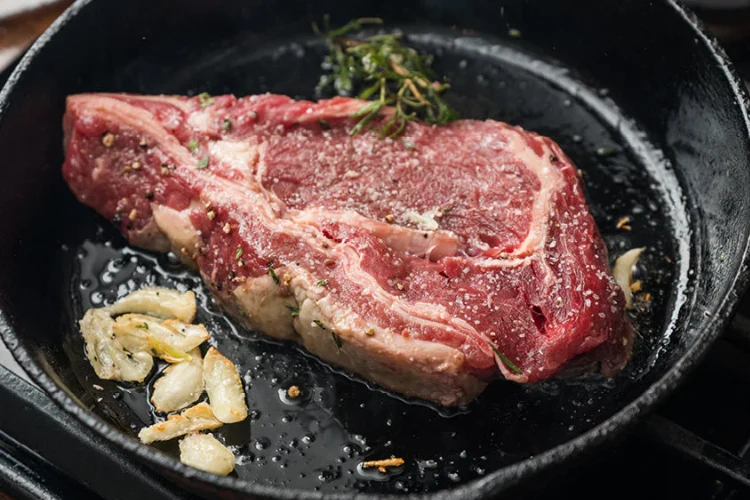
Our signature dry-aged ribeye. Heavily marbled, thick, and forgiving of a minute either way.
View Product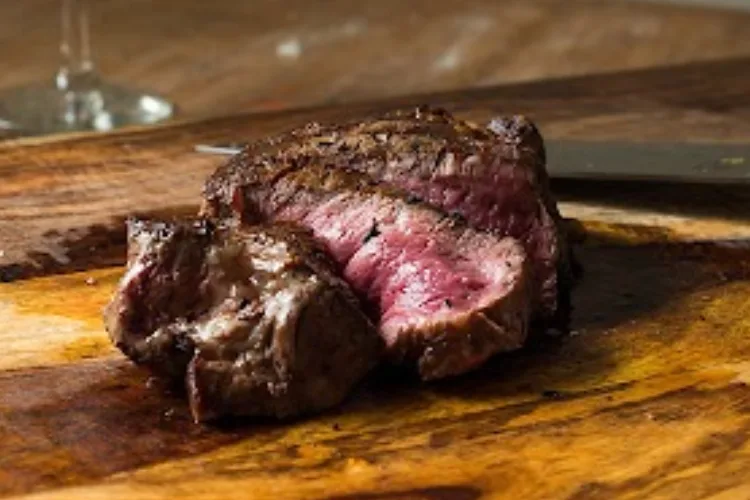
A dry-aged New York strip with a firm fat cap along one edge that tells you when the pan is ready.
View Product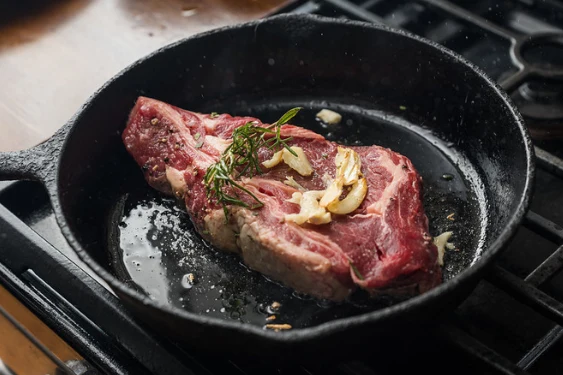
The same cut without the dry aging, for a weeknight where you still want a real steak.
View ProductWhat marbling does alongside aging is in what is beef marbling, and the raising terms in pasture-raised vs grass-fed.
- Freezing and Food Safety, USDA FSIS
- Grades and Standards: Beef, USDA AMS
Food-safety temperatures and storage times on this page are cited to the agencies above rather than to us.
Written at Shipley Farms in Vilas, North Carolina: a family cattle farm raising and dry-aging beef in the Appalachian Mountains, now in its fifth generation. No shortcuts since 1872.
Every quote on this page is Gray Shipley talking, the man who runs this farm. We sat down with him, turned on a recorder, and kept his own words. Hesitations are trimmed so they read on the page. Nothing else is added or reworded, except where Gray revised his own words in review.
Nobody knows this beef better than we do. On food safety we leave it to USDA FSIS, and we have linked their pages above. Reviewed 3 October 2026.
Shipley Farms
Stories, recipes and news from Shipley Farms.