How to Make Hamburger Patties That Do Not Shrink
Patties shrink. All of them do, because fat renders and protein tightens. What you can control is how much, and whether the result still fits the bun. Three habits cover almost all of it.
Three things make a patty shrink: fat rendering out, protein tightening as it heats, and water leaving. The first two are physics. The third is partly you.
Handle it as little as you can
Every minute the beef spends being worked warms it and compacts it. A patty that has been kneaded into a smooth puck cooks dense and tight. One that has been barely pressed together cooks loose and tender.
“And then, you know, let the flavor do the work and don't try to do too much.”
Gray Shipley
The three habits
- Keep it cold. Beef straight from the refrigerator forms better and holds its shape longer on the heat.
- Make them wider than the bun. By a good half inch. They will pull back to about the right size.
- Dimple the middle. A thumbprint in the center stops the patty doming into a ball as the edges tighten.
Ratio again, because it decides this too
“You don't want a lean burger. You don't want some silly 90-10. You know, get a good 80-20, 75-25 blend.”
Gray Shipley
A leaner patty shrinks less, because there is less fat to render. It is also drier, which is the trade nobody mentions. The answer is not leaner beef, it is a patty sized for the shrink you are going to get.
Salt at the right moment
Salt mixed into the beef changes the texture: it dissolves proteins and makes the patty springy, closer to sausage than burger. Salt the outside just before it hits the heat instead, and you keep the loose texture you were working for.
Size it to the bun, not to the pack
Five and a third ounces is a useful standard because it fits an ordinary bun after it shrinks. A quarter pound forms a patty that looks right raw and sits small on the bread once cooked, which is where the disappointment comes from.
If you are making a lot
Form them on parchment squares and stack them, then refrigerate until the moment they cook. They go from the stack to the heat without being handled again, which is the whole trick when you are cooking for twenty.
“I like a thicker burger. You know, when you get that sear and the crunch and the smash burger, that's pretty good. But I like a good, thick burger.”
Gray Shipley
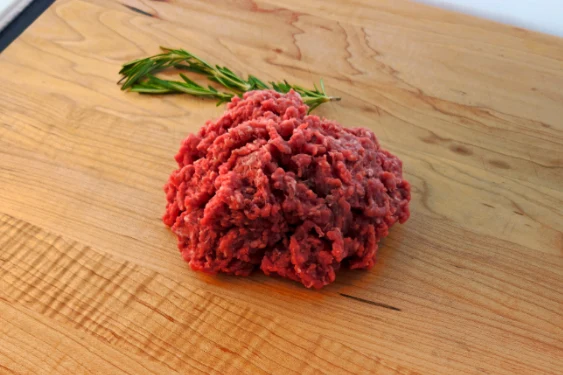
One pound packs of dry-aged ground beef. Four quarter-pounders or three third-pounders to the pack.
View Product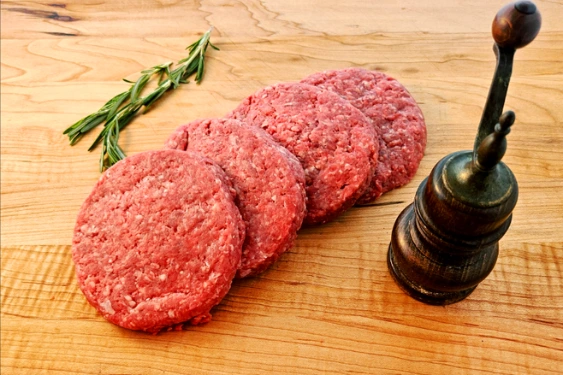
Dry-aged patties at 5.3 ounces, portioned already. Count heads, count patties, done.
View Product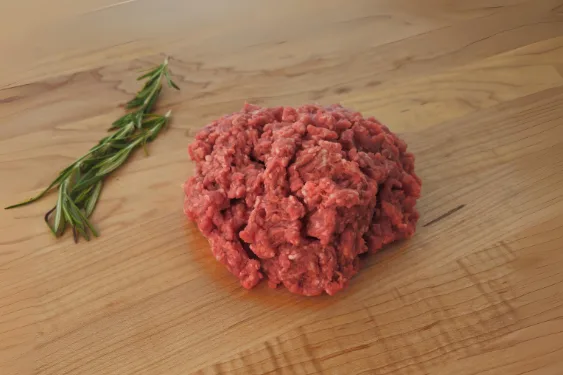
Proper Meats ground beef by the pound. The one to buy by the handful for a week of dinners.
View ProductThe ratio argument is in 80/20 vs 90/10, the grill method in how to grill burgers, and seasoning in how to season burgers.
- Cook to a Safe Minimum Internal Temperature, FoodSafety.gov
Food-safety temperatures and storage times on this page are cited to the agencies above rather than to us.
Written at Shipley Farms in Vilas, North Carolina: a family cattle farm raising and dry-aging beef in the Appalachian Mountains, now in its fifth generation. No shortcuts since 1872.
Every quote on this page is Gray Shipley talking, the man who runs this farm. We sat down with him, turned on a recorder, and kept his own words. Hesitations are trimmed so they read on the page. Nothing else is added or reworded, except where Gray revised his own words in review.
Nobody knows this beef better than we do. On food safety we leave it to FoodSafety.gov, and we have linked their page above. Reviewed 3 October 2026.
Shipley Farms
Stories, recipes and news from Shipley Farms.