How to Reverse-Sear Steak
Reverse-searing means cooking the steak low first and searing it last.
If you have ever cut into a thick steak and found a thin band of pink between two gray layers, reverse-searing is the fix.
The idea is simple. Cook it low until it is nearly done, then sear it hard for a minute at the end.
Why the order helps
A hard sear from raw puts a lot of heat into the outside of the steak and needs time for that heat to reach the middle. On a thick cut, the outer layers overcook while they wait.
Cooking gently first brings the whole interior up together. By the time you sear, you only need the surface to brown, which takes about a minute a side.
The method
- Dry the steak and salt it. Ideally forty minutes ahead or the night before, uncovered on a rack in the refrigerator.
- Put it on a rack over a tray. Air underneath keeps the bottom from steaming.
- Oven at 250 degrees Fahrenheit. Lower is fine and slower.
- Cook to about 115 degrees for medium-rare. Twenty-five to forty-five minutes depending on thickness. Use a thermometer, not a clock.
- Rest it ten minutes while the pan heats.
- Sear in a very hot pan. Sixty to ninety seconds a side. Butter in the last thirty seconds.
- Serve more or less straight away. It has already rested.
The oven does your drying for you
“Get the moisture off the surface.”
Gray Shipley
This is the quiet advantage of the method. A long spell in dry oven air leaves the surface drier than it started, so the final sear browns almost on contact.
“Let it dry before you put it on the skillet or put it on the grill so that you get the sear on the outside. You keep that moisture and juiciness on the inside.”
Gray Shipley
When not to bother
- Thin steaks, under an inch. They will be cooked through before you get to sear them.
- When you are in a hurry. It is a forty-five minute method, not a fifteen minute one.
- On a loose-grained cut like skirt or bavette. Those want fast, hot and brief.
Take it off early, as always
“So, I think that's the most common mistake is you're not sure, so you'll cook it a little longer. And you just don't need to.”
Gray Shipley
Which cuts suit it
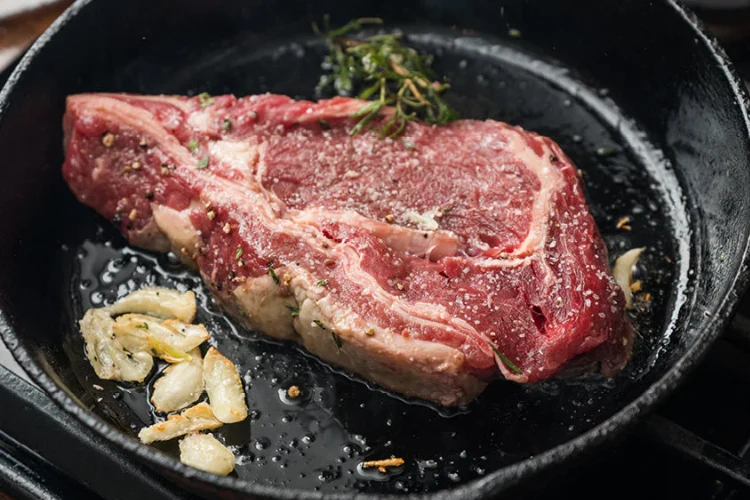
This is the method's natural home. Thick, marbled, and it rewards an even interior.
View Product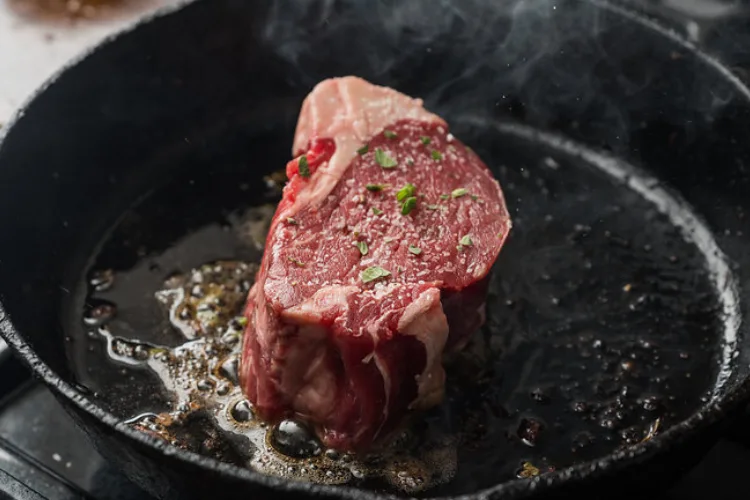
With little fat to buffer it, gentle heat first is the difference between pink and gray throughout.
View Product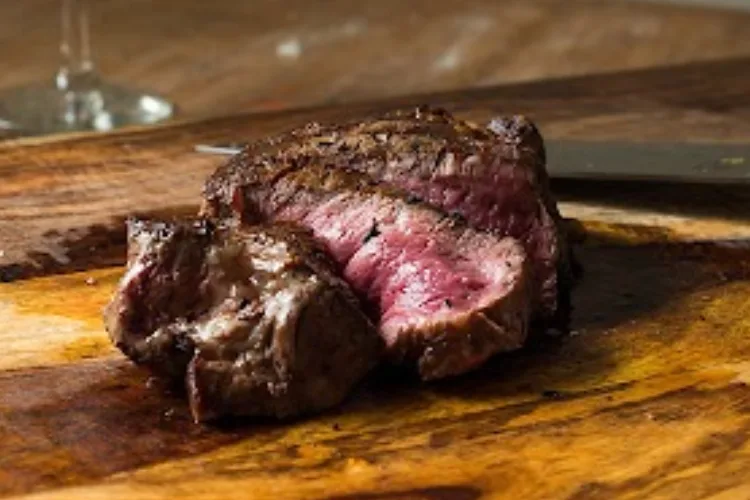
A thick-cut strip holds an even temperature and crisps its fat cap in the final sear.
View ProductThe crust article explains why the dry surface does the work, the temperature chart gives you the numbers, and cast iron is the right pan for the final minute.
Low first, hot last. On a thick steak it is the most reliable method there is.
- Cook to a Safe Minimum Internal Temperature, FoodSafety.gov
- Food Thermometers, USDA FSIS
Food-safety temperatures and storage times on this page are cited to the agencies above rather than to us.
Written at Shipley Farms in Vilas, North Carolina: a family cattle farm raising and dry-aging beef in the Appalachian Mountains, now in its fifth generation. No shortcuts since 1872.
Every quote on this page is Gray Shipley talking, the man who runs this farm. We sat down with him, turned on a recorder, and kept his own words. Hesitations are trimmed so they read on the page. Nothing else is added or reworded, except where Gray revised his own words in review.
Nobody knows this beef better than we do. On food safety we leave it to USDA FSIS and FoodSafety.gov, and we have linked their pages above. Reviewed 3 October 2026.
Shipley Farms
Stories, recipes and news from Shipley Farms.