Ground Pork vs Ground Beef: When to Use Which
They are not substitutes for each other. They behave differently in a pan and they do different jobs in a dish.
People reach for whichever is in the freezer and wonder why the result moved. They are doing different jobs.
What ground pork brings
Fat, and mildness. Pork fat renders softer and at a lower temperature than beef fat, which makes it a binder and a moisture source. It also tastes of comparatively little, which is a feature when the seasoning is meant to lead.
What ground beef brings
Structure and its own flavor. Beef holds together in a patty in a way pork does not, browns harder, and tastes distinctly of beef whatever you do to it. Our dry-aged grind more so than most.
“Yeah, when it's just, when it's made of food, I say food made of food. What I mean is food that actually comes from real. Food products, real things that are grown or raised things that are natural. And when you prepare something out of real food ingredients, it can just taste the difference.”
Gray Shipley
Use pork when
- The dish is carried by seasoning: dumplings, meatballs, stuffing, sausage you are making yourself.
- You need the mixture to stay moist through a long cook.
- You want fat without the flavor arguing with everything else.
Use beef when
- The meat is the point: burgers, chili, a ragu you want to taste of beef.
- You need it to hold a shape under heat.
- You want hard browning, which beef does better. See browning ground beef.
Or mix them
A mix of the two is the traditional answer for meatballs, meatloaf and a lot of ragu, and the reason is structural rather than sentimental: beef gives the body and pork gives the fat and the softness. Somewhere around two parts beef to one part pork is a sensible starting point.
“Low fat, and diet and light all of those things are used as signals to suggest this is healthier. And the opposite is true because when you take fat out of something, you got to replace it with something else. So what's it going to be?”
Gray Shipley
“Farming should adapt or adopt lean practices, learn from the Japanese, look for and eliminate waste. And so that's where technology has its application using technology as tools to find and eliminate waste and bring efficiency.”
Gray Shipley
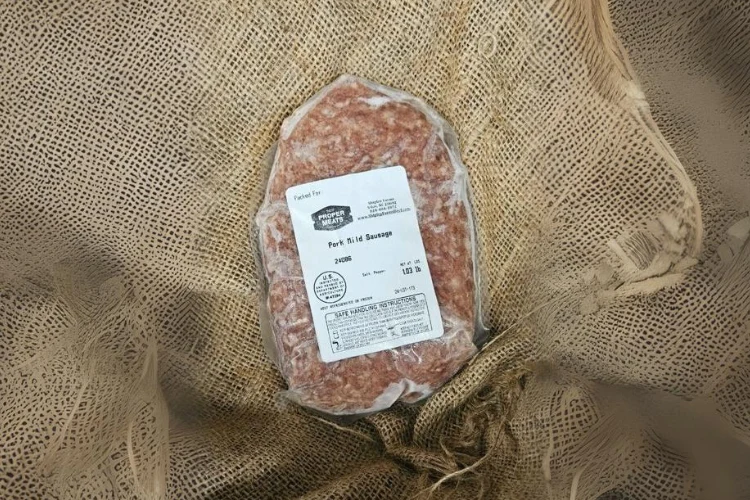
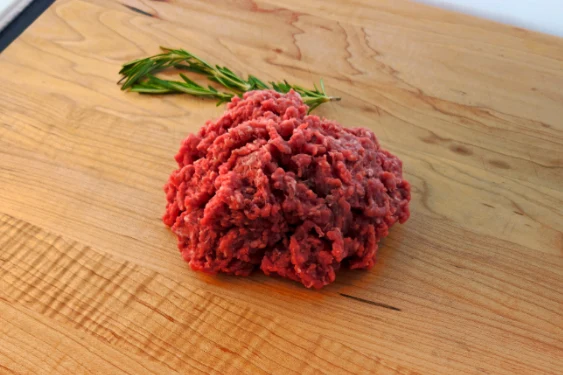
Dry-aged and coarse. Structure and flavor of its own.
View ProductWhen should I use ground pork instead of ground beef?
Pork when you want fat and mildness, beef when you want structure and flavor of its own.
- Cook to a Safe Minimum Internal Temperature, FoodSafety.gov
- The Color of Meat and Poultry, USDA FSIS
Food-safety temperatures and storage times on this page are cited to the agencies above rather than to us.
Written at Shipley Farms in Vilas, North Carolina: a family cattle farm raising and dry-aging beef in the Appalachian Mountains, now in its fifth generation. No shortcuts since 1872.
Every quote on this page is Gray Shipley talking, the man who runs this farm. We sat down with him, turned on a recorder, and kept his own words. Hesitations are trimmed so they read on the page. Nothing else is added or reworded, except where Gray revised his own words in review.
Nobody knows this beef better than we do. On food safety we leave it to USDA FSIS and FoodSafety.gov, and we have linked their pages above. Reviewed 3 October 2026.
Shipley Farms
Stories, recipes and news from Shipley Farms.