How to Cook a Bavette Steak
Bavette takes about six minutes to cook. Nearly everything that goes wrong with it happens afterwards, with a knife.
Bavette, or sirloin flap, is a loose-grained steak with good marbling for the price. It is one of the better value cuts on the animal and one of the easiest to ruin at the last step.
Cooking it
- Salt it and let the surface dry for about 40 minutes.
- Very hot pan or grill. Bavette is uneven in thickness, which is fine: it gives you a range of doneness across one piece.
- About three minutes a side. Aim at the rarer end of what you want.
- Rest eight minutes.
Do not cook it past medium. Past that the loose grain goes from pleasantly chewy to work.
The board is where it is won or lost
The grain on a bavette is coarse and completely obvious. Cut along it and you get rope. Cut across it, thin, and it is tender. This is a bigger effect on this cut than on almost anything else we sell, which is covered in why is my steak tough.
“This is one thing that I've never figured out how to crack it to do it really well is meatloaf. If I've got my grandmother or my mom doing a meatloaf, that's fantastic.”
Gray Shipley
“We used to just kind of not try to outsmart God, let the animal do what it's supposed to do and stay out of the way.”
Gray Shipley
What to put on it
Something sharp. The fat in a bavette wants acid against it, which is why chimichurri suits it so well: see the chimichurri recipe. How it differs from flank is in bavette against flank.
“Yeah, no shortcuts just means, it's a mindset, the mindset of looking for a shortcut. It doesn't mean that we don't look for improvement. It doesn't mean we don't look for ways to do things better.”
Gray Shipley
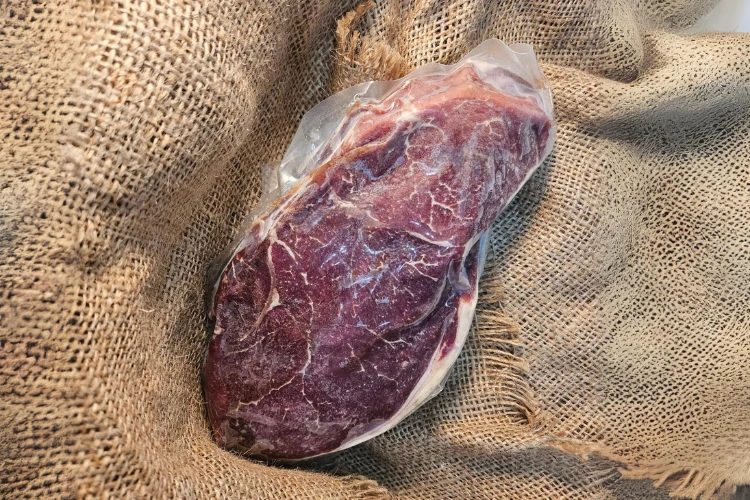
Dry-aged bavette. Good marbling, coarse grain, excellent value.
View ProductHow do I cook a bavette steak?
Hot and fast to medium rare, then sliced thin across a very obvious grain.
- Cook to a Safe Minimum Internal Temperature, FoodSafety.gov
- Food Thermometers, USDA FSIS
Food-safety temperatures and storage times on this page are cited to the agencies above rather than to us.
Written at Shipley Farms in Vilas, North Carolina: a family cattle farm raising and dry-aging beef in the Appalachian Mountains, now in its fifth generation. No shortcuts since 1872.
Every quote on this page is Gray Shipley talking, the man who runs this farm. We sat down with him, turned on a recorder, and kept his own words. Hesitations are trimmed so they read on the page. Nothing else is added or reworded, except where Gray revised his own words in review.
Nobody knows this beef better than we do. On food safety we leave it to USDA FSIS and FoodSafety.gov, and we have linked their pages above. Reviewed 3 October 2026.
Shipley Farms
Stories, recipes and news from Shipley Farms.