How to Cook Pasture-Raised Pork Chops
Most people learned to cook pork from a generation that cooked it to death for good reasons that no longer apply. Here is the version for a good chop.
Pork is the one meat where most households are still carrying an instruction from decades ago. Cook it until there is no pink, the thinking went, and for a long time there was a real reason for that caution.
The guidance has since changed, and we are not going to restate a safe temperature on our own authority. USDA FSIS and FoodSafety.gov publish it and both are linked at the foot of this page. Use theirs.
Why pasture-raised pork needs more care, not less
A pig raised outdoors, moving around, is leaner than one raised in confinement. Less intramuscular fat means less margin for error, because fat is what keeps meat eating moist when you overshoot. The better the pork, the more an extra four minutes costs you.
“Pasture raised is where the, it's where the animal belongs. They belong on the pasture. And so don't take them out of the environment where they need to be.”
Gray Shipley
“We, when we started domesticating things, we didn't find barns that cattle had, or confinement buildings that cattle and pigs had constructed for themselves. It's not what they did.”
Gray Shipley
Brine it
A simple salt brine, about an hour for a thick chop, changes the outcome more than any other single step. It seasons through rather than just on the surface, and it gives you a buffer against overcooking. Dry it thoroughly afterwards or it will not brown.
Then cook it like a steak
- Dry the surface properly after brining. Wet pork steams.
- Hot pan, hard sear on both sides to build a crust.
- Drop the heat and finish it gently, or move it to the cooler side of a grill.
- Check with a thermometer rather than by eye, against the agency figure linked below.
- Rest it a good ten minutes. A thick chop carries a lot of carryover.
The searing mechanics are the same as for beef and are covered properly in how to sear a steak.
“Yeah, no shortcuts just means, it's a mindset, the mindset of looking for a shortcut. It doesn't mean that we don't look for improvement. It doesn't mean we don't look for ways to do things better.”
Gray Shipley
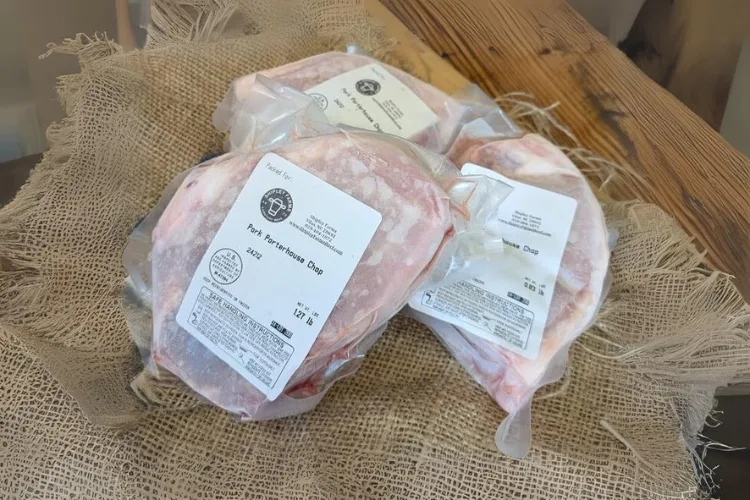
Bone-in center cut, pasture raised, which means leaner.
View ProductHow do I cook a thick pork chop without drying it out?
Brine it, sear it, and pull it earlier than you think, because pasture-raised pork is leaner than supermarket pork.
- Cook to a Safe Minimum Internal Temperature, FoodSafety.gov
- Food Thermometers, USDA FSIS
- Doneness Versus Safety, USDA FSIS
Food-safety temperatures and storage times on this page are cited to the agencies above rather than to us.
Written at Shipley Farms in Vilas, North Carolina: a family cattle farm raising and dry-aging beef in the Appalachian Mountains, now in its fifth generation. No shortcuts since 1872.
Every quote on this page is Gray Shipley talking, the man who runs this farm. We sat down with him, turned on a recorder, and kept his own words. Hesitations are trimmed so they read on the page. Nothing else is added or reworded, except where Gray revised his own words in review.
Nobody knows this beef better than we do. On food safety we leave it to USDA FSIS and FoodSafety.gov, and we have linked their pages above. Reviewed 3 October 2026.
Shipley Farms
Stories, recipes and news from Shipley Farms.