Short Ribs vs Chuck Short Rib: What Is the Difference?
Both get sold as short ribs. They come from different primals and they do not behave the same in a pot.
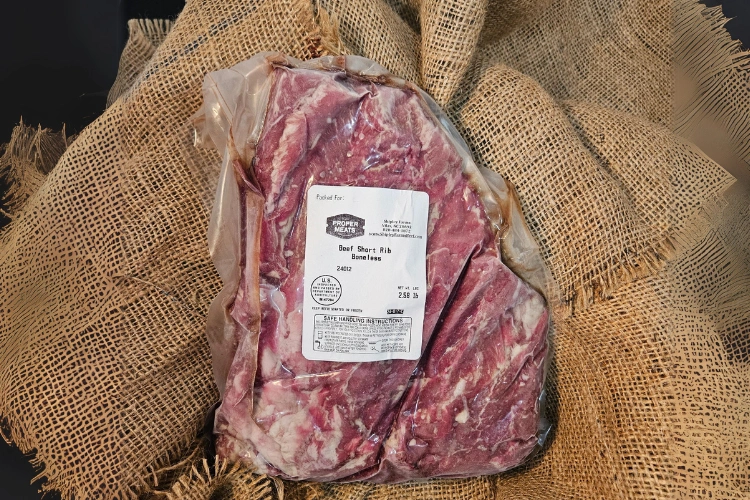
Short rib is a name applied to cuts from two different places, which is why the same recipe gives different results depending on what you bought.
Plate short ribs
From the belly, behind the brisket. On the cut map that is the bottom row. These are the big meaty ones, a thick block of meat sitting on a long bone, with plenty of fat running through.
Chuck short ribs
From the shoulder end, higher up. Leaner, with more seams of connective tissue and usually more bone relative to meat. Excellent, but they need longer to give up.
“Well, growing a great carrot has an awful lot that goes into it. And so specialization just allows you to get really good at parts of things, especially on a small scale.”
Gray Shipley
How that changes the braise
- Plate ribs have more fat to render, so they can take a longer cook without drying and they produce a richer sauce.
- Chuck ribs have more collagen and less fat, so they need the full time to become tender and the sauce is leaner.
- Either is done when the meat gives completely to a fork, not when the clock says so.
Which to buy
If you are serving them whole, plate ribs look better and eat richer. If they are going into something shredded, chuck ribs are usually cheaper and nobody can tell. Method for both is in braised short ribs.
“You think more farms should adopt knowing your numbers, managing your farm, like a business.”
Gray Shipley
“We used to just kind of not try to outsmart God, let the animal do what it's supposed to do and stay out of the way.”
Gray Shipley
What is the difference between plate short ribs and chuck short ribs?
Where on the animal they are cut from. Plate ribs are meatier and fattier; chuck ribs are leaner with more connective tissue.
- Cook to a Safe Minimum Internal Temperature, FoodSafety.gov
Food-safety temperatures and storage times on this page are cited to the agencies above rather than to us.
Written at Shipley Farms in Vilas, North Carolina: a family cattle farm raising and dry-aging beef in the Appalachian Mountains, now in its fifth generation. No shortcuts since 1872.
Every quote on this page is Gray Shipley talking, the man who runs this farm. We sat down with him, turned on a recorder, and kept his own words. Hesitations are trimmed so they read on the page. Nothing else is added or reworded, except where Gray revised his own words in review.
Nobody knows this beef better than we do. On food safety we leave it to FoodSafety.gov, and we have linked their page above. Reviewed 3 October 2026.
Shipley Farms
Stories, recipes and news from Shipley Farms.