Sunday Chuck Roast
Three hours, mostly unattended. The table shows the whole thing. The only judgement call is at the end, and it is made with a fork rather than a timer.
A chuck roast is a tough cut on purpose. It carries the connective tissue that only gives up over hours, and that is the whole reason it tastes the way it does when you get it right.
| 3 lb SB Dry-Aged Chuck Roast, Boneless | 1 salt, rest 1 hr | 2 sear all sides, 8 min | 3 cover and braise, low oven, ~3 hr |
| 2 tsp coarse salt | |||
| 2 Tbsp beef tallow | |||
| 2 onions, quartered | 4 rough chop | ||
| 4 carrots, in large chunks | |||
| 3 cloves garlic | |||
| 2 cups beef stock | |||
| 2 sprigs rosemary | |||
| 5Test with a fork rather than a timer. It should turn with no resistance at all. | |||
| 6Rest 20 minutes in its own liquid before pulling it apart. | |||
Numbers show the order to work in. Each cell spans exactly the ingredients it uses.
Three hours is a guide, the fork is the test
This is where a table like this one usually falls down, and it is worth being explicit about. Connective tissue gives up at its own pace, and that pace depends on the animal, the thickness and your oven. If the fork meets resistance at three hours, it needs longer. Nothing goes wrong by waiting.
“We used to just kind of not try to outsmart God, let the animal do what it's supposed to do and stay out of the way.”
Gray Shipley
Why sear it at all
The sear does not seal anything in, whatever you were told. It builds the browned surface that gives the braising liquid its depth. Skip it and the finished pot tastes flat.
“There's a saying that farming isn't rocket science. It's way more complicated than that.”
Gray Shipley
Chuck roast, pot roast, same thing
Pot roast is a method rather than a cut, and chuck is the cut most often used for it. We worked through this in chuck roast against pot roast.
“Yeah, no shortcuts just means, you know, it's a mindset, the mindset of looking for a shortcut. You know, it doesn't mean that we don't look for improvement. It doesn't mean we don't look for ways to do things better.”
Gray Shipley
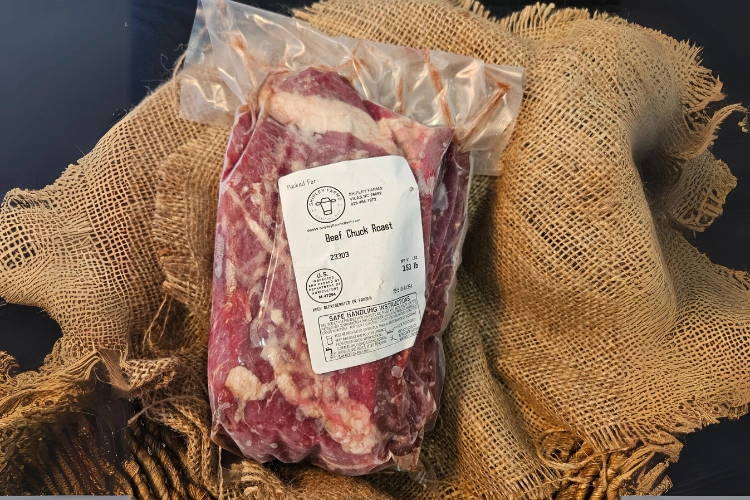
Boneless, dry-aged, and built for a long afternoon in a low oven.
View Product- Cook to a Safe Minimum Internal Temperature, FoodSafety.gov
Food-safety temperatures and storage times on this page are cited to the agencies above rather than to us.
Written at Shipley Farms in Vilas, North Carolina: a family cattle farm raising and dry-aging beef in the Appalachian Mountains, now in its fifth generation. No shortcuts since 1872.
Every quote on this page is Gray Shipley talking, the man who runs this farm. We sat down with him, turned on a recorder, and kept his own words. Hesitations are trimmed so they read on the page. Nothing else is added or reworded, except where Gray revised his own words in review.
Nobody knows this beef better than we do. On food safety we leave it to FoodSafety.gov, and we have linked their page above. Reviewed 3 October 2026.
Shipley Farms
Stories, recipes and news from Shipley Farms.