What Is Vaca Vieja Beef?
Almost all beef sold in this country comes from young animals. Vaca vieja does not, and the difference is not subtle.
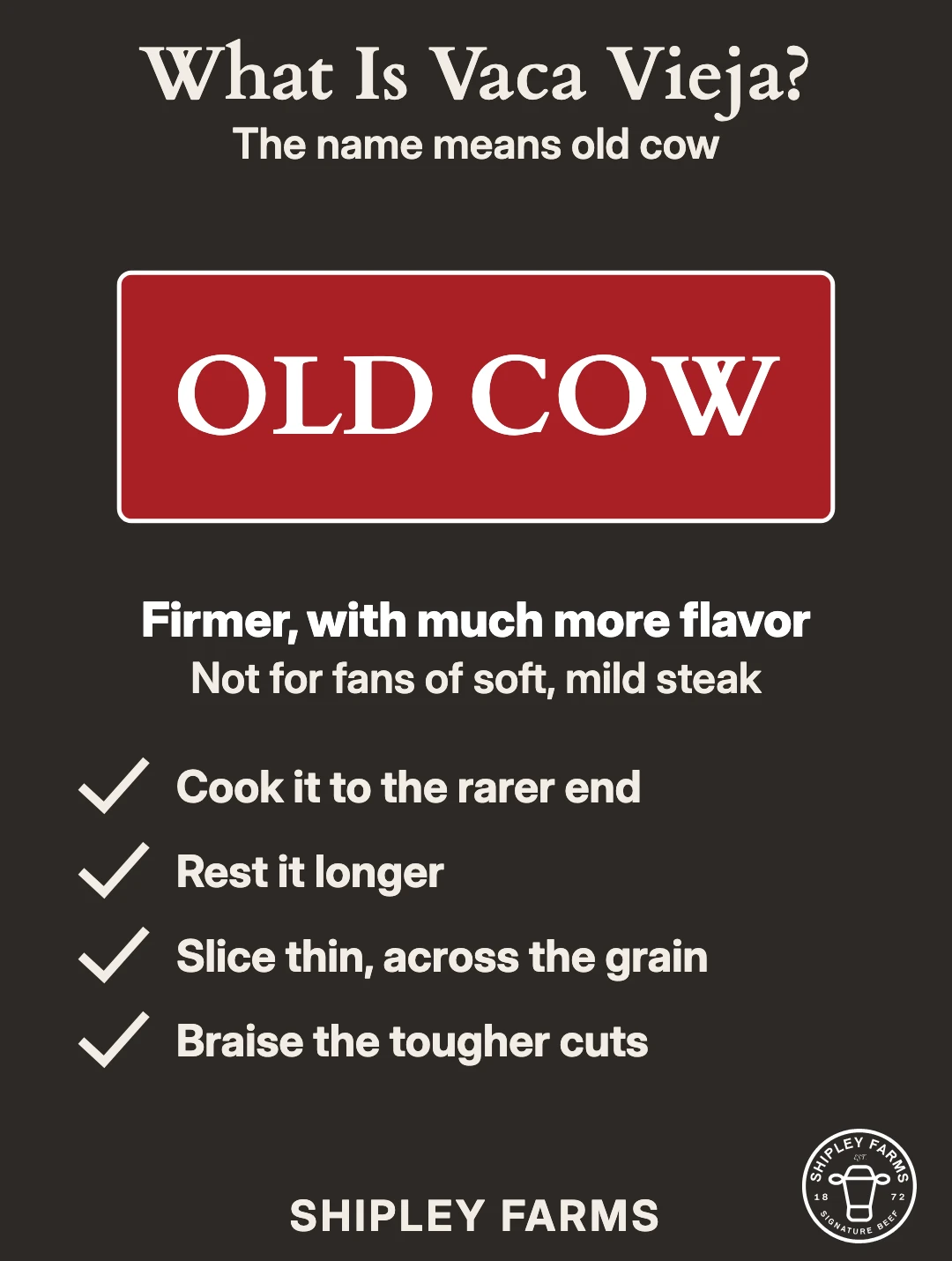
Vaca vieja means old cow. In most of the American beef industry that is a problem to be processed into something else. In Spain and increasingly here, it is the point.
Why almost all beef comes from young animals
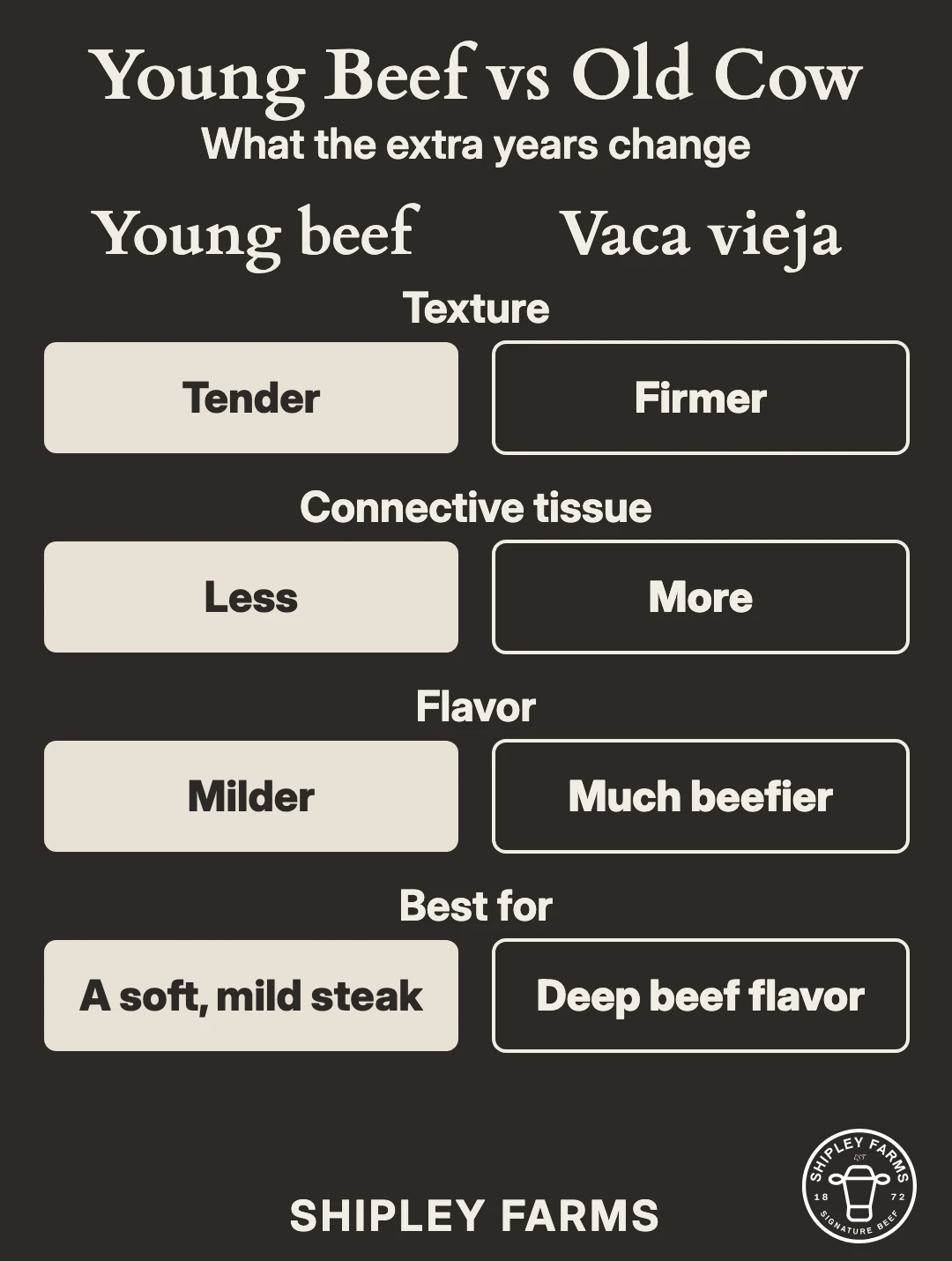
The industry finishes animals young because young meat is tender and tenderness is what a commodity market can measure and sell. Age does the opposite to texture: muscles that have worked for years carry more connective tissue.
But age does something else too
It concentrates flavor. An older animal has had years of grazing, of seasons, of moving across ground. That shows up as a deeper color, a firmer texture and a taste that is markedly more beefy than what most people are used to.
“And it takes three years to make a steak.”
Gray Shipley
Three years to make a steak is the normal case. Vaca vieja is considerably longer than that, and the flavor is the compound interest on it.
How to cook it
- Do not treat it as a regular steak. It is firmer. Pull it at the rarer end and rest it longer.
- Slice thinner, and across the grain. More than you would with a young animal.
- For the tougher cuts, braise. The same rule as always: the harder it worked, the longer it needs. See the cut map.
Who it is for
People who have eaten a lot of beef and want something that tastes more like itself. It is not the cut to serve someone who wants a soft, mild steak, and we would rather say that than sell you a disappointment.
“Or the other side of it is it's the lower quality meat is made cheaper because you're giving up something. You're giving up the authenticity and the quality and the process.”
Gray Shipley
“We used to just kind of not try to outsmart God, let the animal do what it's supposed to do and stay out of the way.”
Gray Shipley
Top sirloin from an older animal. Firmer, and much more flavor.
Photograph coming soon for this cut.
View ProductWhat is vaca vieja beef and why would I want it?
Beef from an older cow, which has more flavor and more connective tissue than beef from a young steer.
- Grades and Standards: Beef, USDA AMS
- Cook to a Safe Minimum Internal Temperature, FoodSafety.gov
Food-safety temperatures and storage times on this page are cited to the agencies above rather than to us.
Written at Shipley Farms in Vilas, North Carolina: a family cattle farm raising and dry-aging beef in the Appalachian Mountains, now in its fifth generation. No shortcuts since 1872.
Every quote on this page is Gray Shipley talking, the man who runs this farm. We sat down with him, turned on a recorder, and kept his own words. Hesitations are trimmed so they read on the page. Nothing else is added or reworded, except where Gray revised his own words in review.
Nobody knows this beef better than we do. On food safety we leave it to FoodSafety.gov, and we have linked their pages above. Reviewed 3 October 2026.
Shipley Farms
Stories, recipes and news from Shipley Farms.