Why Is My Gravy Thin?
Thin gravy is usually a stock problem rather than a thickening problem, and more flour makes it worse.
Everyone reaches for more flour. Flour thickens, but it thickens into paste rather than into body, and a floury gravy tastes of flour.
1. The stock had no gelatin in it
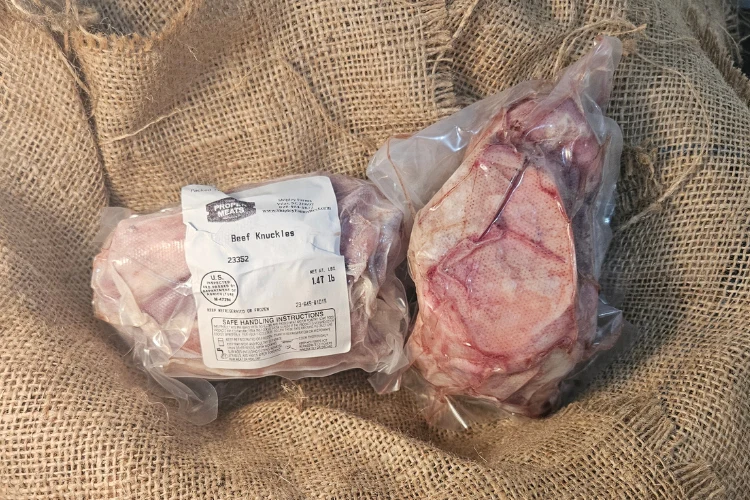
A proper stock made from joint-heavy bones sets to a jelly when cold. That gelatin is what gives gravy its mouthfeel and its gloss. A stock made from marrow bones, or from a cube, has none of it, and no amount of flour fakes that.
Which bones to use is in what to do with beef bones, and the method in how to make beef stock.
“And so quality is what's in your food and what's not in your food, the quality, what's going into it, as well as keeping some of the things out of it, that you don't want to be eating because it's not really food.”
Gray Shipley
2. You did not reduce it enough
Gravy thickens by losing water. Let it simmer and reduce by a third before you judge the consistency. Most thin gravy is simply young gravy.
3. The flour went in cold
Flour needs heat to gelatinize. Stirred into a cool liquid it disperses without thickening and then clumps when it finally heats. Make a roux in the hot pan drippings first, cook it a minute or two, and add liquid gradually.
“So, I think that's the most common mistake is you're not sure, so you'll cook it a little longer. And you just don't need to.”
Gray Shipley
Scrape the pan
The browned residue in the roasting tin is most of the flavor. Deglaze while the tin is still hot and get all of it into the gravy.
“Get the moisture off the surface.”
Gray Shipley
Why did my gravy come out thin?
Not enough reduction, not enough collagen, or flour added to a liquid that was already too cool.
- Cook to a Safe Minimum Internal Temperature, FoodSafety.gov
- Refrigeration & Food Safety, USDA FSIS
Food-safety temperatures and storage times on this page are cited to the agencies above rather than to us.
Written at Shipley Farms in Vilas, North Carolina: a family cattle farm raising and dry-aging beef in the Appalachian Mountains, now in its fifth generation. No shortcuts since 1872.
Every quote on this page is Gray Shipley talking, the man who runs this farm. We sat down with him, turned on a recorder, and kept his own words. Hesitations are trimmed so they read on the page. Nothing else is added or reworded, except where Gray revised his own words in review.
Nobody knows this beef better than we do. On food safety we leave it to USDA FSIS and FoodSafety.gov, and we have linked their pages above. Reviewed 3 October 2026.
Shipley Farms
Stories, recipes and news from Shipley Farms.