Chorizo Risotto
Chorizo risotto is a weeknight risotto with a lot of flavor for very little extra work. Brown fresh pork chorizo first and set it aside. Soften a shallot in the brick-red fat it leaves behind, toast the rice in it, add a splash of white wine, then feed in hot stock a ladle at a time for about 20 minutes. Butter, Parmesan and the chorizo go back in at the end, and the whole pot turns a warm orange.
Fresh chorizo works especially well here because its fat is full of chili, garlic and paprika. Every grain of rice is coated in it before the stock goes in, so the seasoning runs all the way through instead of sitting on top.
At a glance: serves 4. Prep 10 minutes, cook about 40 minutes.
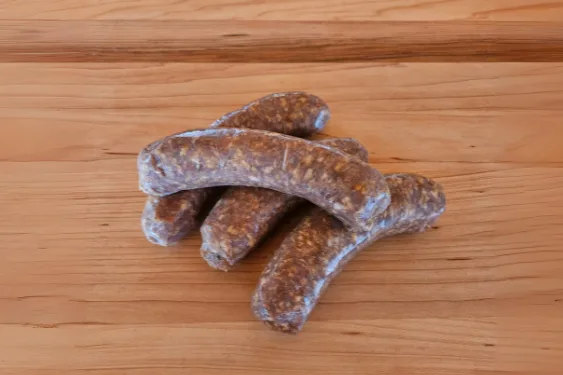
This recipe uses 1 pack of pork chorizo links, enough for four generous bowls.
Add 1 pack of pork chorizo links to cartView ProductCooking for a full freezer instead? See the 1/8 beef share subscription.
Gray Shipley, who runs the farm, was asked what a shopper should be asking about the food they buy. Part of his answer:
“what's on the label and what's actually in it? Is there anything that I can't pronounce?”
Gray Shipley
He was talking about food shopping in general, not about risotto, and his questions are a test for whatever you buy rather than a claim about any one product. They suit this dish, though. Risotto has very few ingredients, and each one shows: rice, stock, wine, butter, cheese and here the sausage. Read the labels on the stock and the cheese with his questions in mind and you will know exactly what is in the pot.
Ingredients
- 1 pack fresh pork chorizo links, 1 to 1 1/4 pounds
- 6 cups low-sodium chicken stock
- 1 tablespoon olive oil, if needed
- 2 medium shallots, finely chopped (about 1/2 cup)
- 2 cloves garlic, minced
- 1 1/2 cups arborio rice
- 1/2 cup dry white wine
- 1 cup frozen peas (optional)
- 2 tablespoons unsalted butter
- 3/4 cup finely grated Parmesan, plus more to serve
- Kosher salt and freshly ground black pepper, to taste
- 2 tablespoons chopped fresh parsley, to serve
Instructions
- Pour the stock into a saucepan, bring it to a simmer, then turn the heat to low so it stays hot while you cook.
- Slit the chorizo casings, squeeze out the meat, and throw away the casings. In a wide, heavy pan or Dutch oven over medium heat, cook the chorizo, breaking it into small pieces with a wooden spoon, until browned and cooked through, 8 to 10 minutes. An instant-read thermometer in a larger piece should read 160 degrees F. Lift the chorizo onto a plate with a slotted spoon.
- Leave about 2 tablespoons of the red fat in the pan and spoon off the rest; if there is less, add the olive oil. Add the shallots with a pinch of salt and cook, stirring, until soft, 3 to 4 minutes. Stir in the garlic for 30 seconds.
- Add the rice and stir for 2 to 3 minutes, until every grain is coated in fat and the edges look translucent.
- Pour in the wine and stir until it is almost all absorbed, 1 to 2 minutes.
- Add a ladle of hot stock, about 1/2 cup, and stir until it is mostly absorbed. Keep adding stock a ladle at a time, stirring often and keeping the pan at a lively simmer, for 18 to 20 minutes, until the rice is creamy and tender but still has a slight bite in the center. You may not need all the stock.
- With the last ladle of stock, stir in the chorizo and the peas and cook for 2 to 3 minutes, until both are hot through.
- Take the pan off the heat. Add the butter and Parmesan and stir hard for about 30 seconds, until the risotto turns glossy. It should flow slowly when you tilt the pan; add a splash more stock if it is stiff. Taste before you add salt, since chorizo and Parmesan are both salty, and season with pepper.
- Spoon into warm, shallow bowls, scatter with parsley and more Parmesan, and serve right away.
Add 1 pack of pork chorizo links to cart
Fresh or cured chorizo for risotto?
This recipe is written for fresh chorizo, the raw sausage sold in links, which has to be cooked through and crumbles into small, tender pieces. Cured Spanish chorizo is a different thing: firm, dried and ready to slice. It also makes a good risotto, with a chewier, smokier bite. If that is what you have, dice it small, crisp it in the olive oil for 3 to 4 minutes, lift it out, and carry on from step 3. It gives off less fat, so you may need the extra oil. The comparison guide below explains how fresh chorizo differs from Italian sausage, which also works in this recipe.
How much stock does risotto need?
Plan on 3 1/2 to 4 cups of stock for every cup of arborio rice, and have a little extra hot in case the rice is thirsty. Six cups for a cup and a half of rice leaves room to spare. Keep the stock at a simmer the whole time. Cold stock drops the temperature of the pan every time you add it, which slows the rice down and makes the cooking uneven.
Start tasting at about 16 minutes after the wine goes in. The rice is ready when it is soft on the outside with a small, firm center, and the liquid around it is creamy rather than watery. Low-sodium stock matters here, since the liquid reduces and the chorizo and cheese bring plenty of salt of their own.
Do you have to stir risotto constantly?
Often, but not constantly. Stirring rubs starch off the surface of the rice, which is what makes risotto creamy, and it stops the rice catching on the bottom of the pan. A good stir every 30 seconds or so is plenty. You can step away for a minute between ladles; just do not leave it long enough for the pan to go dry.
Leftover chorizo risotto
Risotto sets firm as it cools. To reheat it, warm it in a pan with a splash of stock or water, stirring until it loosens. FSIS advises reheating leftovers to 165 degrees F. Firm leftover risotto also makes good little cakes: shape it into patties, dust them with flour, and fry them in olive oil until crisp and hot through. For more ideas with sausage, including feeding a crowd, see the guides below.
Food safety
USDA FSIS lists 160 degrees F as the safe minimum internal temperature for ground meats, and fresh chorizo is ground meat. Color is no guide with chorizo, which is red from the start, so check it with an instant-read thermometer. Wash your hands, knife and board after handling the raw sausage, and refrigerate leftovers promptly. See the FSIS Safe Minimum Internal Temperature Chart.
- Safe Minimum Internal Temperature Chart, USDA FSIS
Food-safety temperatures on this page are cited to USDA FSIS rather than to us.
Published by Shipley Farms. The quote on this page is Gray Shipley, who runs the farm, in his own words from a recorded interview, quoted exactly, or as he revised it in review.
On food safety we follow USDA FSIS, linked above.