Beef Tips vs Stew Meat: What Is the Difference?
They look identical in the package and they are not interchangeable. Cooking one as though it were the other is how you get either rubber or mush.
Two bags of cubed beef on the same shelf, similar price, completely different instructions. This one is worth getting right because the failure mode is total.
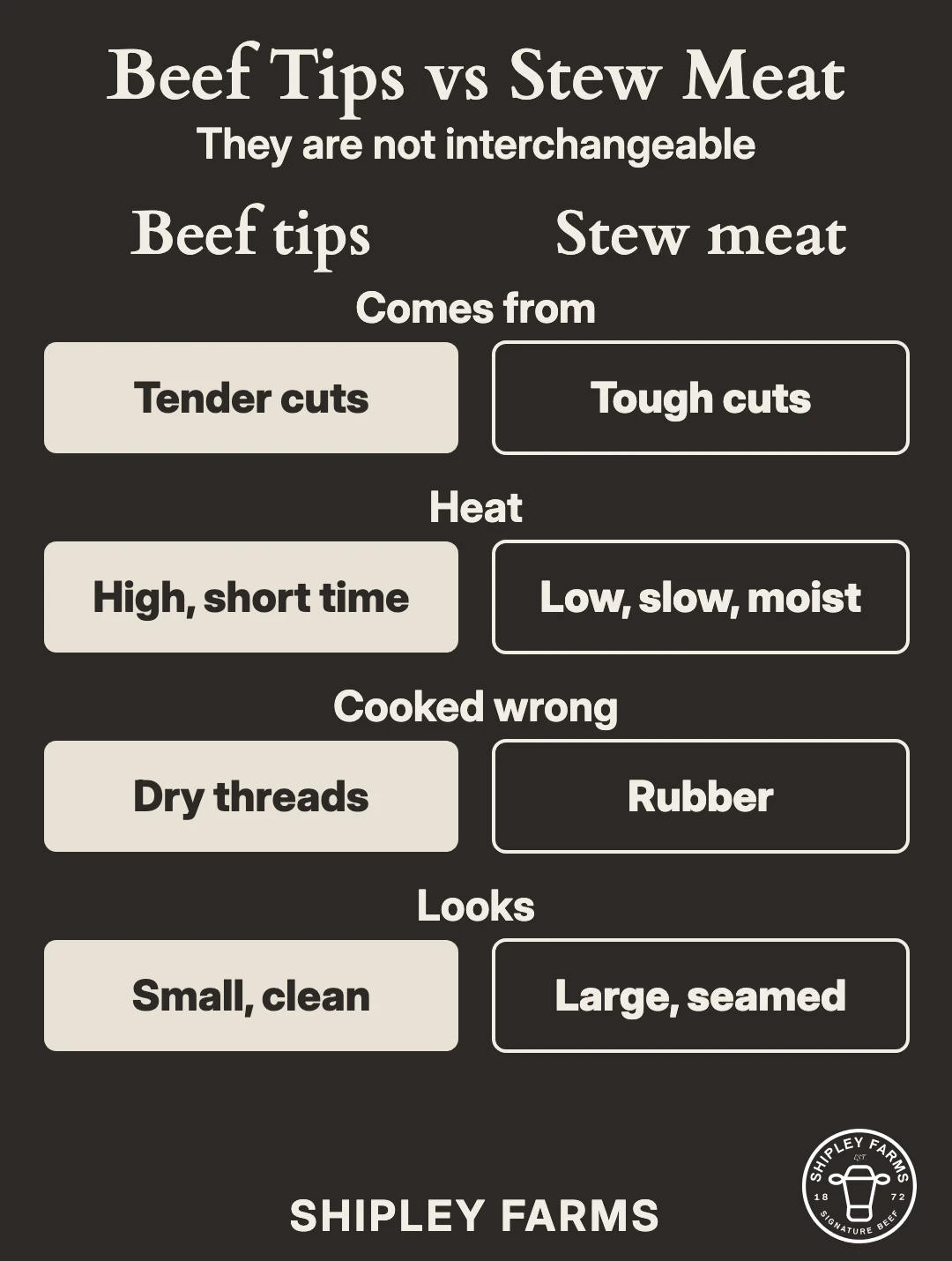
Beef tips
Tips are the trimmings from tender cuts: the tapered ends of a tenderloin, offcuts from sirloin and strip. They are already tender, which means they want high heat and a very short time in the pan. Treat them like small steaks.
Stew meat
Stew meat is tough cuts cubed, usually chuck or round. It is full of connective tissue, which is a liability for twenty minutes and an asset after three hours. It wants low, slow, moist heat so that collagen can turn to gelatin.
“Well, growing a great carrot has an awful lot that goes into it. And so specialization just allows you to get really good at parts of things, especially on a small scale.”
Gray Shipley
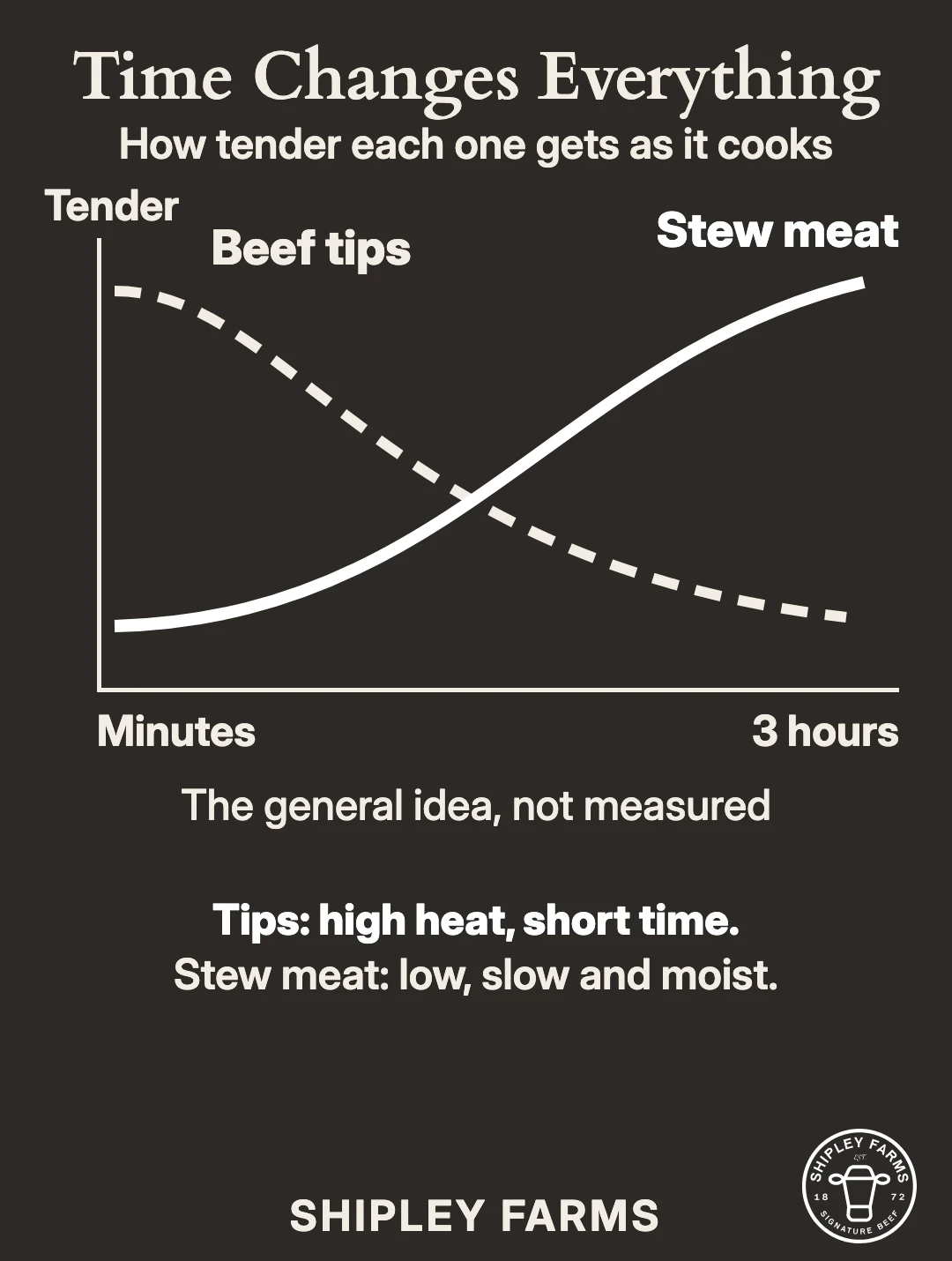
What goes wrong
- Stew meat cooked fast is rubber. The connective tissue never gets the chance to break down.
- Beef tips cooked slow fall apart into dry, stringy threads. There was no collagen to melt, so the long cook just drives the moisture out.
- Both failures look like you bought bad beef. Neither is.
That second failure is the same mechanism as a dry roast, and it catches people constantly.
How to tell them apart
Stew meat is usually larger cubes, visibly seamed with silver connective tissue, and darker. Tips are smaller, cleaner and leaner. If the package does not say and you cannot tell, ask. We will tell you which cut it came off.
“And so the local food system, one, allows you to know directly where your food's coming from. And two, it's consistently raised and handled and invested in and cared for more responsibly than the industrial system ever could.”
Gray Shipley
“Yeah, no shortcuts just means, it's a mindset, the mindset of looking for a shortcut. It doesn't mean that we don't look for improvement. It doesn't mean we don't look for ways to do things better.”
Gray Shipley
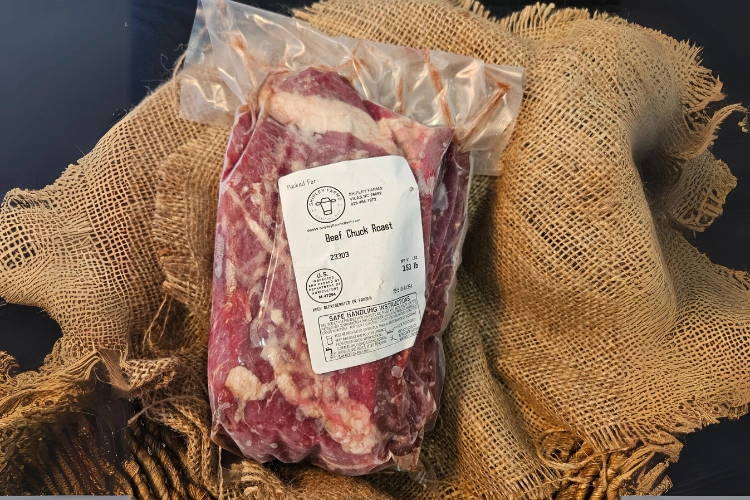
A chuck roast, which is what stew meat really is.
View ProductIs beef tips the same thing as stew meat?
No. Beef tips are trimmed from tender cuts and cook fast; stew meat is tough cuts cubed and needs hours.
- Cook to a Safe Minimum Internal Temperature, FoodSafety.gov
- “Danger Zone” (40°F - 140°F), USDA FSIS
Food-safety temperatures and storage times on this page are cited to the agencies above rather than to us.
Written at Shipley Farms in Vilas, North Carolina: a family cattle farm raising and dry-aging beef in the Appalachian Mountains, now in its fifth generation. No shortcuts since 1872.
Every quote on this page is Gray Shipley talking, the man who runs this farm. We sat down with him, turned on a recorder, and kept his own words. Hesitations are trimmed so they read on the page. Nothing else is added or reworded, except where Gray revised his own words in review.
Nobody knows this beef better than we do. On food safety we leave it to USDA FSIS and FoodSafety.gov, and we have linked their pages above. Reviewed 3 October 2026.
Shipley Farms
Stories, recipes and news from Shipley Farms.