Bone-In or Boneless: Does the Bone Matter?
Bone-in steaks cost more per pound of edible meat. Here is what you actually get for it.
The claim is that the bone adds flavor. It mostly does not, and the real effects are worth knowing because they change how you cook.
What the bone actually does
- It insulates. Meat next to the bone cooks more slowly, so a bone-in steak has a rarer band along that edge. That is a feature if you want a range of doneness and a nuisance if you want it even.
- It slows the whole steak down. Bone conducts heat poorly, so bone-in cuts take longer overall.
- It blocks browning. The face against the bone cannot sit flat in a pan.
On flavor
Marrow and connective tissue around the bone contribute something over a long wet cook, which is why bones matter enormously in stock. Over eight minutes in a hot pan, very little transfers. The flavor difference on a steak is small.
“But the muscles that get used, that's where the flavor comes from. That's why the brisket is so good if you can cook it right.”
Gray Shipley
What you are really paying for
Presentation, the rarer band near the bone, and the bone itself to gnaw or to put in a stockpot. Those are real. Just know that a bone-in price per pound includes weight you cannot eat.
“You think more farms should adopt knowing your numbers, managing your farm, like a business.”
Gray Shipley
“If it's the right way, that's what no shortcuts is, we'll put in the extra effort to do things right.”
Gray Shipley
On a roast the calculation shifts, because the bones also form a rack: see standing rib against prime rib.
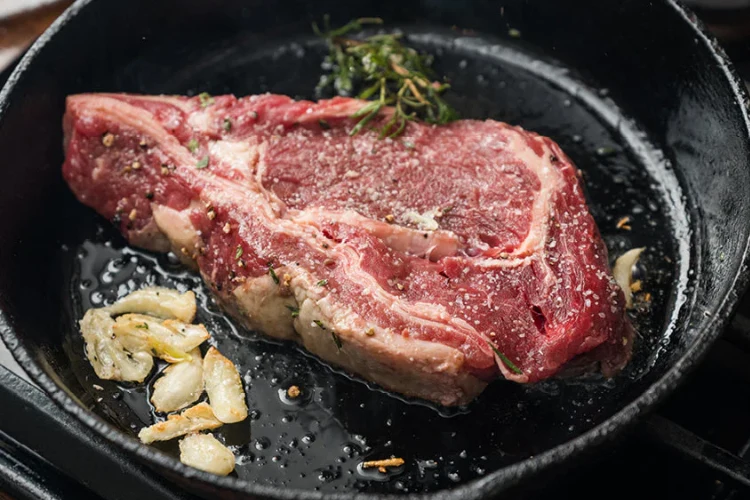
Even thickness, full contact with the pan, nothing to carve around.
View ProductDoes cooking a steak on the bone make a difference?
Yes, but not the one people think. The bone insulates; it does not add flavor.
- Cook to a Safe Minimum Internal Temperature, FoodSafety.gov
- Grades and Standards: Beef, USDA AMS
Food-safety temperatures and storage times on this page are cited to the agencies above rather than to us.
Written at Shipley Farms in Vilas, North Carolina: a family cattle farm raising and dry-aging beef in the Appalachian Mountains, now in its fifth generation. No shortcuts since 1872.
Every quote on this page is Gray Shipley talking, the man who runs this farm. We sat down with him, turned on a recorder, and kept his own words. Hesitations are trimmed so they read on the page. Nothing else is added or reworded, except where Gray revised his own words in review.
Nobody knows this beef better than we do. On food safety we leave it to FoodSafety.gov, and we have linked their pages above. Reviewed 3 October 2026.
Shipley Farms
Stories, recipes and news from Shipley Farms.