Standing Rib Roast vs Prime Rib: Are They the Same?
They are the same roast. The confusion is that the word prime also means a USDA grade, and a prime rib is very often not USDA Prime.
Same cut. A standing rib roast is a section of the rib primal, bone in, roasted standing on those bones. Prime rib is the same thing under a different name, usually on a menu.
The confusion worth clearing up
Prime is also a USDA grade, the top one, assessing marbling and maturity. A restaurant selling prime rib is very often not selling USDA Prime beef. The word in the dish name predates and is independent of the grading system.
So prime rib tells you the cut. USDA Prime tells you a grade. The two are unrelated and a menu is not obliged to clarify which it means. The vocabulary is in beef buying terms, and the agency page is linked below.
“Instead of asking, is this organic? I would ask either where did this come from? If you don't know who grew it, then you don't know what the chain is.”
Gray Shipley
Bone in or out
- Bone in. The bones insulate, so the meat nearest them cooks more gently and stays rarer. They also make a rack the roast sits on.
- Boneless. Easier to carve, cooks slightly faster, loses that insulation.
It is the same muscle as a ribeye
Cut the roast into steaks and you have ribeyes. That is worth knowing when you are deciding between buying a roast and buying steaks: it is the same beef and the roast is usually better value per pound.
“You think more farms should adopt knowing your numbers, managing your farm, like a business.”
Gray Shipley
“We used to just kind of not try to outsmart God, let the animal do what it's supposed to do and stay out of the way.”
Gray Shipley
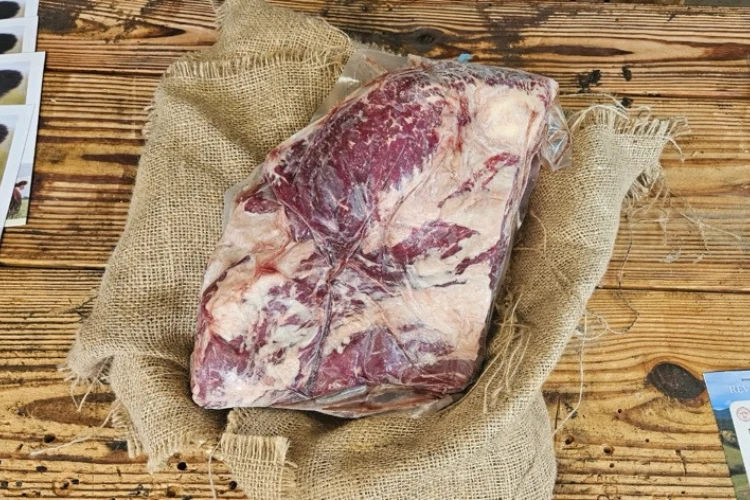
Bone-in standing rib, dry-aged. The same muscle as a ribeye.
View ProductIs a standing rib roast the same as prime rib?
Yes, mostly. They are the same cut, and 'prime' in the name usually has nothing to do with the USDA grade.
- Grades and Standards: Beef, USDA AMS
- Cook to a Safe Minimum Internal Temperature, FoodSafety.gov
Food-safety temperatures and storage times on this page are cited to the agencies above rather than to us.
Written at Shipley Farms in Vilas, North Carolina: a family cattle farm raising and dry-aging beef in the Appalachian Mountains, now in its fifth generation. No shortcuts since 1872.
Every quote on this page is Gray Shipley talking, the man who runs this farm. We sat down with him, turned on a recorder, and kept his own words. Hesitations are trimmed so they read on the page. Nothing else is added or reworded, except where Gray revised his own words in review.
Nobody knows this beef better than we do. On food safety we leave it to FoodSafety.gov, and we have linked their pages above. Reviewed 3 October 2026.
Shipley Farms
Stories, recipes and news from Shipley Farms.