Chest Freezer in a Cold Garage: Will It Keep Your Beef Frozen?
Can a chest freezer go in a cold garage? What a farm that runs freezers all winter has learned, before you fill one with a beef share.
If you are buying a beef share, the freezer usually ends up in the garage. Winter is when that can go wrong.
Asked what breaks in winter that nobody warns you about, Gray Shipley did not name a tractor or a water line. He named the freezers:
“Winter can actually be hard on the freezers. You wouldn't think.”
Gray Shipley
Word for word, as recorded
Winter can actually be hard on the freezers you wouldn't think.
Freezers do not have to work harder when it is cold outside. But a frost-free freezer runs a defrost cycle, and in a cold room the machinery around that cycle has a harder time.
“Sometimes you'll find that the freezers have more mechanical issues in the winter than they do in the summer.”
Gray Shipley
Word for word, as recorded
Sometimes you'll find that the freezers have more mechanical issues in the winter than they do in the summer.
Can a chest freezer go in a cold garage?
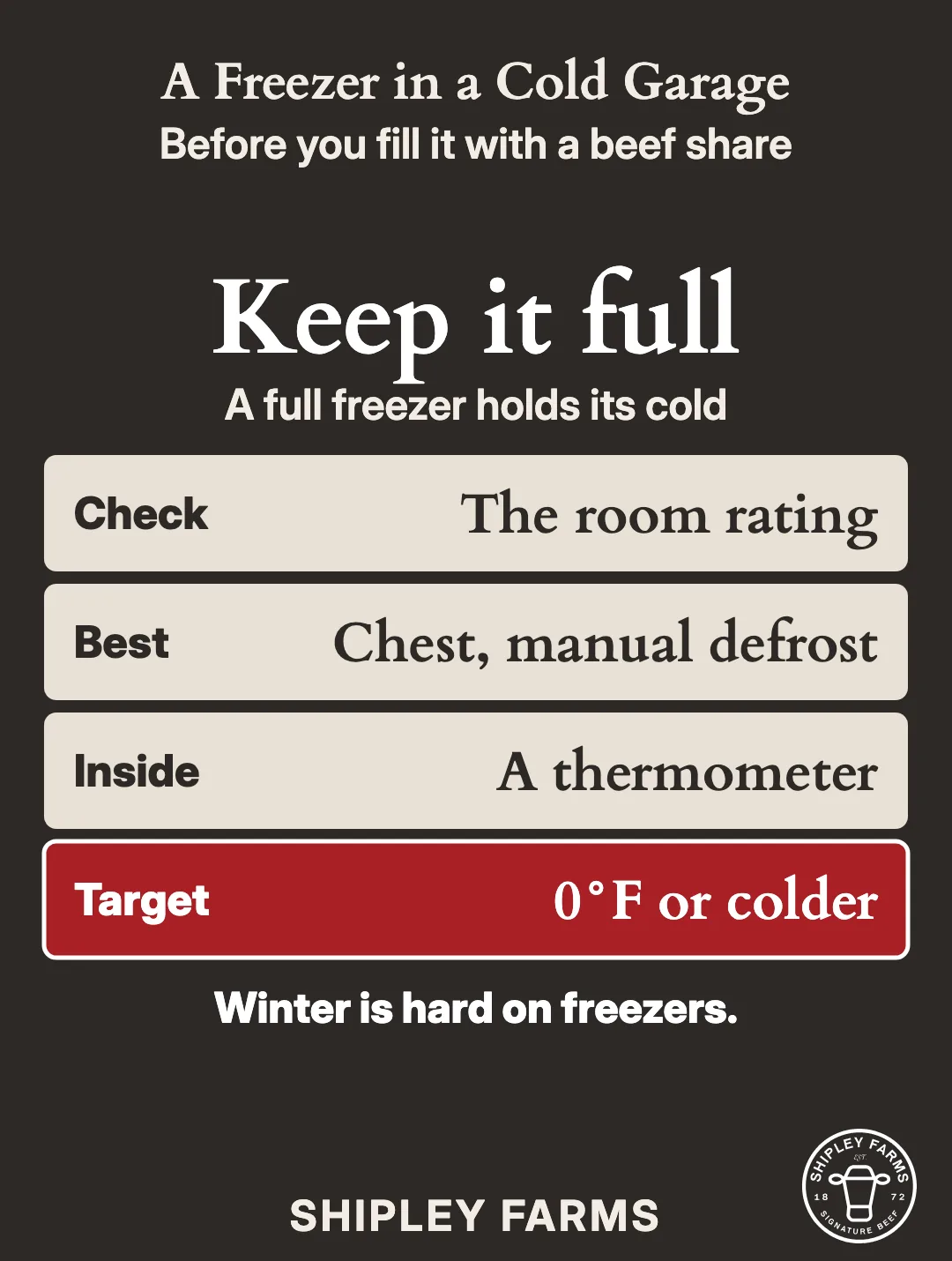
Often, yes, but check before you trust it with a quarter of a cow. Most household freezers are designed for a heated room, and the manual lists the lowest room temperature the model is rated for. Below that range, the freezer may not run the way it was designed to.
- Look for the rating. Freezers sold as garage-ready are built for a wider range of room temperatures. If the manual does not mention the garage, assume it was designed for indoors.
- Chest beats upright. A manual-defrost chest freezer has fewer parts to fail in the cold than a frost-free upright, and it holds its cold better when the lid is opened.
- Put a thermometer inside. The freezer should read 0°F or colder. A cheap freezer thermometer tells you on a cold morning whether it still does.
- Keep it full. A full freezer holds its temperature longer than an empty one, through a cold snap or a power cut. A beef share helps here.
Outdoors is harder still. Most household freezers are made for indoor use, so check the manual for both the room temperatures it is rated for and whether outdoor use is allowed at all, and if it mentions neither, keep it indoors.
If you have the choice, a basement usually stays closer to room temperature year round than an unheated garage, which keeps most freezers inside their rated range.
How much freezer you need for a beef share
How Much Beef Is in a Half Cow? has the weights and the freezer space for each share, and Which Shipley Beef Share Is Right for You? helps you choose a size that fits the freezer you have.
Why is my garage freezer not freezing in winter?
Usually the garage has dropped below the lowest room temperature the freezer is rated for, and it is no longer running the way it was designed to. Check the inside with a freezer thermometer. If it reads above 0°F, move the food to a freezer that is holding temperature, use the USDA guidance below on what can be refrozen, and then move this freezer somewhere warmer or replace it with a garage-ready model.
If the freezer fails
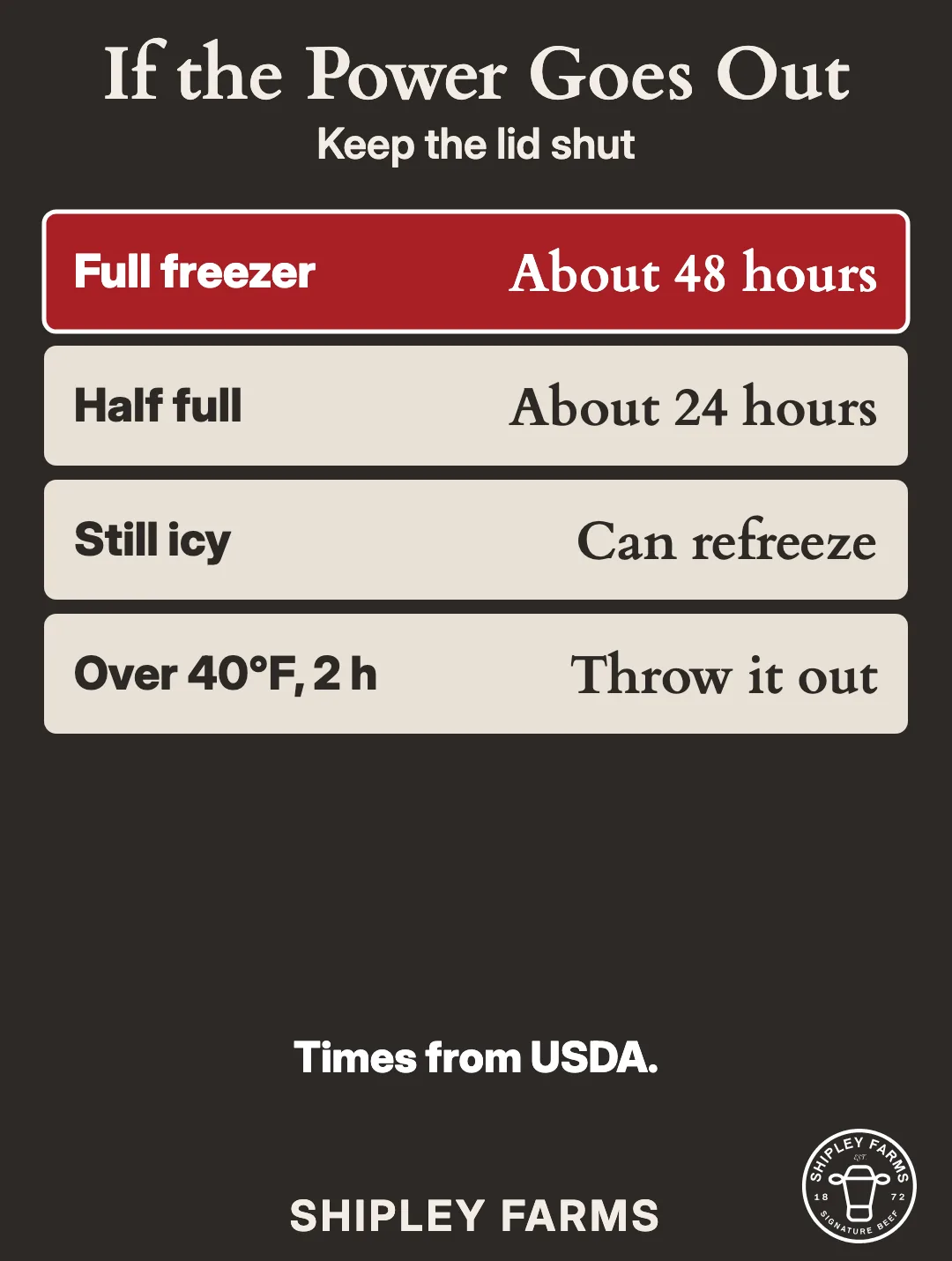
Keep the lid closed. USDA says a full freezer holds its temperature for about 48 hours with the door shut, and a half-full one for about 24. Food that still has ice crystals, or has stayed at 40°F or below, can be refrozen. Anything that has sat above 40°F for more than two hours should be thrown out. The USDA page below has the detail.
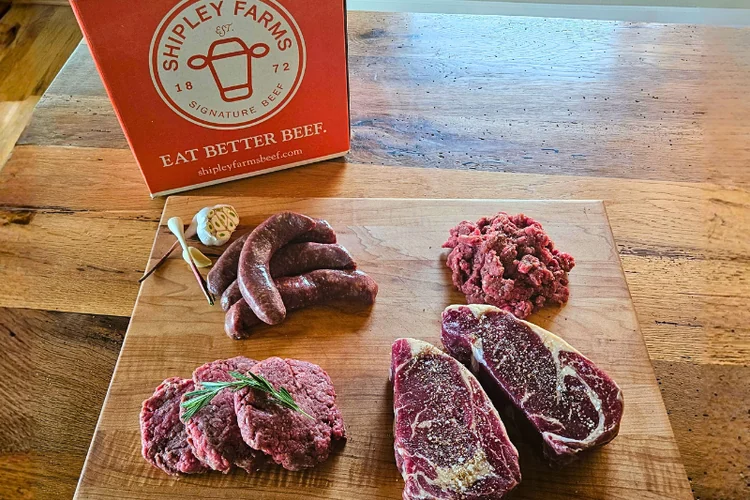
A quarter of a Shipley Farms steer, cut and packaged for your freezer.
View Product- Freezing and Food Safety, USDA FSIS
Food-safety temperatures and storage times on this page are cited to the agencies above rather than to us.
Written at Shipley Farms in Vilas, North Carolina: a family cattle farm raising and dry-aging beef in the Appalachian Mountains, now in its fifth generation. No shortcuts since 1872.
Every quote on this page is Gray Shipley talking, the man who runs this farm. He recorded these answers himself, at the farm, in the autumn of 2026. The play button under each quote is that recording, exactly as he said it, and the words under it are a word-for-word transcript. In the written quotes, hesitations are trimmed so they read on the page. Nothing else is added or reworded, except where Gray revised his own words in review.
On food safety we leave it to USDA FSIS and FoodSafety.gov, and we have linked their pages above. Reviewed 9 November 2026.
Shipley Farms
Stories, recipes and news from Shipley Farms.