Dry Brining Beef
Salt the beef, then wait. That is the whole technique, and it does more for the result than most of what people buy equipment for.
Salt it, then leave it. That is it. No liquid, no container, no equipment.
What happens
- Salt draws moisture to the surface in the first half hour. The beef looks wet. This is the stage people panic at and wipe it off.
- Over the next few hours that moisture dissolves the salt and gets drawn back in, carrying seasoning through the meat rather than leaving it on top.
- The surface then dries out, which is exactly what you need for browning.
“Get the moisture off the surface.”
Gray Shipley
How long
- A steak. 40 minutes minimum, and up to 24 hours is better.
- A roast. 24 to 48 hours, uncovered, on a rack in the fridge.
- Ground beef. Do not. Salting ground beef ahead makes it springy and bouncy. Salt it as it hits the pan.
Uncovered is the part that matters
Covering it traps the moisture against the surface and you lose the drying benefit entirely. A rack, in the fridge, with air moving around it. It will not dry out in any way you would notice; it will brown in a way you definitely will.
“A lot of steaks can do fine with just a little salt and pepper. But a good steak doesn't need too much seasoning.”
Gray Shipley
“And then let the flavor do the work and don't try to do too much.”
Gray Shipley
Where this fits in the method is in how to sear a steak.
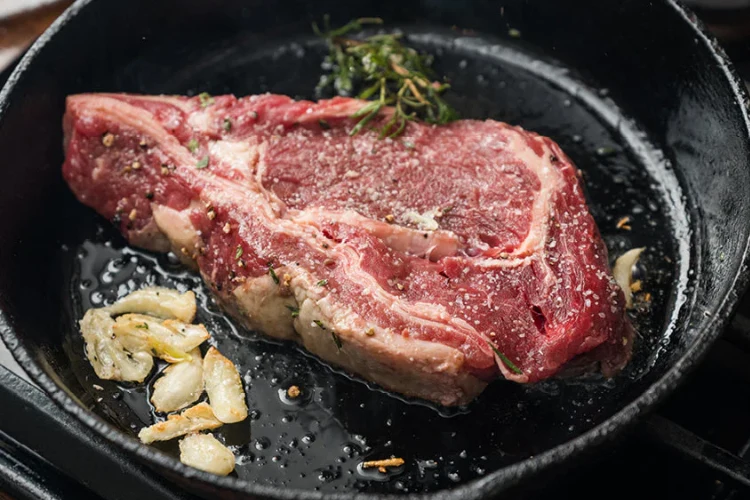
Thick, marbled, and 24 hours of dry brining shows on it.
View ProductWhat is dry brining and should I do it?
Salting beef well ahead and leaving it uncovered. Yes, on almost everything.
- Cook to a Safe Minimum Internal Temperature, FoodSafety.gov
- Refrigeration & Food Safety, USDA FSIS
Food-safety temperatures and storage times on this page are cited to the agencies above rather than to us.
Written at Shipley Farms in Vilas, North Carolina: a family cattle farm raising and dry-aging beef in the Appalachian Mountains, now in its fifth generation. No shortcuts since 1872.
Every quote on this page is Gray Shipley talking, the man who runs this farm. We sat down with him, turned on a recorder, and kept his own words. Hesitations are trimmed so they read on the page. Nothing else is added or reworded, except where Gray revised his own words in review.
Nobody knows this beef better than we do. On food safety we leave it to USDA FSIS and FoodSafety.gov, and we have linked their pages above. Reviewed 3 October 2026.
Shipley Farms
Stories, recipes and news from Shipley Farms.