How Long to Rest Beef
Everyone knows to rest meat. Almost nobody rests it long enough, including the farmer.
Resting does two things. Carryover heat finishes the cooking, and the muscle fibers relax enough to hold onto their juices instead of releasing them onto the board.
“Not as long as I should. Really should go eight to ten minutes. I sometimes barely give it five.”
Gray Shipley
That is Gray being honest about it, and he is describing what nearly everyone does. Five minutes feels like a long time when dinner is ready.
Rough guide
- A steak, an inch and a half thick. Eight to ten minutes.
- A thin steak. Five minutes. Less mass, less carryover.
- A roast. Twenty minutes minimum, longer for a big one.
- Brisket. An hour, and two is better.
It will not go cold
This is the objection and it is mostly wrong. A thick steak loses very little in ten minutes, and what it loses is more than repaid by not emptying itself onto the board. Rest it somewhere warm and loosely tented if it worries you, but do not wrap it tightly or the crust goes soft.
“So, I think that's the most common mistake is you're not sure, so you'll cook it a little longer. And you just don't need to.”
Gray Shipley
Rest and pulling early are the same instruction
Carryover is why you take beef off below your target. If you are not resting, the carryover happens on the plate while you eat, which is why the last bites are more done than the first. Ranges are in the temperature chart.
“Get the moisture off the surface.”
Gray Shipley
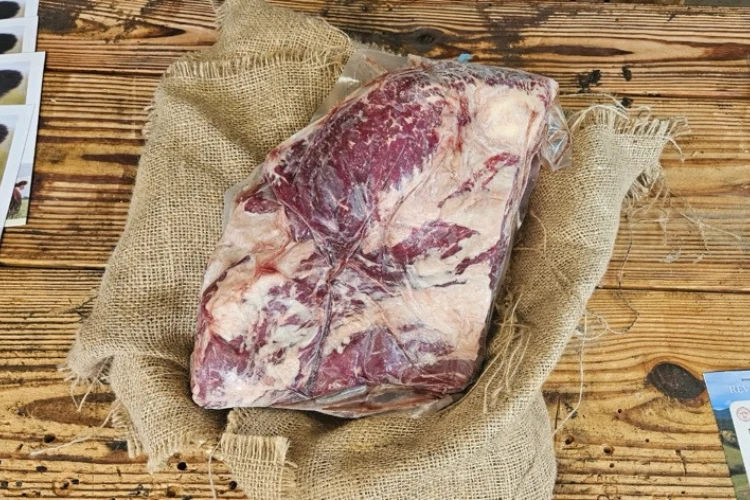
A roast repays twenty minutes more than any other step.
View ProductHow long should I rest beef after cooking?
Roughly half the cooking time for a steak, and much longer for a roast.
- Cook to a Safe Minimum Internal Temperature, FoodSafety.gov
- Doneness Versus Safety, USDA FSIS
Food-safety temperatures and storage times on this page are cited to the agencies above rather than to us.
Written at Shipley Farms in Vilas, North Carolina: a family cattle farm raising and dry-aging beef in the Appalachian Mountains, now in its fifth generation. No shortcuts since 1872.
Every quote on this page is Gray Shipley talking, the man who runs this farm. We sat down with him, turned on a recorder, and kept his own words. Hesitations are trimmed so they read on the page. Nothing else is added or reworded, except where Gray revised his own words in review.
Nobody knows this beef better than we do. On food safety we leave it to USDA FSIS and FoodSafety.gov, and we have linked their pages above. Reviewed 3 October 2026.
Shipley Farms
Stories, recipes and news from Shipley Farms.